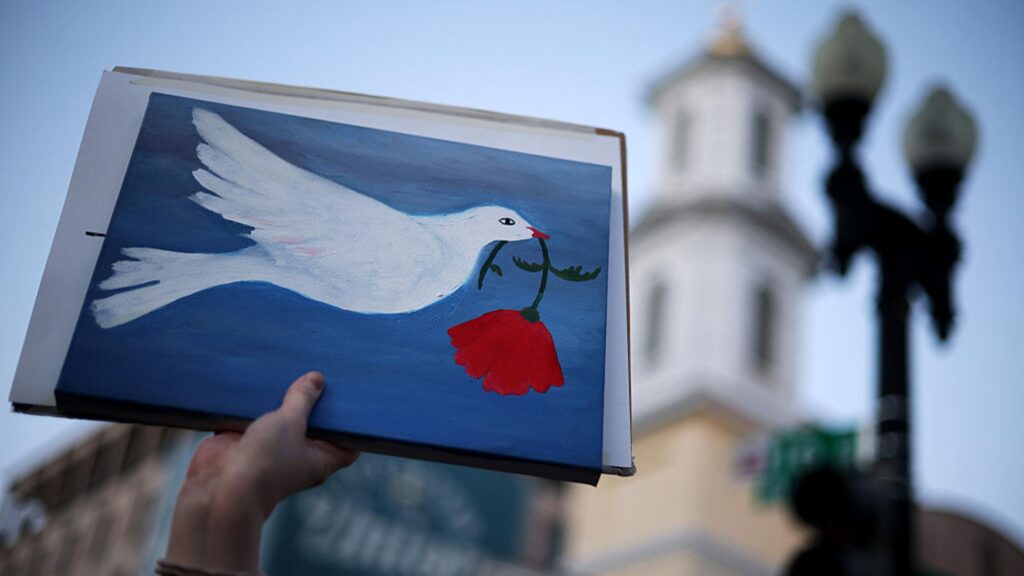
Negotiations to implement a memorandum of understanding between the United States and Iran began Sunday in Switzerland, attended by delegates from both nations, along with mediators from Qatar and Pakistan.
Though a joint statement Monday praised the “positive and constructive atmosphere” and progress made on the first day of talks, tensions remain high as Israel refuses to fully withdraw from its security zones in Lebanon.
Over the next 60 days, negotiators will seek to chart a path toward ending a war that has upended the region and sent shockwaves through the global economy since it began with the U.S. and Israel launching airstrikes on Iran on Feb. 28.
Here is a timeline of the key events that brought the conflict to this pivotal moment.
Read more: The 60-Day Test: What Iran’s Agreement with the United States Really Means
Feb. 28: U.S.-Israeli strikes kill Iran’s Supreme Leader
The U.S. and Israel launch a sweeping air campaign that targets strategic military locations, nuclear sites, and government facilities in Iran. The operation kills Iranian Supreme Leader Ayatollah Ali Khamenei.
The strikes come with little public warning, catching many civilians, diplomats, and markets off guard and transforming a period of regional tension into open war overnight.
Missiles also hit the cities of Qom, Karaj, Kermanshah, Tabriz, and Isfahan, a major hub for Iran’s nuclear program. In one of the war’s most controversial moments, a girls’ elementary school in southern Iran is demolished, killing 175 people, at least 108 of them children.
Iran starts a retaliation campaign soon after, targeting Israel and neighboring Gulf states with a barrage of missiles. Iran targets U.S. bases in Bahrain, Qatar, the United Arab Emirates, Kuwait, Jordan, and Saudi Arabia, but also strikes civilian areas, including multiple hotels and airports.
March 2: Hezbollah enters the war
By the third day of the war, the conflict expands. In retaliation for the assassination of Khamenei, Hezbollah, an Iranian-backed militia based in Lebanon, launches missiles toward Israel.
Israel responds, with strikes reaching into the suburbs of Beirut and the Beqaa Valley. At least 31 Lebanese people are killed and 179 are wounded, according to Lebanon’s health ministry.
Read more: The U.S.-Iran War: By the Numbers
March 8: Global oil shock takes hold
Iran closes the Strait of Hormuz, a vital passageway through which 20% of the world’s oil usually flows, triggering an economic and energy disruption that is felt worldwide.
When energy markets open, crude oil prices surge above $100 a barrel for the first time since Russia’s 2022 invasion of Ukraine.
Mojtaba Hosseini Khamenei, the son of Iran’s slain Supreme Leader, is named his successor, completing a rapid transfer of power.
March 16: Israel expands war with ground offensive into Lebanon
A new milestone is reached as Israel announces a “limited” ground offensive in areas of southern Lebanon—significantly expanding the breadth of its military operations.
The Lebanese government says that Israel’s bombing has already displaced more than 1 million people across the country, representing one-fifth of the country’s population.
Read more: Israel’s War Against Lebanon, Explained
April 8: A ceasefire begins, then quickly deteriorates
A two-week ceasefire between the U.S. and Iran is reached with the help of Pakistan. Hours later, however, Trump posts on Truth Social that “a whole civilization will die tonight, never to be brought back again,” fueling uncertainty about the durability of the agreement.
Soon after the ceasefire is announced, over 300 people are killed in over 100 Israeli strikes on Lebanon in just 10 minutes, according to Lebanese authorities.
Israeli Prime Minister Benjamin Netanyahu says that the ceasefire did not extend to Lebanon, a claim that Iran disputes.
April 11: First high-level peace talks end without a deal
Vice President JD Vance leads an American delegation to Islamabad for the highest-level direct talks between the U.S. and Iran since the war’s start. After marathon meetings lasting more than 21 hours, both sides left without a deal.
“We need to see an affirmative commitment that they will not seek a nuclear weapon, and they will not seek the tools that would enable them to quickly achieve a nuclear weapon,” Vance says.
April 12: U.S. launches its own blockade of Hormuz
Trump announces that the U.S. will begin a reciprocal naval blockade of the Strait of Hormuz until Iran agrees to open it to all traffic. The move cuts off access to Iranian oil exports and disrupts a key source of revenue generated through commercial shipping transiting the waterway.
April 16: Israel and Hezbollah reach a ceasefire
Israel and the Lebanese government establish a 10-day ceasefire. But Israel continues to attack Beirut and other parts of Lebanon. Netanyahu insists Israeli troops will remain in Lebanon.
Read more: Israel and Hezbollah Agree to Cease-Fire, U.S. Official Says
June 15: The U.S. and Iran outline a peace agreement
Amid mounting pressure from leaders around the world and a worsening energy crisis, officials announce that the U.S. and Iran have reached an initial agreement to reopen the Strait of Hormuz, setting the stage for formal negotiations later that week in Geneva.
In a call with reporters, officials say that Trump, Vance, and Mohammad Bagher Ghalibaf, Iran’s parliamentary speaker and chief negotiator, have already signed the agreement digitally. Oil prices fall and agricultural stocks rise in the wake of the announcement.
June 18: The Strait of Hormuz reopens
U.S. Central Command announces that reciprocal restrictions on shipping to and from Iranian ports and coastal areas are lifted. Iran commits to restoring commercial transit through the Strait of Hormuz to pre-war volumes.
June 18-20: Fighting in Lebanon threatens negotiations
After Hezbollah attacks kill four Israeli soldiers on June 18, Israel launches retaliatory strikes, forcing the postponement of the peace talks scheduled to take place in Geneva the following day between the U.S. and Iran. The flare-up raises fears that a broader diplomatic effort could unravel before negotiations even begin.
A new ceasefire is reached by the day’s end, but Israeli offensives resume June 20, killing at least seven people and wounding more than a dozen, according to Lebanon’s health ministry.
Iran subsequently announces that the Strait of Hormuz was, once again, closed to maritime traffic.
June 21: Peace talks begin in Switzerland
Despite ongoing uncertainty about the reclosure of the Strait of Hormuz and Israel’s willingness to withdraw from Lebanon, delegates from Iran and the U.S., including Vance, convene to initiate a first round of peace negotiations. Mediators from Qatar and Pakistan join the talks at the Burgenstock Resort in Lucerne, Switzerland.
June 22: Talks produce a roadmap for peace
Qatar and Pakistan release a joint statement describing a “positive and constructive atmosphere” during the first day of peace talks in Switzerland. The statement demonstrates positive momentum toward key goals, like reopening the Strait of Hormuz, and says delegates created a “roadmap toward a final deal within 60 days.”
“We set the foundation. We haven’t built the house, but we’ve laid a successful foundation to get to a good place for the American people,” Vance tells reporters.
He also says that the U.S. and Iran have made progress in coordinating a ceasefire in Lebanon—addressing one of the most critical unresolved issues, given Netanyahu’s resistance to withdrawing soldiers from Lebanon.
Vance further announces that Iran agreed to let inspectors from the International Atomic Energy Agency into its facilities, potentially easing tensions around its nuclear program. He calls the concession “a major milestone for the American people, and the first step in permanently denuclearizing or permanently ending a nuclear weapons program in Iran.”
In another sign of progress, the U.S. Treasury issues a 60-day license that waives sanctions on Iranian oil.
The post From Overnight Airstrikes to Peace Talks: A Timeline of the U.S.-Iran War appeared first on TIME.