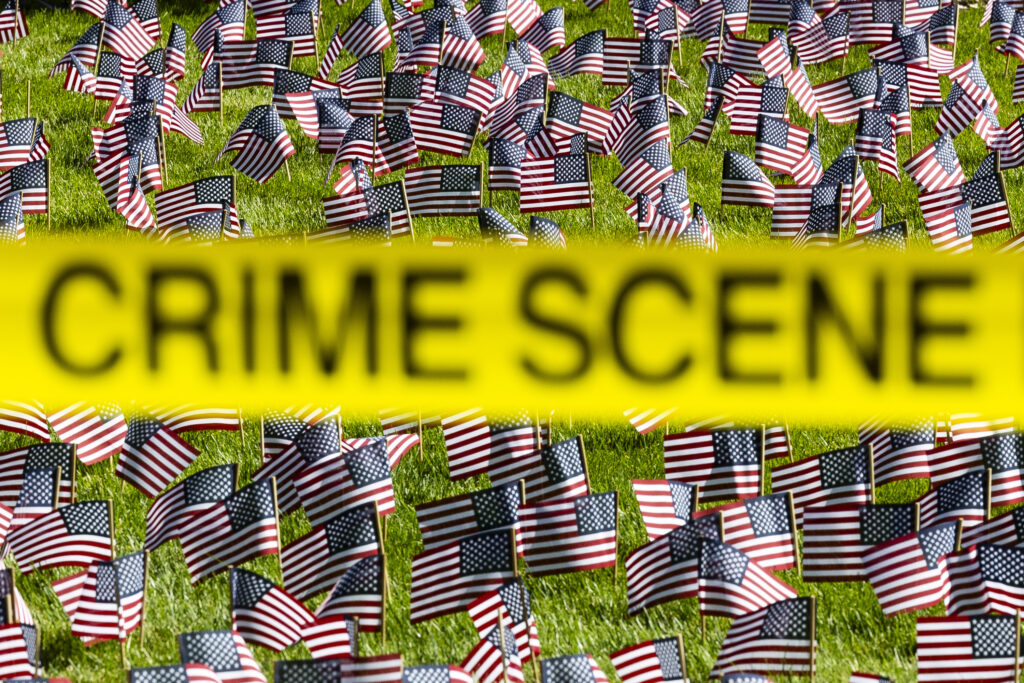
The reckoning over the dismal state of campus discourse continues. On Tuesday, the Foundation for Individual Rights and Expression released its latest campus survey, which shows that nearly half of America’s undergraduate students “mostly” or “completely” believe that “words can be violence,” less than three months after Charlie Kirk’s assassination tragically reminded the country that there’s a big difference between speech and action.
The idea that controversial opinions equal danger has been percolating for years on college campuses. Not only did this misguided view teach students to shun difficult conversations, but it also created an environment ripe for politicization, calls for cancelation and rank hypocrisy. Americans were shocked after Hamas’s Oct. 7, 2023, terrorist attacks to find that many students who pushed the idea of “microaggressions” were willing to rationalize calling for “intifada.”
The problem with seeing disagreeable ideas as violent is that it can be used to justify responding with violence. Kirk himself warned that “when people stop talking, that’s when you get violence.” He urged his supporters not to see the other side as evil, lest they lose their humanity.
The challenge for university administrators will be to humanize unpopular opinions on campus, even amid heightened fears of violent reactions. Institutions can start by normalizing the kind of difficult conversations their students see as too dangerous. They should also be viewpoint-neutral when approving guest speakers, knowing that this means bringing controversial figures to campus. Speakers like Kirk should not need security to share their views, but universities ought to be willing to provide sufficient resources for protection when necessary.
Conservatives, who often complain about being crowded out from campus discourse, have their own part to play. Compared with their liberal and moderate peers, conservative students report feeling more uncomfortable going to class or speaking up. That’s understandable, but it can’t be a pretext to turn around and shut down progressive ideas. Nor should conservatives squander the political moment by pushing offensive ideas for the sake of sticking it to the campus left. Invoking Nazi rhetoricor gleefully taking credit for calling Immigration and Customs Enforcement on migrant workers is protected speech, but it isn’t a good way to prove your ideas are worthy of a prominent place on campus.
Kirk died pursuing the kinds of difficult conversations campuses desperately need. Now, it’s up to universities to honor his legacy and teach students that disagreement shouldn’t be dangerous, let alone deadly.
The post Charlie Kirk’s killing shows the difference between words and violence appeared first on Washington Post.