Sometimes, we get it wrong. We pan a film that becomes a classic — or praise what doesn’t age well. As part of a look back at The Post’s film archives, we unearth reviews in which the take doesn’t quite match a movie’s long-term reception.
When “The Shining” arrived in theaters in the summer of 1980, audiences were divided. Critics took issue with director Stanley Kubrick’s visual language, the script’s characterizations and how the film changed the ending of Stephen King’s source novel.
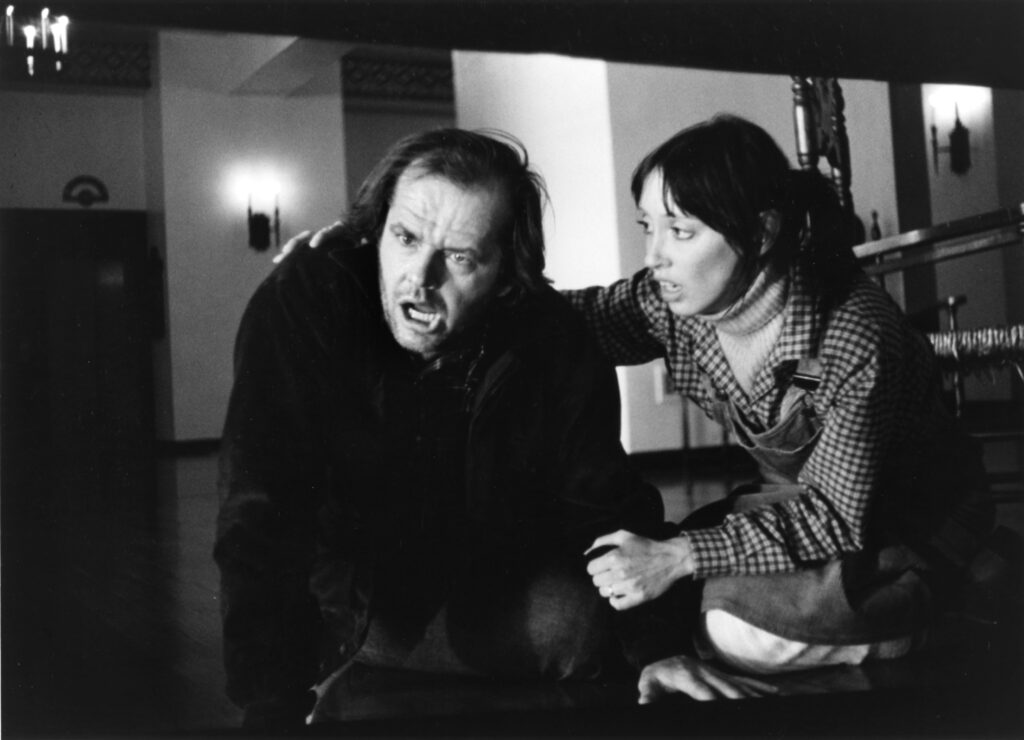
The Washington Post’s Gary Arnold panned “The Shining,” knocking Shelley Duvall’s haunting performance and the film’s sense of tension with a succession of scorching hot burns.
Today, “The Shining” is considered by many as one of the greatest horror films of all time. Read what Arnold originally wrote here:
Stanley Kubrick’s production of “The Shining,” a ponderous, lackluster distillation of Stephen King’s best-selling novel, looms as the Big Letdown of the new film season.I can’t recall a more elaborately ineffective scare movie. You might say that “The Shining,” opening today at area theaters, has no peers: Few directors achieve the treacherous luxury of spending five years (and $12 million-$15 million) on such a peerlessly wrongheaded finished product.King’s flamboyant, Freudian horror thriller — obviously contrived and often overwritten — described how the evil spirits haunting a posh resort hotel high in the Rockies began to materialize and then terrorize a family engaged as winter caretakers. The gathering demons found a particularly susceptible victim in the father, Jack Torrance, who degenerated into a raging madman, intent on murdering wife and child.A deft manipulator, King delivered the hokey but terrifying goods, building step-by-step to an explosive climax. He sustained suspense and reinforced the supernatural and violent incidents with a persuasive psychological underpinning — the troubled marriage of Jack and Wendy Torrance and the psychic powers of their 5-year-old son, Danny.Kubrick seems intent on smothering that incendiary material. While retaining the outline of King’s haunted-house fable, Kubrick obscures or weakens most of the underlying psychological turmoil and minimizes the sinister possibilities in the setting. Having invited us to a Halloween party, he declines to provide the appropriate tingly refreshments.In fact, Kubrick has already passed around his choicest tidbit: the sight of blood seeping out of elevator doors and flooding a hotel corridor. The image is admirably suited to the book, since the evil manifestations at the Overlook Hotel are meant to begin as a trickle and end as a torrent. However, moviegoers have been watching those doors leak for several months now in the famous “Shining” trailer. The movie itself fails to augment this impressive shocker. We merely see it again, in three fragments from less effective camera angles.Kubrick seems preoccupied with production design at the expense of characterization, tension, fear meaning. He conducts extended camera tours along the corridors and through the rooms built so splendidly by Roy Walker’s crew on the soundstages of the EMI-Elstree studios to represent the spacious art-deco interiors of the Overlook. The sets are undeniably handsome, but they fail to impose mystery or menace, partly because they’re so brilliantly illuminated that we can see every inch of them.I’m not sure what Kubrick and his great cinematographer, John Alcott, thought this lighting scheme would accomplish. The practical result is a would-be spooky picture with no place for the spooks to hide. (Moreover, if every room in the hotel is as brightly lighted as it appears to be in the nocturnal sequences of “The Shining,” the management must be prepared to pay a fortune in off-season electricity bills.)King’s characters had enough identity to carry the pretense that the malevolent apparitions were somehow activated by the tensions within the Torrance family. Danny’s gift for precognition is called “shining” by a solicitous, similarly gifted character, a black chef named Halloran who meets the family when it arrives on the last day of the season and then answers the boy’s cry of distress at the climax. Danny’s special gift appears to stir slumbering spirits in the hotel that feed off the smoldering antagonism between his parents. Fanciful perhaps, but again, effective.The ill feelings that erupted between Jack and Wendy were constantly warring with genuine affection and sexual passion. Jack, a former teacher and frustrated writer, takes the isolated caretaking job in an effort to pull himself together after a history of alcoholism and dangerous temperamental outbursts. One such episode cost him a teaching post. Another resulted in a broken arm for his son. Yet in the novel, Danny still adored the unstable, potentially violent father, who was obviously destined to threaten him once the family became snowbound at the hotel. King had transposed the elemental love-hate mechanism of his earlier “Carrie,” brilliantly filmed by Brian De Palma in 1976. The tormented, psychic Carrie had also been compelled to defend herself from the madness of a mother she deeply loved and needed.Kubrick’s failure to establish a credible sense of family intimacy and conflict is perhaps more damaging than his insistence on a minimally scary pictorial style. You doubt that Jack Nicholson’s Jack and Shelley Duvall’s Wendy have ever met, let alone married, produced a child, gone through rough times and arrived at this crisis. Kubrick has junked episodes that might have helped and neglected to invent substitutes. He also allows the costars to embarrass themselves with gauche, inadvertently ridiculous performances, of different kinds. Where Nicholson seems to need toning down, the jittery and amateurish Duvall cries out for basic dramatic coaching.As the little boy, grave-faced Danny Lloyd puts the pros to shame — at least until he’s required to go catatonic and begins speaking in a voice that recalls Mercedes McCambridge as Pazuzu.The crucial dramatic failing is that the movie has no emotional center. Not Jack, not Danny, not Wendy, not Halloran (even though he’s embodied by Scatman Crothers, a likable and reassuring presence if there ever was one), not the Overlook. King kept these elements in balance. Why can’t Kubrick?It’s not as if the movie discovered a superior form of terrifying perception. Having disregarded the available devices for justifying a horror story, Kubrick resorts to a rattling, banging score (mooged-up selections from Bartok, Ligeti, Penderecki and others) and a clownish performance by Nicholson, doing impressions of The Big Bad Wolf, Quasimodo and “The Films of Lon Chaney” as he stalks and lurches about, arching his eyebrow, baring his teeth and cackling like a satanic hyena.Like Louise Fletcher, Nicholson desperately needs to break the Oscar jinx. He also needs to explain the mysterious limp he acquires soon after Duvall slashes his hand to protect herself from a crazed assault. (“I guess that cut on his hand is really hurting his foot,” my wife commented sweetly.)Nicholson could have been convincing as the original Jack Torrance, a self-loathing literary failure. You’d think a screenwriting collaborator like Diane Johnson, the respected novelist and critic, might have helped Kubrick define the psychology of this type more effectively. She and Kubrick appear to come up with two good ideas — giving the hotel a maze and having Wendy discover Jack’s pathetic “manuscript” — but they haven’t invented nearly enough to compensate for the resources overlooked in the source material.One waits patiently through the first hour, because Kubrick is obviously trying to be very, very methodical about the exposition. But the wait proves futile. Things don’t begin popping. The payoffs don’t give you the shivers. There’s no follow-through on the occasional ominous touch that works, like the overhead shots of Jack’s VW driving to the hotel at the start of the film or the sensational, all two brief low-angle shots behind Danny’s Big Wheel as he pedals around the hotel. In retrospect, these moments loom larger because so many others have fizzled out.The movie is littered with remnants of episodes that were integral to the novel but appear vague or inexplicable on the screen. (Nicholson’s first encounter with a ghostly bartender is perhaps the worst example.) And readers of King’s novel are likely to feel justifiably contemptuous of two switches at the denouement: an ill-advised change of victims and the abandonment of an apocalyptic disaster in favor of a “kicker” weakly patterned after the Rosebud gimmick in “Citizen Kane.”At this melancholy point in his career, Kubrick seems incapable of begging, borrowing or stealing an effective brainstorm. He’s so listlessly detached that he can’t even do justice to a presold chiller-diller overstocked with sensational opportunities.— Gary Arnold
What do you think? Does “The Shining” ruin King’s novel? Is it the best horror film of all time? Let us know in the comments.
The post Our critic called ‘The Shining’ a disappointment. History disagreed. appeared first on Washington Post.