Last fall, my children’s school district — in a suburb north of San Francisco, in a community connected to leading tech companies like OpenAI, Anthropic, and Google — issued a call to parents.
The district wanted us to join its Artificial Intelligence (AI) task force. The goal was to draft an AI vision statement and develop a framework for AI in the classroom. I signed up without hesitation.
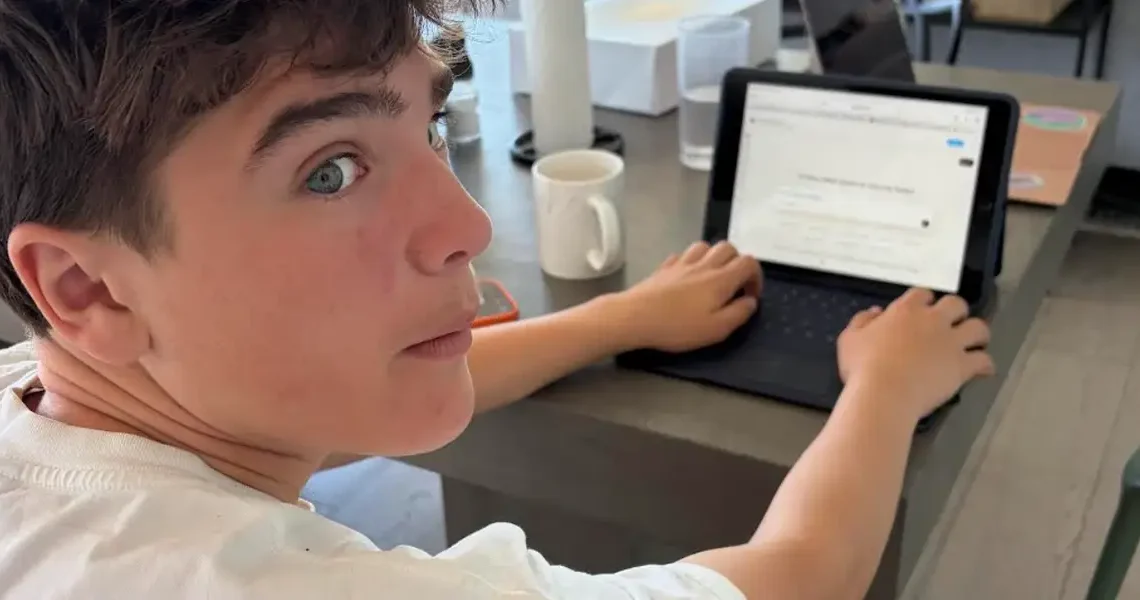
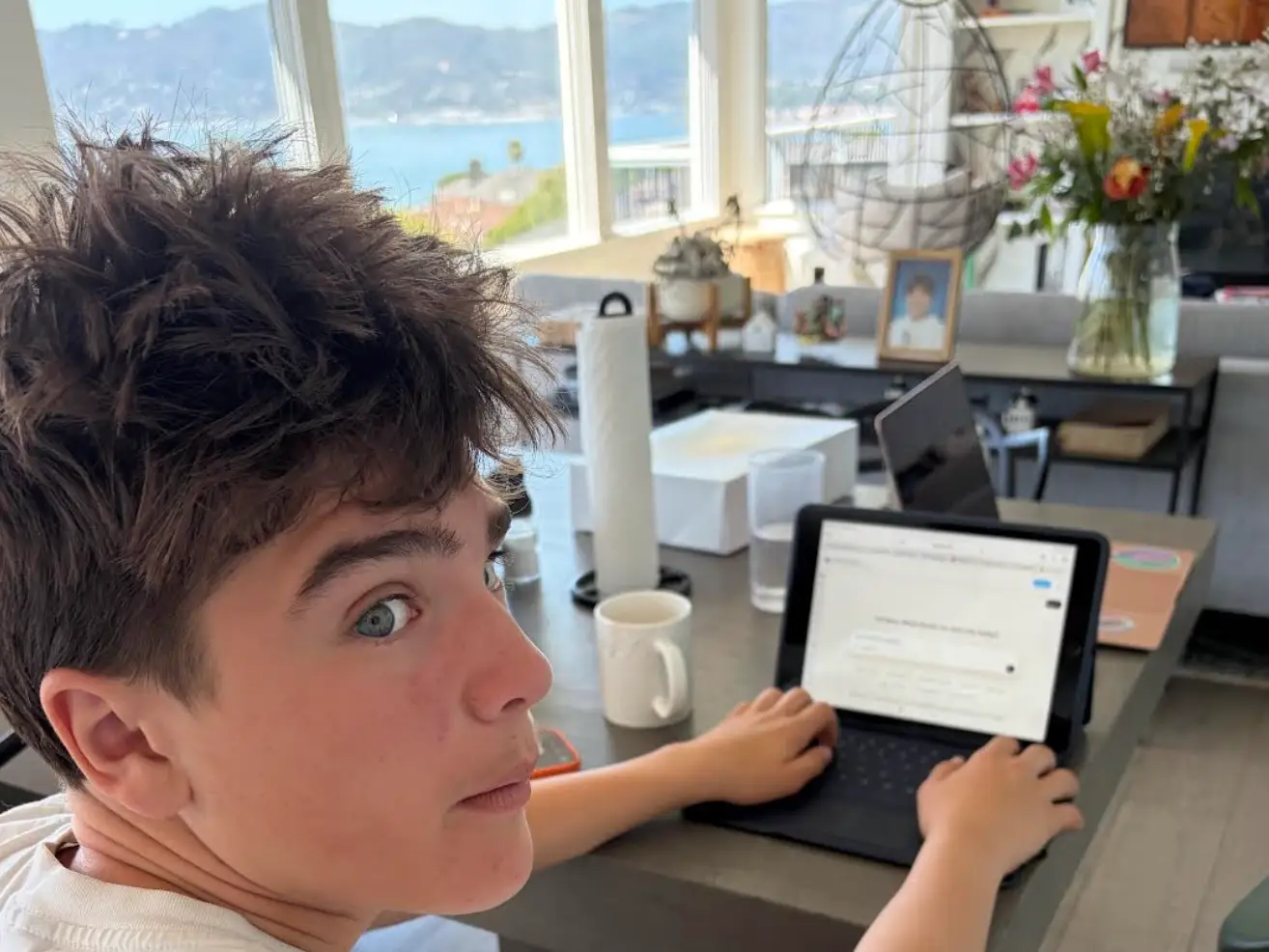
Why? Because my kid was coming home, taking pictures of his math homework, feeding them into an AI engine, and writing a single prompt: Solve.
He’s known for taking shortcuts, but this one concerned me. As a rule follower, I thought, yikes, he may get into trouble using AI for his homework.
And then a bigger question gave me pause. Do I even want him to be using AI in this way?
I’ve realized many parents are also struggling with AI
My parenting generation has had to navigate rules on screen time, cellphones, and social media without a clear road map.
Having to contend with another emerging technology, one that feels even more powerful, has been daunting. I began to worry about what AI might do to a developing mind.
As I spoke with other parents about my concerns, I discovered I wasn’t alone. Many saw AI literacy as an important skill, but they also worried about its effects on creativity, attachment, critical thinking, and children’s ability to problem-solve on their own.
I joined my son’s AI task force
When I joined the Reed Union School District (RUSD) AI task force in November of last year with a group of teachers, administrators, and parent volunteers, I was struck right away by the district’s posture.
This wasn’t a discussion about whether AI was to be used in the classroom. It was a conversation on how to do it thoughtfully. The general attitude was that this new technology, when used responsibly, could improve learning outcomes and prepare students for a future in which tech skills are increasingly valued.
Over three meetings, we helped form a vision statement for AI integration, a safety and ethics review, and a policy on AI literacy and student use.
The more I listened, the more my own thinking shifted. AI held promise, and there were real risks to consider. Both things are true.
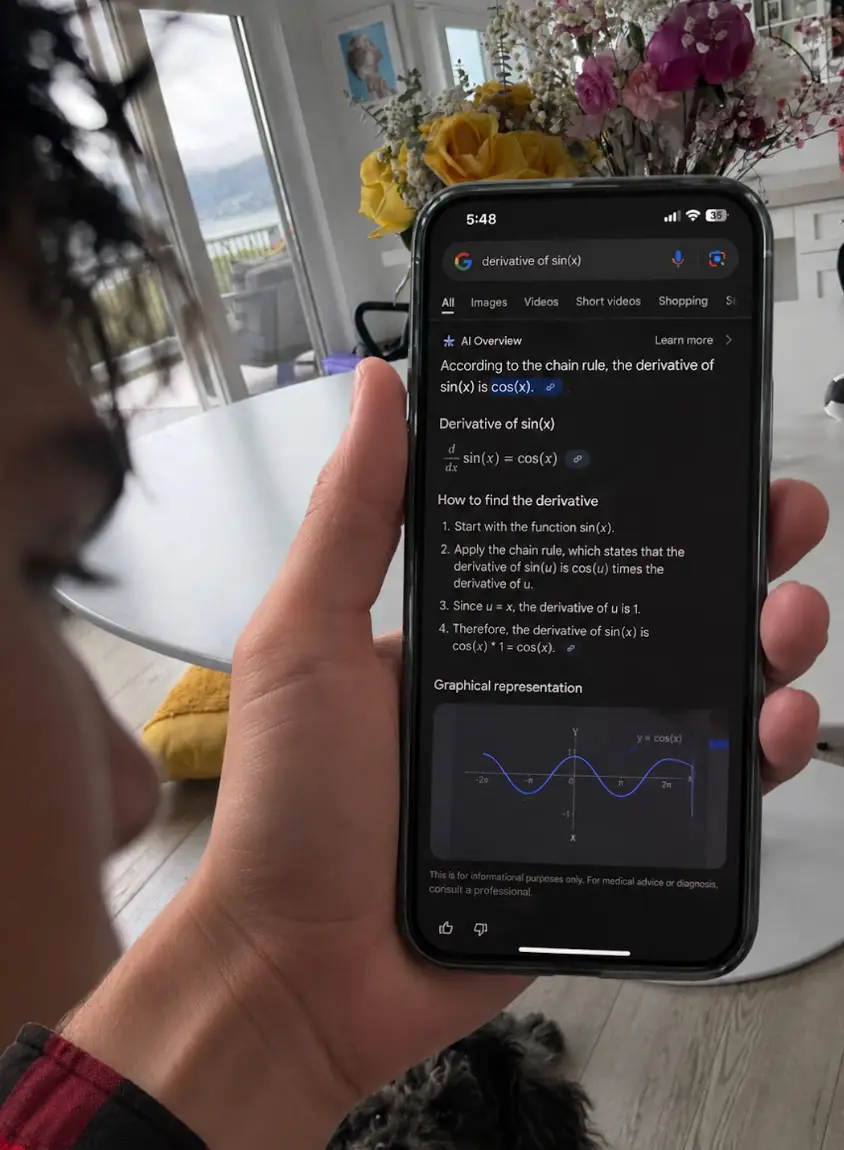
I came into the AI task force with a protective parent instinct, but I came to understand that finding the middle way with this technology was the work I had signed up to do.
We’ve implemented a new, helpful system
Many students have no idea what the rules are when using AI in their schoolwork, and it’s a lot messier than you think.
I have heard it firsthand from my own kid: use AI, maybe get an A, or use AI and risk getting judged by your friends, or punished by teachers. Some kids are risk takers who experiment with these tools. Others won’t touch them at all. As a parent watching from both sides, I could see that neither response serves them.
RUSD is guiding students, teachers, and parents out of this gray zone. The district is rolling out a traffic-light model specifying when and how AI is permitted for academic tasks.
For elementary K-5 students, red light means no AI usage, yellow light allows AI as a tutor or support, and green light means AI as a partner.
For middle schoolers, the model becomes a 0 to 4 scale with color bands. Here, 0 indicates no AI involvement, while 4 indicates a task in which AI generates the work and the student must critique and fact-check it.
The traffic light system and numeric framework will be placed on assignment headers, classroom posters, and communications with families. This creates clear signals, helping students understand the rules and the reasons behind them.
This will also help me know what to reinforce at home.
I’m still figuring it out as I go
What I want for my son is not a ban on AI. I want him to use it as a learning partner — to be curious, to be creative, to ask it questions, to read it carefully, and to push back on its answers if they don’t sound right.
I don’t want him to sit down, hit copy and paste, and walk away. That is the difference between a student who uses AI to outsource thinking and a student who learns to augment his own.
RUSD is trying to build the latter. And so am I.
Read the original article on Business Insider
The post My teenage son is using AI to do his math homework. I’m now helping his school write its first AI policy. appeared first on Business Insider.