On a fall afternoon 15 years ago, I met an idealistic researcher outside a Stanford coffee shop to discuss our shared dream: using AI to detect cancer. He had wiry hair, a penchant for talking with his hands, and a reputation for brilliance. He worked at a research lab that developed early screens for cancer; I, at 20, had just learned that I carried a mutation that conferred a very high risk of breast, ovarian, and other cancers. Over the following years, he offered guidance on how to enter his field, prepared me to apply for the scholarship that would fund my Ph.D., and warned me away from cancer-screening companies that made exaggerated claims.
But from there our paths diverged. I became an AI professor. He co-founded Anthropic. My mentor was Dario Amodei, the man who leads one of the most powerful AI companies in the world. In a utopian 2024 essay titled “Machines of Loving Grace,” he predicted that superhuman AI—smarter than Nobel Prize winners, freely using computers, and collaborating with millions of copies of itself—could soon compress a century of scientific progress into a single decade, and potentially reduce cancer mortality by 95 percent.
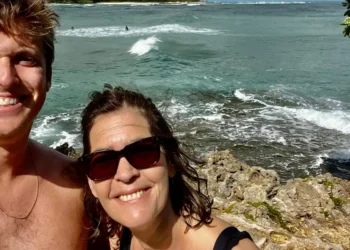
Which should sound pretty good to me. At 35, my cancer risks are catching up with me. A few weeks ago, surgeons removed my ovaries, instantly inducing menopause and destroying my ability to naturally bear children. By 40, the risk of breast cancer for carriers of my mutation rises to one in four, double the lifetime risk for the average woman. My mother, who also carries the mutation, was diagnosed with breast cancer at 45. Now would be a fabulous time in my life for a superintelligent AI to cure cancer.
Why, then, do I find myself rooting for delays in the creation of this AI—hoping, in my heart of hearts, that GPT-6 will be a disappointment?
Part of the answer is that, despite the extraordinary speed of AI development, I do not believe that AI is likely to cure cancer anytime soon—certainly not enough to bet my life on it. This skepticism is shared by most of the AI experts in a survey I recently advised, who generally expect slower progress than the leaders of AI labs. AI systems are strongest in settings such as chess, where they can generate infinite data (by playing over and over again), experiment freely, and observe exactly what happens. Many important settings, including math and coding, share these properties, and AI has yielded remarkable progress there. But cancer is different. Cancer data are finite and come from biological experiments and clinical trials that cannot run at silicon speeds. Experimenting freely on cancer patients would be unethical. And cancer data only imperfectly illuminate the complex processes by which our own cells betray us. There are, in short, many barriers to curing cancer beyond a lack of intelligence.
The intelligence our existing AI systems provide is also already formidable and underused. We have yet to take full advantage of systems such as the Nobel Prize–winning AlphaFold, which predicts protein structures with stunning accuracy but has not yet yielded revolutions in drug development; or the AI algorithms that match or beat radiologists at many types of image analysis; or the chatbots that now aid scientists with research. My Ph.D. students used to write code to analyze medical data; now they express their ideas in plain English and let AI do the rest. They operate essentially as professors, constrained only by their own imagination. My student recently came to me giddy with excitement over an AI-aided medical discovery.
So as daunting as a cure for cancer remains, I am certain that AI will contribute to it. And if curing cancer were the only result of building ever more powerful AI systems, I would cheer for their arrival. But the problem is that their impacts are much broader, and we are moving too quickly to ensure that these impacts are positive.
The recent chaotic release of Anthropic’s latest model, Fable 5, illustrates how unprepared we are to handle the broader repercussions of these models. Anthropic, fearing that the model might be misused to develop bioweapons, initially kneecapped its ability to answer most basic biological questions, which the company said was a temporary measure. This made the model, ironically, far less useful for cancer research than its less powerful predecessors. A couple of days later, the U.S. government issued a national-security directive prohibiting foreign nationals from using the model, likely due to concerns it could be used for cyberattacks. In response, Anthropic shut the model down entirely. Reasonable people disagree about how risky this model is and whether Anthropic or the government is overreacting. But clearly, our institutions aren’t remotely ready to respond to these rapid deployments. (Anthropic did not respond to a request for comment about Fable 5’s rollout, nor to other questions.)
Many developers of these models, including Dario Amodei, agree that AI is progressing more quickly than society is adapting. The solution they propose is for society to speed up, not for AI to slow down, which they view as unrealistic; the very title of Amodei’s latest essay, “Policy on the AI Exponential,” frames AI progress as an iron arc to which society must bend. But speeding ahead will inevitably mean more of the type of chaos that surrounded Fable 5’s release. More fundamentally, it will shorten our time to respond to the many societal challenges that powerful AI may raise, including mass unemployment, skyrocketing inequality, repressive surveillance, and autonomous warfare. Each of these—and many others that match their scope—is an enormous problem, no less obviously important than curing cancer, for which we lack good solutions. It is not at all clear that crafting an international response to all of these issues at breakneck speed is easier than slowing AI down.
I myself am ferociously impatient; since the day I learned I carried my mutation, I have lived with the constant awareness that life is finite. But I will wait a little longer for a cure—even if it means losing my fertility and living under the shadow of risk—if it lets us approach this new world more carefully, and ensure that, in curing cancer, we do not lose the things that make cancer worth curing.
Of all the things we stand to lose, I worry perhaps most about how we will find meaning if we obviate our own minds. Amodei struggles repeatedly with this question in his essays, calling it “more difficult than the others.” I admire his attempt to confront the question but find his answer unconvincing. “I spend plenty of time playing video games, swimming, walking around outside, and talking to friends,” he writes in “Machines of Loving Grace.” But I doubt that he would want to spend the rest of his life doing only those activities—certainly I would not. He suggests that humans will still find meaning in deep intellectual pursuits, such as doing research, even if AI can do them much better. For my own part, I would neither spend months struggling with a research problem I knew AI could solve instantly, nor find as much pleasure in the answers it provided. I do not want to be merely a spectator to the universe, whatever wonders AI may reveal.
Or take this essay. I will be heartbroken when a chatbot can extract my innermost feelings and, having gorged itself on the words of a million artists, regurgitate Fitzgerald-worthy prose I cannot match. For me, writing is a process bound up in self-discovery and human connection. My sister suggested the idea for this essay; my wife, seeing me suddenly and deeply sad as I reflected on it, touched my cheek, offering a comfort that no AI therapist could. Afterwards, I wrote late into the night at the handmade dining-room table I inherited from my grandparents. I thought of how my family would gather for long dinners around this table—the adults loosened with wine, the children excited to be part of it all, everyone laughing and talking over one another and debating physics and philosophy—trying, in our slow, suboptimal, human way, to figure things out.
The post I’d Rather Risk Cancer Than See AI Move This Fast appeared first on The Atlantic.