Melatonin — a “go-to” sleep aid for kids and adults alike in many households in America — continues to create media buzz, with conflicting messages that leave people uncertain about its safety.
Some headlines point to melatonin’s supposed immunity-boosting power, while others point to unestablished links between melatonin and heart failure.
I’m a pediatrician and sleep medicine doctor specializing in children, adolescents and adults.
In my experience, many families go through long-standing difficulties with sleep for several months, and even years, before they seek specialty care. And often they come across information online that isn’t tailored to the right age group or sleep condition. In addition, the Food and Drug Administration hasn’t approved any insomnia medications for children, so pediatricians don’t have many options.
Melatonin is the most widely studied sleep aid in children. Still, I find that many parents feel uncertain about using melatonin and some even experience guilt if they do, despite clear benefits with appropriate use.
Adequate, regular and healthy sleep is essential for functioning at our best throughout the day, and people deserve to get sleep information that is supported by evidence.
Melatonin’s role in shaping circadian rhythms
Melatonin is released during evening hours by a tiny, pinecone-shaped endocrine gland deep in the brain called the pineal gland.
Melatonin levels peak in the middle of the night and then plummet by morning. Once the melatonin signal starts to come on, it rises and then falls during the night. This process is “circadian” in that it happens daily.
Light is the strongest inhibitor of melatonin production. Darkness removes that inhibition and allows the pineal gland to release melatonin. This is why sleep specialists often advise against exposure to bright light and encourage natural light exposure during the day — particularly in the morning — to solidify natural sleep patterns based on circadian rhythms.
Interestingly, melatonin is also found in other parts of the body such as the gastrointestinal tract. This is likely why melatonin in natural food sources, such as tart berries and walnuts, does not hinder the body’s natural melatonin patterns.
Melatonin and sleep regulation
Unlike other over-the-counter sleep aids, melatonin affects two pathways that encourage sleep. One pathway results in the “hypnotic” effect, which increases sleepiness and helps us fall asleep, like most other sleep aids. The other pathway, which is unique to melatonin, results in the “chronotropic” effect, which helps support and regulate sleep-wake timing and circadian rhythms.
Having insomnia, which includes difficulties falling asleep, staying asleep or waking too early, can lead to daytime dysfunction. When used at night, melatonin can reduce the time it takes to fall asleep and may also shift the circadian clock to an earlier time.
A circadian rhythm disorder refers to a problem with the timing of sleep in relation to our environment.
The most common circadian rhythm disorder in some teenagers and young adults is the delayed type. This relates to having a later internal clock compared with actual clock time. In other words, people are not tired enough to go to bed until later — even after midnight. This affects the time of sleep onset, making it hard to fall asleep and hard to wake up, and ultimately shortens sleep duration.
Melatonin can be helpful in these cases, because it signals to the delayed brain clock that it’s time for sleep earlier than the person would naturally feel tired.
The variety of melatonin options
Melatonin products can be made in a regular immediate-release formulation, which is found in most liquids and chewables. These provide a fast-peak effect — usually within 10 to 30 minutes of taking it — for helping with falling sleep.
Melatonin can also be made in an extended-release formulation. These products have a gradual onset, sometimes even peaking mid-sleep and making it easier to stay asleep.
Some brands provide immediate and extended-release benefits for falling asleep and staying asleep.
Many children with insomnia before bedtime who use melatonin will be able to fall asleep faster and increase total sleep time by about a half-hour; some do not respond.
For this and other reasons, it’s important to consult with a health care provider before taking melatonin or giving it to a child.
Potential downsides of melatonin use
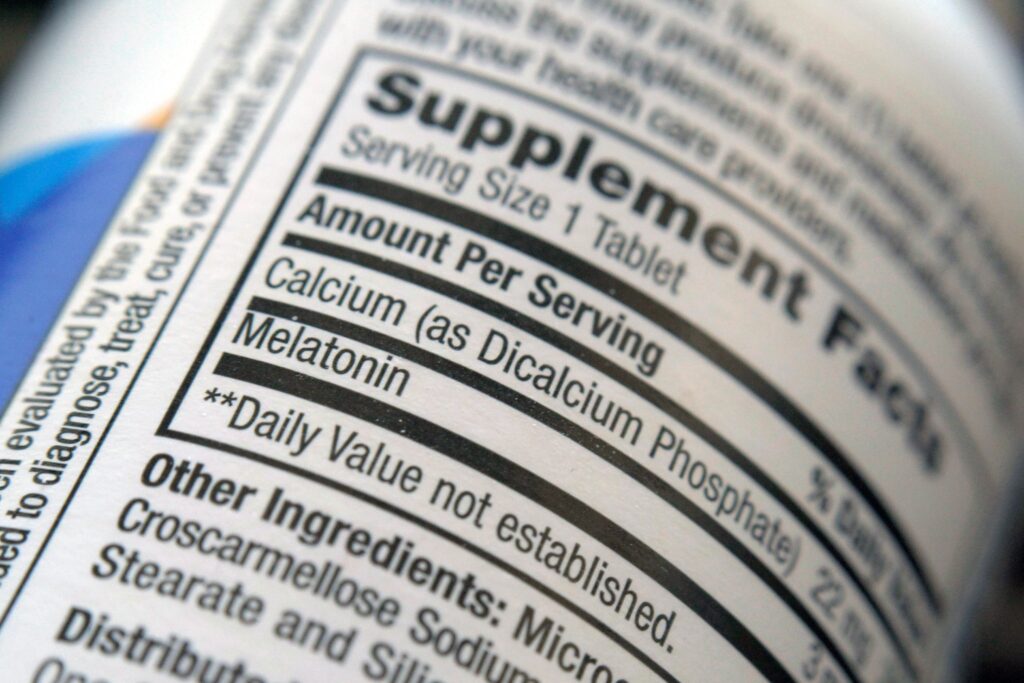
Melatonin use comes with some potential downsides, the most obvious of which is that because it is considered a dietary supplement in the U.S., it is not regulated by the FDA as a prescription medication.
In other parts of the world, such as the European Union, melatonin is only available by prescription with appropriate dosing by a licensed clinician.
Because melatonin is only labeled as a supplement in the U.S., many parents are giving it to their children without the guidance of a health care professional and without first trying non-pharmaceutical therapies for insomnia. And many people use melatonin for undiagnosed sleep conditions that may not warrant its use. It is important to seek medical attention before using any sleep aid, including melatonin.
Another major variable is brand quality. One brand might deliver spot-on doses backed with rigorous testing for quality, while another might have vastly different concentrations than the label claims.
For instance, a 2023 study showed that some brands label a chewable gummy product as melatonin even though it contained no melatonin. Even more disturbing, some brands whose products were labeled as melatonin in the study actually had cannabidiol, or CBD, in them instead.
The same study found that among 30 commercial melatonin products, melatonin content ranged from minus−83 percent to plus-478 percent of the labeled content. And even within a single lot of a given brand, melatonin content varied by as much as 465 percent.
High doses of melatonin in children have not been tested for safety. While reported overdoses are generally associated with mild symptoms, some children have been hospitalized.
Because melatonin is not regulated as a drug in the U.S., it is a good idea to check consumer sites to find reliable brands and to look for USP verification, a third-party testing program performed by an independent nonprofit organization.
It is imperative that parents keep melatonin out of the reach of children, particularly gummies, which may appear tasty to a child. There have been numerous reports of kids mistaking supplements in the form of gummies — melatonin or otherwise — for candy, leading to overuse and overdoses.
Melatonin use for insomnia in children and adolescents
When used correctly — meaning the right brand, right dose, right reason and with guidance from a health care professional — melatonin can be used safely to help support treatment of insomnia.
Research strongly points to the safety of melatonin as a sleep aid for use in children, along with other treatments for disorders of insomnia and circadian rhythm disorder.
In particular, there is a solid base of studies about the safety and effectiveness of melatonin use in children with neurodevelopmental disorders such as autism spectrum disorder and attention-deficit/hyperactivity disorder, or ADHD. Many clinicians who care for children with autism and ADHD recommend the use of melatonin after trying other behavioral strategies for insomnia.
The most trustworthy evidence for the use of melatonin in children and teens comes from rigorous scientific studies called randomized controlled trials. In one trial of 125 children and teens — the majority of whom had autism — melatonin use increased total sleep at night by nearly 60 minutes.
Another comparative study of 275 children and teens demonstrated that those who received melatonin slept about 22 minutes longer, on average, compared with those in the placebo group.
While long-term studies are still limited, one study of children with autism who took nightly prolonged-release melatonin for two years found no significant changes in body mass index or puberty timing.
When using melatonin, the timing and dosage is critical for efficacy and safety. Doctors recommend taking melatonin 30 minutes before bedtime for insomnia.
The International Pediatric Sleep Association recommends the following dosages according to age:
- Age <2: not studied well and not recommended without supervision from a clinician.
- Toddler (ages 2-3 years): up to 1 milligram, or mg.
- Preschool (ages 4-5): up to 2 mg.
- School-age (ages 6-10): up to 3 mg.
- Older school-age and adolescents (ages 11+): up to 5 mg.
This article was produced in collaboration with The Conversation, a nonprofit news organization.
Sally Ibrahim, MD, is an associate professor of pediatrics at Case Western Reserve University.
The post I’m a pediatric sleep doctor. Here’s what I tell parents about melatonin. appeared first on Washington Post.