Stephen Slivinski is a senior fellow at the Cato Institute.
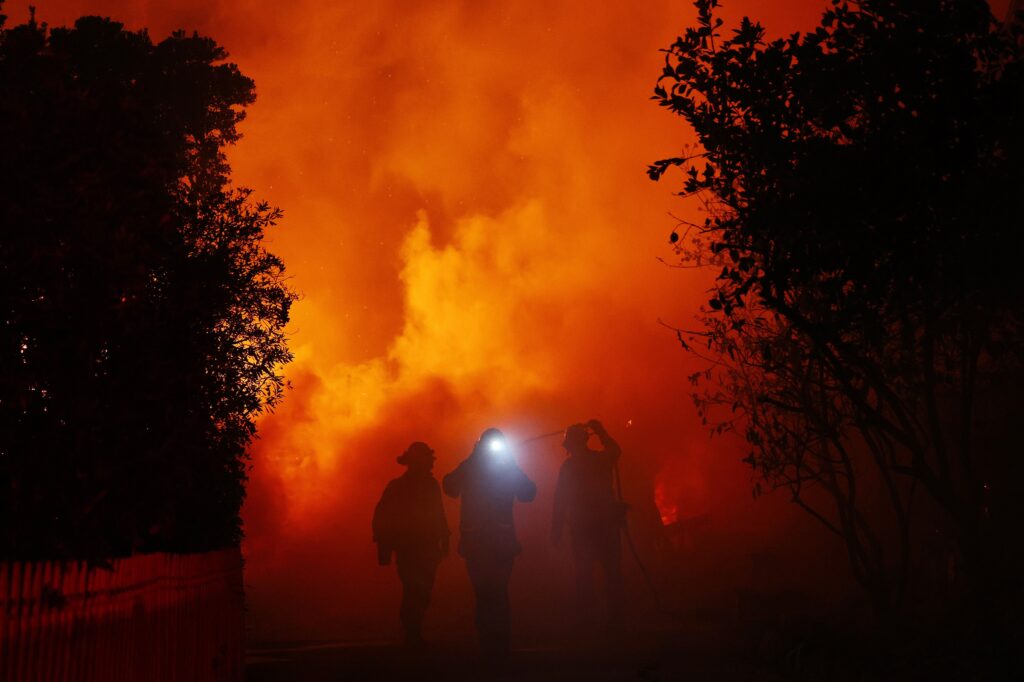
Earlier this year, the Palisade and Eaton wildfires near Los Angeles were fought by an army of over 4,000 California state firefighters, alongside thousands of other support personnel. Within that number were more than 780 inmates from state prisons enrolled in the state’s “fire camp” program, which has been operational since World War II.
This program provides essential assistance to frontline wildfire containment efforts, as well as providing valuable training to inmates looking for skills — including first aid — they can use to help find work after finishing their sentences.
But those released from California prisons would, for many years, run into one of several brick walls. Some couldn’t be hired as a firefighter at municipal-level firehouses because of their prison records. Others might have qualified for firefighter certification but couldn’t obtain an EMT license, a requirement for many firefighter jobs. State laws required the rejection of applicants who served prison time for a felony anytime in the prior 10 years even if they had already completed their sentences, hadn’t reoffended and had already completed the rigorous training — funded by California taxpayers — to become firefighters. These licensing prohibitions even applied to some nonviolent drug misdemeanors.
Reforms enacted in the state have begun to change that. Graduates of the fire training program can now be considered for an expungement of their criminal record, obviating many of the barriers. The process was complicated and lengthy, but a new law enacted in October places those graduates in that expungement pipeline automatically and puts the process on a faster track.
Similar barriers still exist in other states. Florida laws allow for programs that “train and certify inmates as firefighters,” but automatically prohibits firefighter applicants who have committed a crime punishable by at least one year in prison. Montana’s prohibition applies to those “who have been convicted of a crime for which the applicant could have been imprisoned in a federal or state penitentiary,” despite the state’s use of inmates to fight wildfires. Denver decrees lifetime disqualification for any felony, preventing former inmate firefighters from being hired in the city.
Yet, when it comes to reintegrating into society, acquiring and maintaining employment is critical. The Justice Department’s Bureau of Justice Statistics estimates that about 66 percent of those released are rearrested within three years, and 82 percent are rearrested within 10 years. One of the strongest predictors of whether someone will avoid reoffending or not is if they have obtained gainful employment. And one of the most prominent barriers to getting a job is state occupational licensing laws.
These laws require a government-granted permission slip to work in occupations, a license that can require thousands of hours of training and several years to obtain. The economic harm these laws do is well-documented and the policy consensus spans both sides of the political spectrum.
Reoffending largely occurs within three years of release. Opening doors to the labor market as quickly as possible is crucial. But significant barriers to employment remain for ex-inmates even after they finish their prison sentence. A number of states have maintained “good character” provisions for years in their licensing laws. Boards in five states can disqualify applicants based on a felony, even if it’s unrelated to their field. Boards in 30 states can deny licenses based on an arrest that did not lead to a conviction. These laws allow licensing boards to decide for themselves how heavily to weigh a criminal record but provide little guidance and allow the board to interpret their power very broadly.
All of these barriers apply to a wide swath of job types, not just firefighters. So perhaps it’s not surprising that, in analyses over the past decade, researchers find substantial increases in recidivism rates within three years in states with the highest barriers to entry into the overall labor market when compared to states that have lower state-mandated licensing requirements and weaker “good character” laws.
The weight of the evidence on this issue has spurred many states to act. The Collateral Consequences Resource Center tracks these reforms. Some states, such as Arizona, have removed their “good character” language altogether. Others, such as Michigan, have put restrictions on character assessments.
The most straightforward reform would be to simply take the criminal history off the table except in cases where the committed crimes are substantially related to the occupational license being sought. Perhaps somebody with a felony DUI conviction should be prohibited from driving a school bus, but that’s not necessarily a reason they shouldn’t become a construction contractor.
The reforms of the past few years have been a good start, but more work remains. Roughly 70 million Americans have criminal records, and nearly one-third of the workforce is covered by laws that require “good character.”
Expanding fast-track automatic expungement is useful, and eliminating a licensing board’s power to hinge license applicant success on subjective character assessments is too. Even more broadly, the next frontier of licensing reforms should restrict the power of licensing boards to make arbitrary decisions, not just ones related to criminal records. All aspiring workers can benefit, but perhaps none more than those who most desperately need that open door.
The post The case against ‘good character’ provisions appeared first on Washington Post.