ZURICH — Iranian and American negotiators gave themselves a 60-day sprint to go from a loosely defined Memorandum of Understanding signed with a felt-tipped flourish by President Donald Trump on Wednesday to a final, full-fledged peace accord.
Make that 59 days. The chaos that has ensued in spite of the ticking clock makes clear how much uncertainty remains before the war is fully resolved along with other complex issues including the future of Iran’s nuclear program.
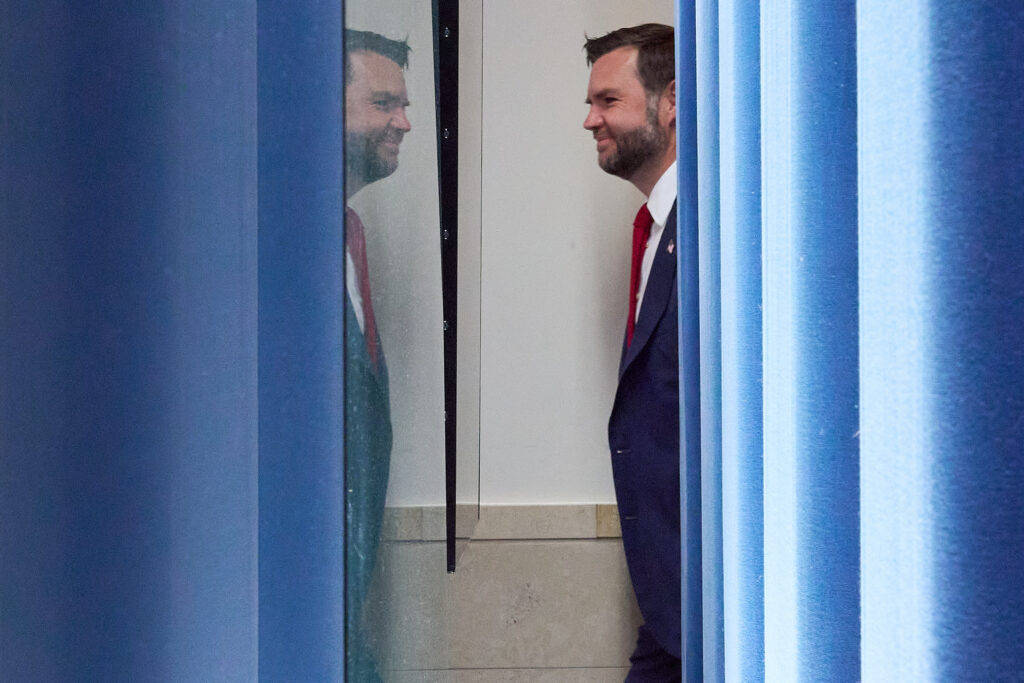
Scores of diplomats, journalists and activists gathered in Zurich on Friday for the kickoff of the next phase. There was supposed to be a signing ceremony featuring Vice President JD Vance and Iranian Foreign Minister Abbas Araghchi, followed by negotiating teams settling in at Bürgenstock, a Swiss resort that is a familiar setting for this kind of diplomacy.
Instead, Iran called off its delegation, citing Israeli attacks in southern Lebanon. Then Vance called off his, hours before he was to depart Washington. By midmorning, the Swiss government confirmed there would be no talks here at all Friday and no word when they might begin.
“The logistics of these negotiations have never been simple or predictable,” a White House spokesperson said late Thursday following the decision to delay Vance’s trip.
Mediators who have nursed the talks for months said they were scrambling to keep the rift from derailing the broader process.
By Friday afternoon in the Middle East they appeared to have restored a truce between Israel and Hezbollah, the Iranian-backed militant group. And by Saturday morning plans appeared to be in motion for a talks to proceed in a smaller format between Araghchi, Trump’s envoy, Steve Witkoff, and the president’s son-in-law, Jared Kushner — though Israeli strikes overnight killed at least five people in southern Lebanon, raising another potential stumbling block.
“Negotiations are ongoing through mediators,” Iran’s semiofficial Tasnim News Agency reported on Saturday. “If conditions for starting talks are met, an announcement will be made.”
“Pakistan is in touch with Tehran and D.C. and is trying to remove these hiccups,” a Pakistani official familiar with the talks said Friday, speaking on the condition of anonymity to discuss sensitive deliberations. “The main part these two parties have to play is to abide by the MOU, and that’s the way forward. However, given the complicated history and the nature of ties between the two sides, and then this war, one can’t rule out hurdles.”
Mediators and analysts say neither Washington nor Tehran wants the peace process to collapse completely.
The White House has made clear that its priority is to open the Strait of Hormuz and get oil tankers moving. And Iran, while willing to champion Hezbollah as talks get underway, is unlikely to walk away completely from a deal that lifts sanctions, leaves its leadership intact and promises billions in unfrozen assets.
Many analysts — including Israelis and even some congressional Republicans — have said that Trump appears to have gotten a bad deal, and they have criticized the 14-point MOU as demanding far too little of Iran.
“As unstable and combustible as the Lebanon theater is, it most likely won’t dramatically alter the strategic calculus of Iran,” said Bilal Saab, senior managing director of TRENDS US, a Washington-based think tank, and a former Pentagon official in the first Trump administration. “The MOU is too good for Iran to give up for Hezbollah.”
The two sides also deeply distrust each other, leaving little confidence that the agreement will be upheld over the long term, even if they manage to agree on an implementation plan.
Iran, in particular, sees Trump as the destroyer of other agreements it has reached with the West, or was in the process of making, and Switzerland has often been the venue.
Araghchi, the foreign minister, himself was involved in talks here last winter that were reportedly making progress on limiting Iran’s nuclear program. Days later, Trump abandoned those negotiations and ordered the bombing of Tehran, killing Iran’s supreme leader, Ayatollah Ali Khamenei, and many other senior officials.
Araghchi also participated in talks with the Obama administration in Geneva in the fall of 2013 and in Zurich in January 2015 that led to a nuclear deal with the United States, Russia, Germany, France, Britain and China, only to have Trump scuttle it two years later.
The Iranians view Trump as unreliable and erratic, said Ali Vaez, an Iran specialist at the International Crisis Group, who was in Switzerland on Friday and said he had spoken to senior Iranian officials Friday morning.
This time, the Iranians are hoping that Trump’s experience of launching a war against them that failed to achieve many of its goals and that has wreaked political and economic damage in the U.S. will make a difference.
A major goal for Tehran is holding Trump responsible for forcing Israel and its prime minister, Benjamin Netanyahu, to abide by terms of the agreement even though Israel is not a signatory to the pact and has denounced it.
“They see this as a test of whether Trump is willing to rein in Netanyahu, because at the end of the day Netanyahu could start bombing Iran again two months from now,” Vaez said. “This is why the Iranians insist on this MOU being a proof of concept for their ability to actually negotiate a more comprehensive agreement with the United States.”
Administration officials had wanted the pomp of a formal signing ceremony in Switzerland to elevate the agreement as a diplomatic achievement. Senior leaders, including Pakistani Prime Minister Shehbaz Sharif and other mediators, had planned to attend.
But Trump unexpectedly usurped that moment Wednesday when he put his name to a copy of the document at a dinner the Palace of Versailles outside Paris. Sitting at a flower-and-candle-filled table with French President Emmanuel Macron, Trump signed with his trademark Sharpie.
He handed the paper to Secretary of State Marco Rubio, who was standing behind him, and then pointed down, seeming to say “oil,” and then up: “stock market.”
The planned signing ceremony was downgraded. Sharif and other dignitaries scrapped plans to travel to Switzerland, and the gathering was recast as a high-level negotiating session.
Then on Thursday, Iran said it would not send a team at all, following Israel’s refusal to pull troops from southern Lebanon and continued attacks. Iran described Israel’s actions as a clear violation of the MOU’s first article, which requires “the immediate and permanent termination of military operations on all fronts” by Iran, the United States and “their allies in the current war.”
That night, four Israeli soldiers were killed in an attack by Hezbollah on a tank. The peace deal seemed to wobble, until a renewed ceasefire between Israel and Hezbollah was announced Friday afternoon.
The willingness of Iranian officials to return to the negotiating table seems to hinge on their ability to claim victory in the war — with the country’s hard-line regime having stood up to two of the most powerful militaries on Earth. Not only did the regime survive, it wrought global economic havoc by closing the Strait of Hormuz, cutting off energy supplies, spiking inflation and fuel prices, and threatening to spark a food crisis in some regions.
“One of the reasons that they believe that Trump treated them the way he did was because he thought he could get away with it,” Vaez said. “But now, the alternative is no longer hypothetical, he has tried it and he knows it doesn’t deliver results. It delivers pain.”
Shaiq Hussain in Islamabad, Pakistan, and Mohamad El Chamaa and Suzy Haidamous in Beirut contributed to this report.
The post Chaotic run-up to U.S.-Iran talks signals steep hurdles ahead appeared first on Washington Post.