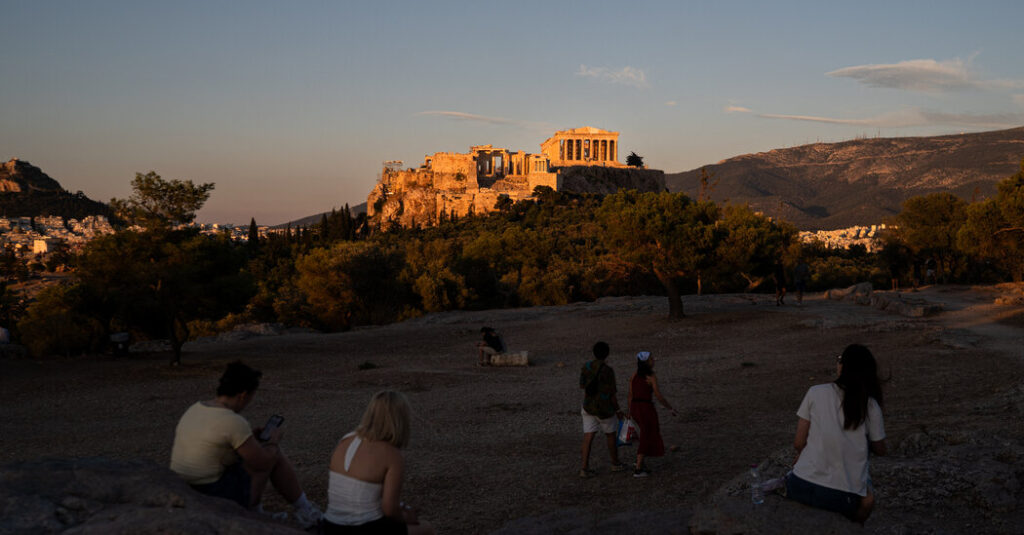
The Parthenon, the grand temple in Athens that is regarded as a pinnacle of Classical architecture, has received a partial makeover.
The western facade of the Parthenon, built in the 5th century B.C., is now in “its most complete form possible for the first time in about 220 years,” the Greek Ministry of Culture announced on Thursday, after restorers added marble slabs to fill gaps in the temple’s western pediment.
Restoration of the pediment began in 2017, according to the Acropolis Restoration Service, part of the culture ministry.
The ancient temple, built to honor the goddess Athena, was made of white marble and lavishly decorated to show off the city’s wealth and power. Two triangular pediments sitting atop its giant fluted columns — one facing west, the other east — used to be full of sculptures of mythical scenes.
Many of those sculptures — including statues of Greek gods and panels depicting centaurs battling humans — were taken around 220 years ago by Lord Elgin, a British aristocrat and ambassador to the Ottoman Empire, which ruled Athens at the time. The sculptures, often called the Elgin Marbles, were later sold to the British government and are now displayed in the British Museum.
The British Museum and the Greek government have been in talks since 2021 over a possible deal to return the sculptures to Greece.
Millions of people each year visit the Acropolis, the citadel overlooking Athens that is home to the Parthenon and other ancient structures. In 2023, Greece started capping the daily number of visitors at the site to curb overcrowding.
The post With Fresh Marble Fillings, the Parthenon Gets a Partial Glow-Up appeared first on New York Times.