This column is from the spring 2026 issue of VICE magazine, THE NOT THE PHOTO ISSUE. Buy it now—or get 4 issues each year sent straight to your door, by subscribing. Read the previous instalment of The Woo here.
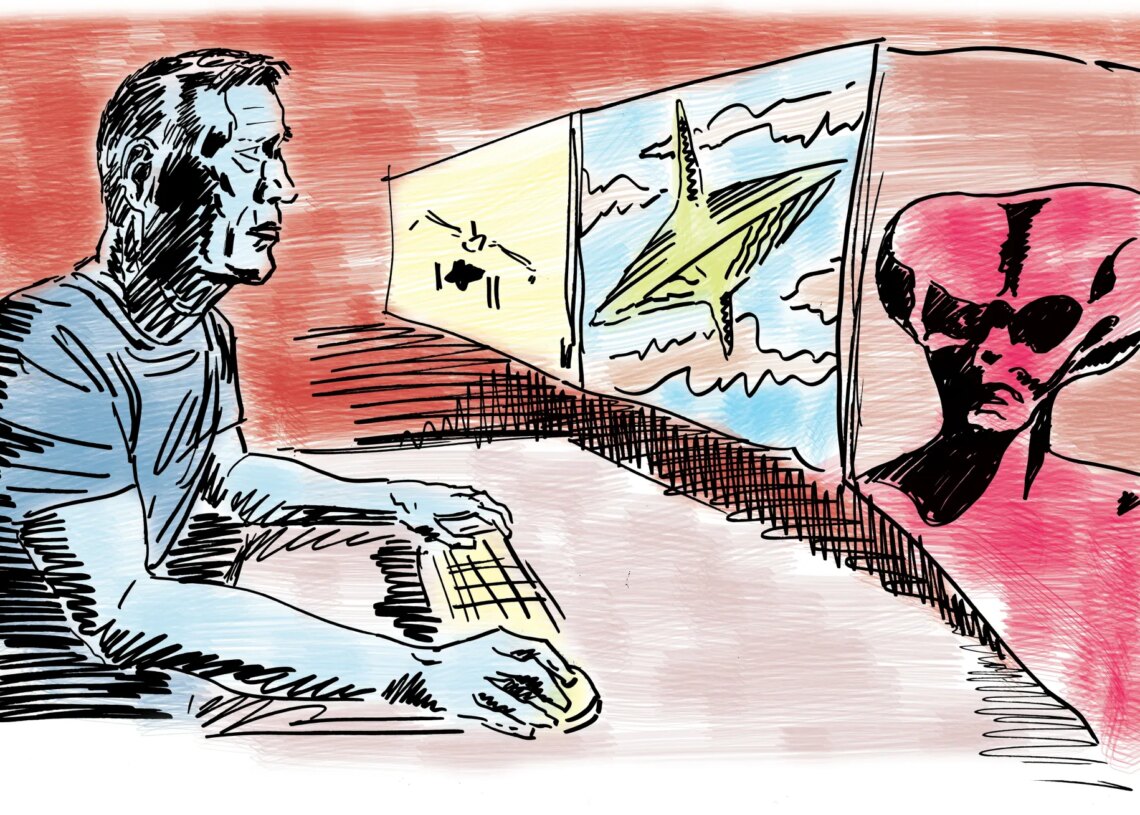
Dwell a while in the parts of the internet haunted by those with an interest in the unexplained, and you’ll quickly hear about Mick West. The former video game programmer turned conspiracy myth-buster has become a folk hero to cynics and skeptics and a villain to anyone convinced that there is, for example, a big factory pumping out spaceships beneath the Atlantic Ocean.
The UAP community on Reddit has drawn its conclusions on Mick. To them, he is an asset, a willing stooge for the three-letter agencies, a deep-state janitor mopping up their evidence with anti-pixelation software and a flashy bit of maths. But talking to Mick doesn’t really feel like that. It feels like the calmest guy in the comments section is just softly guiding you toward the various holes in your logic. But then, isn’t that exactly how the best operatives do it…?
I sat down with the paranormal internet’s designated adult to test his infinite patience.
VICE: Before we get into the veracity of candid UAP snaps, true or false: You were somehow involved in the creation of the Tony Hawk video games?
Mick West: I was one of the owners of the studio, Neversoft. I was Technical Director, and was responsible for the player control and some of the game design of the original series. Basically, all the thumb twiddling.
How did you go from coding kickflips to debunking alien hoaxes?
I was always reading the Fortean Times and watching shows like Mysteries of the Unexplained type stuff on TV. I was getting my pilot’s license and started reading about chemtrails, which led to conspiracy theories and UFOs. UFO sightings are such a fun thing to analyze because you can actually make a difference—you can actually figure out what these things are. Individual cases have been solved by me and people on my forum, Metabunk.
So let’s be serious for a minute. Are you, or have you ever been, an operative of a secret agency—government-run or otherwise—tasked with spreading misinformation about chemtrails, 9/11, and the UAP phenomenon on the internet?
Absolutely not. This accusation goes back many years, to when I was originally looking into chemtrails. People thought, ‘How can this guy not see what’s in the sky?’ Or, ‘How can he not see the Earth is flat? He must be a government agent.’ But the truth is I just enjoy doing it.
You enjoy debunking?
It’s a skill set I have. Investigating these images and videos is basically the same as the computer programming I did for years, the technical aspects are all math. I’m interested in solving puzzles. Ninety percent of programming is fixing bugs—if you don’t fix the bug, it’ll come back to bite you. It’s a little bit of a compulsion, a little bit of OCD. When I read something on the internet or from the government saying something that is wrong—saying “this image is a UFO” or whatever—I want to fix it.
“I think people get disheartened looking at visual evidence. And so we’re seeing the shift from a focus on the visual to a focus on the narrative, a focus on testimony”
Why do people bother creating false images?
People enjoy fooling each other. Occasionally you’ve got cases where people are doing it to promote their narrative, for profit; they have a TV show or something like that.
For those who want to believe, or those that just fancy playing at being Dana Scully, any rules of thumb for analyzing images of alleged UAP?
First, where does the image come from? Consider the source. If you’re seeing something that’s anonymously posted on TikTok, you’ve got zero reason to believe it’s real. If it’s an image or video that’s actually attributed to a real person, you can move forward.
The next thing to consider: Is it too good to be true? Often, in fake photos, you get things like the shadows being in the wrong direction, or it’s in an area where, if it did actually happen, a lot of people would’ve seen it. There was one alleged sighting recently, which occurred at Cheyenne Mountain at Colorado Springs, a big military base. Four people said they saw this giant craft hovering over the mountain, the size of a football field. You look at it on a map and at least 100,000 other people would’ve been able to see a craft that size.
A lot of UFO analysis is simply recognizing things. Show me a picture of a fly going across a video frame, and I’ll tell you it’s a fly. Someone else might tell you it’s a giant UFO, because they haven’t seen abundant footage of flies like I have.
I guess AI is making all this tougher?
I think hoaxers will use AI for profit. I think AI images are also educating people as to how easy it is to create fakes, causing them to be more skeptical and demand stronger evidence.
But we know most people reporting UFOs are honest. They’re mostly trying to recall what they saw. If you have the two things together—a person that says “I saw this amazing thing” and also the video of that amazing thing—then that is going to be the gold-standard base of evidence required for a UFO case, going forward. It’s so easy to misremember things, and it’s so easy to fake things, but it’s difficult to present testimony and image together in a complimentary way.
Well, unless you subscribe to a [French UFO researcher] Jaques Valle-style explanation: that there is a psychic element at play which is so strong it alters people’s perceptions of reality. Then there’s less of a burden on experiencers to present verifiable evidence.
In many ways, it feels like we’re in the post-evidence phase. In fact, a lot of the UFO enthusiasts just will actually say this—that we’ve gone past the stage where we need verifiable evidence, because we already know it’s happening. Therefore, why are we even bothering looking at these videos? We should just be pressuring Congress for disclosure… which is complete nonsense. They’re not in the post-evidence stage. They’re still in the evidence-free stage. In some ways, I think it’s a reaction to the debunking that’s being done. I think people get disheartened looking at visual evidence. And so we’re seeing the shift from a focus on the visual to a focus on the narrative, a focus on testimony.
Why is it important to debunk these images?
Seeing is believing. Visuals short-circuit skepticism and harden beliefs. Younger audiences are increasingly aware of AI manipulation and quicker to doubt what they see, but the problem is still growing. What we need, especially in the media, government, and the military, are consistent standards, training, and habits of verification. This isn’t just about solving individual images. It’s about preventing false visuals from reinforcing false narratives and shaping public opinion and policy.
This column is from the spring 2026 issue of VICE magazine, THE NOT THE PHOTO ISSUE. Buy it now—or get 4 issues each year sent straight to your door, by subscribing. Read the previous instalment of The Woo here.
The post The Debunk Unc: Myth-Busting Mick West Is Hunting Down UFO Hoaxers appeared first on VICE.