Ryan Fayhee is an attorney based in D.C. and serves on the board of the Foley Foundation, which advocates for the freedom of Americans held hostage abroad.
The 14-point memorandum of understanding to end the war between the United States and Iran has a notable absence: any provision addressing the fate of at least six U.S. citizens held in Iranian prisons. As a 60-day period begins for negotiations toward a permanent settlement, the White House has an opportunity to build on President Donald Trump’s past success in gaining the release of Americans wrongfully detained by foreign powers.
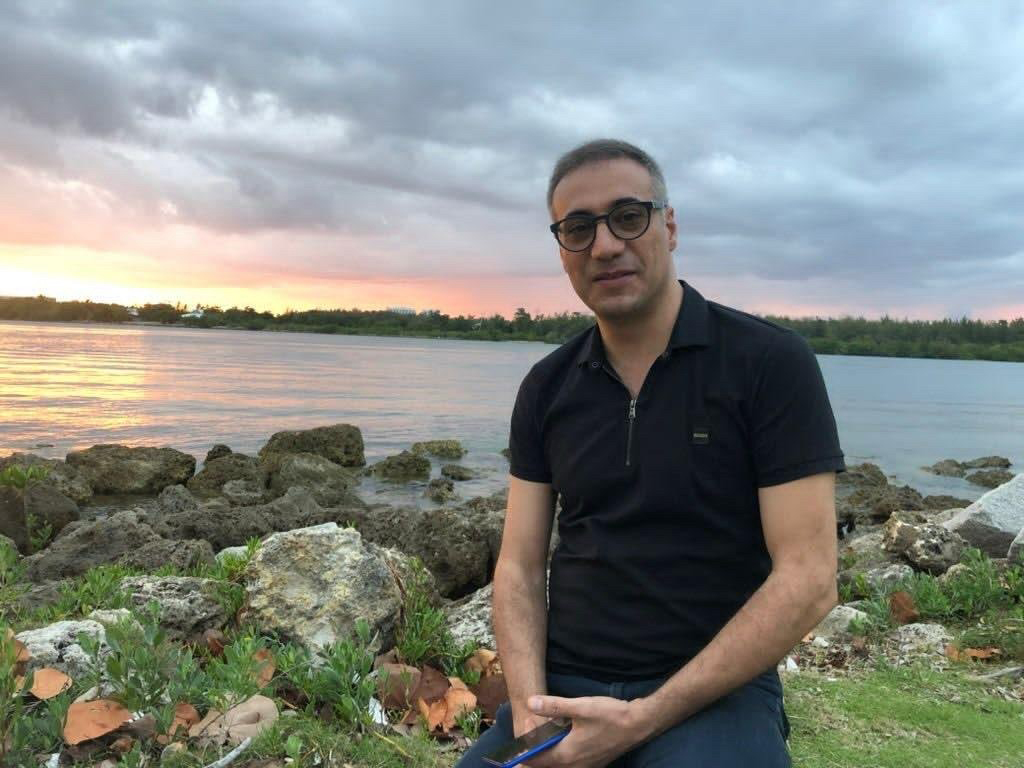
One such detainee is Reza Valizadeh, an Iranian American journalist. Arrested in September 2024 while visiting family in Iran, he is serving a 10-year sentence in Tehran’s Evin Prison on vague and spurious charges of “collaboration with a hostile government.” Valizadeh had spent nearly three decades reporting on Iranian and Middle Eastern affairs, including 10 years with Radio Free Europe/Radio Liberty.
Valizadeh was committed to the American principle that a free and flourishing press is vital to a healthy society. In holding him, the Islamic Republic of Iran is sending a clear message: Honest and accurate reporting it doesn’t like will be severely punished. He is my client, but I am unable to communicate with him directly now because the Iranian government shut down internet access throughout the country as large protests broke out earlier this year. However, he manages to send voice notes to contacts in Iran through an encrypted messaging app, and those notes are conveyed to me.
From inside the notorious Evin Prison, Valizadeh recently noted that the U.S. and Britain transferred to Iran dozens of detained sailors and fishermen through Pakistani intermediaries. “The U.S. government could have demanded our exchange in return,” he said in a voice memo. Valizadeh said the U.S. could have insisted on improving the conditions under which he and the others are held. “At least demand real medical services for us,” he said to reduce some of the physical pressure and mental torture.
His messages have revealed the quiet devastation of captivity. He feared for the safety of his many sources in the country when Iranian authorities pressed him for passwords to his devices after his arrest.
Valizadeh went silent for months after the regime’s internet blackout and perhaps also because of threats made against his family in Iran. When I finally received a new voice note, his descriptions of the deteriorating conditions inside Evin were disturbing. He spoke of prolonged food deprivation, solitary confinement, denial of medical treatment and routine psychological torture. He described authorities reinforcing cells with sheet metal against Israeli and U.S. bombs, the air made difficult to breathe amid dust and rubble from nearby airstrikes.
Yet even in this moment of extreme privation and isolation, Valizadeh speaks also about the others — Americans and dual nationals — held alongside him. Kamran Hekmati, a Jewish Iranian American, is imprisoned in Evin for visiting Israel more than a decade ago for his son’s bar mitzvah. Hekmati suffers from bladder cancer. We are aware of at least four other Americans held in Iran whose families wish to keep their names private for fear of retaliation.
Imprisoning foreign nationals has been a central tool of Iranian foreign policy since the Islamic Republic targeted the U.S. in 1979 by seizing more than 50 diplomats and embassy staff members and holding them for 444 days. In that light, the U.S. commitment to secure the release of Americans held in Iran is not only a humanitarian imperative but a test of diplomacy with Iran.
The two sides have 60 days to reach a final agreement. If American negotiators can secure a lasting agreement on thorny issues such as the Strait of Hormuz and nuclear weapons, surely they can win freedom for Valizadeh and other Americans.
One day, I hope Valizadeh will be able to speak directly. He has already mapped out reporting for when he is freed, ready to tell the story of how he and his fellow Americans were brought home.
The post U.S.-Iran peace deal has a critical omission appeared first on Washington Post.