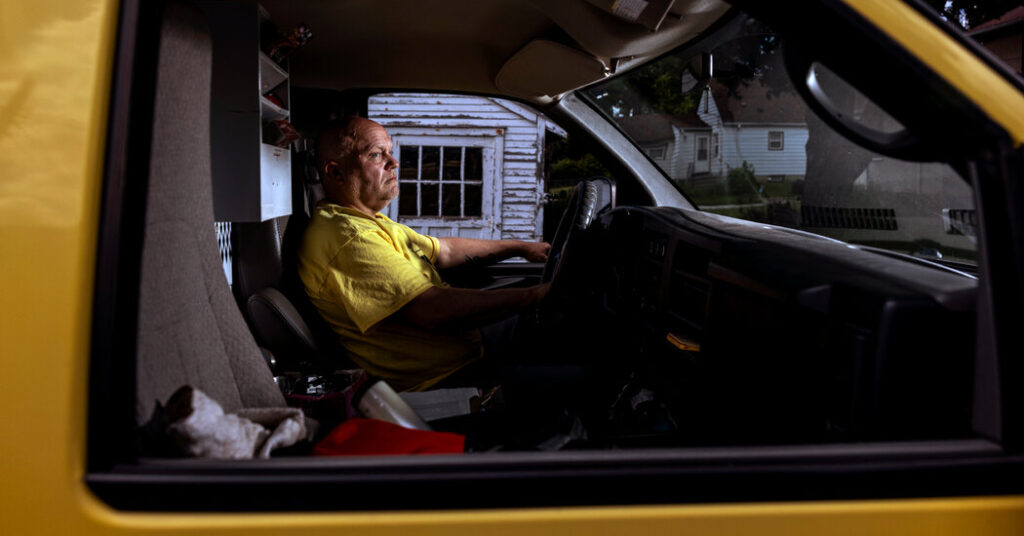
On the night of his arrest, Paul Johnson says he lay for hours in a hospital bed in Minneapolis, woozy from the pain pills and addled from the head blows he claims he received from federal agents. He was alone, he said, unable to communicate with anyone and strapped in place by the shackles on his leg.
Waking on a January morning, he tried to call his wife to tell her he had been taken into custody during an immigration protest, but the agents would not let him, according to court papers filed last week. When a nurse tried to sneak a phone into his room, he said, the agents stopped that too.
Eventually, careful not to dislodge the I.V. in his arm, Mr. Johnson, a longtime progressive activist, reached out with his free leg and managed — with his toes — to hook the cord of a nearby landline. He dragged the receiver toward himself, he said, and quietly placed a call.
By the end of the day, his lawyer finally arrived, finding him in a state of panicked isolation. “Mr. Johnson began sobbing from relief that someone had come to see him,” the lawyer later wrote.
On Thursday evening, after The New York Times repeatedly over four days asked the Justice Department and the Department of Homeland Security about Mr. Johnson’s case, federal prosecutors suddenly moved to dismiss the charges he faced of assaulting federal officers during the protest. In a one-page filing in Federal District Court in Minneapolis, the prosecutors also said they would investigate the allegations of misconduct he had raised.
“I’m ecstatic,” Mr. Johnson said in a brief interview with The Times. “I hope there’s actual action behind these words.”
Mr. Johnson’s story reflects what critics say is the aggressive nature of the Trump administration’s response to those who have protested its immigration crackdown, especially in Minnesota, where hundreds of heavily armed and masked federal agents were sent this winter. But even among the many troubling tales that have emerged from the state, his claims are particularly startling, including allegations that federal agents assaulted him after he followed them in his van and then, after arresting him, left him shackled to a bed for days — except for bathroom breaks and medical treatment — before he was even charged.
The weekslong action in Minnesota, known as Operation Metro Surge, led to the detention of more than 4,000 immigrants, according to officials. But it also resulted in the violation of scores of court orders, the dismissal of criminal cases against more than a dozen other people accused of assaulting agents during protests and the deaths of two demonstrators — Renee Good and Alex Pretti — at the hands of federal agents.
In their initial charging document filed in January, prosecutors said Mr. Johnson approached the immigration agents one evening that month with a baseball bat in hand and later sprayed them with a chemical irritant.
Those charges, first filed as a felony, were quickly reduced, without explanation, to a misdemeanor.
Because Mr. Johnson spent much of his time in the Hennepin County Medical Center alone and unable to receive visitors, it was not possible to independently verify each of his claims. Justice Department and Homeland Security Department officials did not respond to multiple requests for comment about his stay in the hospital, as each agency referred the issue to the other.
On Thursday, after the dismissal motion was filed, the Justice Department denied that it had asked to end the case because of questions from The Times.
Mr. Johnson, however, remains daunted by his ordeal, erupting into sobs several times during the interview.
“I had no idea the entire time I was there what was actually going on,” he said. “I was just thinking, ‘I’m in here on my own, and if anyone is going to protect me, it would have to be myself.’”
The court papers filed last week by his lawyer, Kevin Riach, laid out the account of Mr. Johnson’s five-day stay in the hospital and accused the federal agents who arrested him of “outrageous government conduct.” Mr. Riach claimed that the agents had “manufactured a dangerous situation designed to develop a false basis to arrest Mr. Johnson” and then held him “incommunicado” at the hospital for days.
From the moment President Trump began his expansive effort to round up immigrants across the country, the department has forcefully pursued criminal cases against demonstrators who have protested the moves in Minneapolis and other cities. On Tuesday, for example, prosecutors filed conspiracy charges against 15 members of what they described as antifa groups in Minneapolis, accusing them of injuring or impeding federal officers while opposing immigration enforcement efforts.
In the rush to bring indictments, however, several cases accusing protesters of going after federal agents have, like Mr. Johnson’s, failed as judges have questioned the evidence presented. Some have pointed out that accusations made in criminal complaints were later contradicted by video footage.
Mr. Riach has said that almost half of the 36 cases filed in Minnesota accusing protesters of assaulting agents during Operation Metro Surge have been dismissed in the past few months. In a recent case in Chicago, prosecutors threw out the charges against four protesters accused of interfering with agents at an Immigration and Customs Enforcement facility after a judge discovered an extraordinary series of grand jury violations.
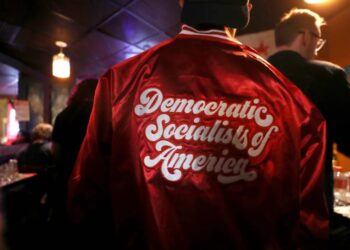
Mr. Johnson has been involved in the protest scene in Minneapolis since at least 2018, when his best friend was fatally shot during a mental health and wellness check by the police. Two years later, he joined the demonstrations against the killing of George Floyd by the police, and in 2021, he ran for mayor of the city on the Humanitarian-Community Party line, earning a couple of hundred votes.
So it was hardly surprising that he joined the protests against ICE this winter when thousands of agents arrived in Minnesota. Like scores of other demonstrators, he started following the agency’s vehicles through immigrant communities on the north side of the city, alerting people to their presence.
On Jan. 22, he recalled, he was trailing two ICE trucks that had been following some young Black men then abruptly veered from their targets and followed him instead.
Mr. Johnson said he pulled his van into the parking lot of a nearby convenience store, where agents swiftly boxed him in. They approached him from both sides, he said, demanding that he step out of his van. Videos reviewed by The Times show agents shattering his windows and punching him repeatedly.
Mr. Johnson was taken first to the B.H. Whipple Federal Building, which served as ICE’s home base, and then to the Hennepin County Medical Center.
At one point, he woke up, he said, and found federal agents taking photos of him in his hospital gown. When he came to in the morning, he discovered that one of his legs had been shackled to the bed.
He immediately asked to call his lawyer but said that the agents would not let him. After they stopped a nurse from giving him her own phone, he recalled, he toe-tapped the landline from its housing and managed to call his wife, Allison Reinke-Johnson.
She had spent a sleepless night trying to find him after seeing a video clip of his arrest, around 7 p.m., on a group chat of ICE protesters. By the morning, she was in a state of panic when, out of the blue, her husband called at 8 a.m.
“All he said was, ‘I’ve been kidnapped by ICE; I’m at H.C.M.C.; call a lawyer,’” Ms. Reinke-Johnson recalled. “I breathed a huge sigh of relief at least knowing where he was.”
But while Mr. Riach was able to talk with Mr. Johnson that same evening, neither he nor Ms. Reinke-Johnson were allowed back into his room until he was finally discharged on Jan. 27, court papers say. He spent those five days shackled to his hospital bed with armed guards at his door, he said, even though the criminal complaint accusing him of assault was not formally filed until Jan. 26.
Until the motion to dismiss had been filed, Mr. Johnson was fighting his case despite having suffered, by his own account, a traumatic brain injury and serious damage to his shoulder.
He says he no longer has the stamina to work his former job as a general contractor and has instead started a hot sauce company, selling a special flavor called “ICE OUT.” The scars on his body are not the only ones left behind from his encounter with the immigration agents.
“Now that it happened to me,” he said, “I realize that anyone could be next.”
The post ICE Protester Says He Was Shackled in Hospital for Days After Agents’ Attack appeared first on New York Times.