This week on Uncanny Valley, our hosts discuss the meltdown that has been recently unfolding at Meta and what it says about the company’s relentless ambitions in the AI race. They also dive into the leaked messages and names of an invite-only group cofounded by billionaire tech founder Peter Thiel, and how Sam Bankman-Fried is now actively seeking a pardon from the Trump administration. Plus, they share their impressions on SpaceX acquiring Cursor and the latest on the negotiations between Anthropic and the government.
Articles mentioned in this episode:
- Meta CTO Andrew Bosworth Admits the Company’s AI Reorg Was ‘Atrocious’
- ‘Tell Him He’s a Piece of Shit’: Meta’s New AI Unit Is a Total Mess
- Leak Exposes Members of Peter Thiel’s Secretive ‘Dialog’ Society
- Anthropic Is Still at Odds With the White House Over Claude Fable 5
You can follow Brian Barrett on Bluesky at @brbarrett and Zoë Schiffer on Bluesky at @zoeschiffer. Write to us at [email protected].
How to Listen
You can always listen to this week’s podcast through the audio player on this page, but if you want to subscribe for free to get every episode, here’s how:
If you’re on an iPhone or iPad, open the app called Podcasts, or just tap this link. You can also download an app like Overcast or Pocket Casts and search for “uncanny valley.” We’re on Spotify too.
Transcript
Note: This is an automated transcript, which may contain errors.
Brian Barrett: Hey, this is Brian. Before we start, two quick things. If you’ve been enjoying listening to the show, we would appreciate it if you took a second to rate it in your podcast app of choice. It really helps us reach more people. And second, if you have any questions related to tech, privacy, or politics that you would like me, Zoë, and Leah to take on, now is the time to submit them to [email protected]. It doesn’t matter how big or how small, we want to hear from you and get you answers. OK, on to the show.
Zoë Schiffer: Welcome to WIRED’s Uncanny Valley. I’m Zoë Schiffer, director of business and industry.
Brian Barrett: I’m Brian Barrett, executive editor.
Zoë Schiffer: Today on the show, we’re talking about the dysfunction in Meta’s newly formed AI unit and why it’s been driving employee morale, which was already very, very low, even further into the ground.
Brian Barrett: We’ll also break down the recent online leak that shed light on Peter Thiel’s invite-only group, Dialog, more than 200 names of high profile people in government, tech, academia, beyond are listed in the documents as members and guests of this secretive society, not to mention a look at what they talk about behind closed doors.
Zoë Schiffer: And it’s a busy week for controversial figures because we’ll also get into how the former cryptocurrency founder and now convicted felon, Sam Bankman-Fried, is not only trying to make his case to get a pardon from the Trump administration, but planning a potential comeback.
Brian Barrett: And a bit later in the show, we’ll talk about SpaceX’s acquisition of Cursor and the latest on Anthropic’s efforts with the Trump administration to get their latest models back online.
Zoë Schiffer: Brian, I think we have to get started with the complete mess and mayhem that is going on inside Meta because the company—
Brian Barrett: It’s bad.
Zoë Schiffer: It’s bad. It’s so bad. People are not happy. Just to set the scene, the company has been laser focused on trying to catch up and maybe win the AI race. It has poured a ton of money into creating a new AI unit, Meta Superintelligence Labs, and they’ve invested a ton in AI infrastructure, they’ve released new models—that’s been a little bit bumpy—but more recently, the company has reshuffled its staff in favor of prioritizing AI. During the company’s most recent round of layoffs last month, about 7,000 people were transferred to work on teams focused on AI. One of these teams was Meta’s applied AI engineering unit, which basically supports the work of the people who are in Meta Superintelligence Labs, which is the super fancy AI lab. And perhaps it’s an understatement to say things have not gone smoothly at all.
Brian Barrett: Just to set the scene too, so you work at Meta, about 8,000 employees were let go as part of that round, right?
Zoë Schiffer: Yes, exactly. 10 percent of the company.
Brian Barrett: And then another 7,000 scattered to various AI units, including this one Meta applied AI unit, which people hate. They have been—in dramatic fashion too. A source that we talked to called it “the Gulag.”
Zoë Schiffer: They did say that.
Brian Barrett: Which seems a bit much. But last week we learned during an employee-only meeting for the Meta applied AI unit, someone interrupted the call to say that they were “being the company’s (beep).” The same person then asked people leading the call to write to a specific Meta AI executive and, “Tell him he’s a piece of (beep).” We have both heard this recording, Zoë.
Zoë Schiffer: Yes, we have, many times.
Brian Barrett: Yes. And as much as I enjoy the interruption, I even more enjoyed the deafening silence immediately after.
Zoë Schiffer: Yeah, that was rough, and there’s two things to say about this. One is that one of the reasons that people are really upset is that the work they are being asked to do they perceive as being very menial. Meta basically took a bunch of engineers who, at least in their telling to us, were working on interesting, exciting projects, and said, “Hey, you now work in this other team, and your projects are basically solving problems on behalf of an AI. If an AI can’t do something, you help it do it.” You’re doing what essentially sounds like post-training to fine-tune a model and improve it for specific purposes. Employees said things like, “It’s not like this work is difficult; in fact, it is that the work is very not challenging. It’s chill, but suddenly I have no purpose in life. It feels like I’m just given these random tasks. I don’t have agency anymore.” And the other thing about it, which you and I have talked about, is employees didn’t have a choice about joining this team.
Brian Barrett: It’s people who had joined Meta because in some cases I’m sure honestly believed in the mission of social media apps that can connect billions of people, whether you or I believe that that higher mission still holds at Meta, people presumably were there, and now they are sort of training the machine. The further context here too, Zoë, which we’ve talked about a lot but is worth saying, this comes on top of Meta saying, “Hey, by the way, we’re going to monitor your laptop usage—
Zoë Schiffer: Right.
Brian Barrett: —and track what you do also in order to train AI.” So if you’re a human working at Meta, it suddenly feels like everything you do is just in service of the machine instead of in service of something bigger.
Zoë Schiffer: Yeah, and people are frustrated about this for a number of reasons, but one of the reasons that this is annoying to some people at least is that Meta’s actually doing remarkably well as a company, it’s had record-breaking or near record-breaking quarters, but it’s not having business success necessarily because of Meta’s AI projects. And it’s not to say the ads product doesn’t have AI in it, but there are other parts of the business that have been around for a lot longer that are actually doing exceedingly well, and now these employees are saying, “Hey, we actually were doing our jobs pretty well as seen by the fact that the company is printing money, and now you’re asking us to go do this other thing that is actually causing us to somewhat lose a bunch of money and force you to do these mass layoffs,” so that situation feels very frustrating.
Brian Barrett: I think it’s so interesting that it’s risen to a level that management has had to address it in very open forums. We reported late last week as part of first round of reporting this, Mark Zuckerberg himself commented on it and one of his proposed solutions or one of his proposed morale-boosting agenda items was, “Hey, let’s do a hackathon,” which went over—how’d that go over, Zoë?
Zoë Schiffer: OK.
Brian Barrett: How did the Meta rank and file respond to the hackathon idea?
Zoë Schiffer: Well, this was an exciting week for WIRED. We got a bunch of news from inside Meta. I saw that and I was like, we’re going to mention this in story one, but this is actually story two. We’re going to do two separate scoops on this because the hackathon was its own saga. But, yeah, we saw employees basically immediately jump into the comments and ratio people that were talking about the hackathon in positive terms. They were saying things like, “We’re not a company that has a hackathon culture anymore. I simply don’t have time to do a hackathon. I’m stressed about my actual work, and you want me to go play with fun toys? No, thank you.” People were pissed.
Brian Barrett: It seems like Meta has drifted pretty clearly from the days in which Mark Zuckerberg was the hacker-in-chief. The management seems not to realize that, or they do realize that and they don’t really care because they are in the process of laying people off anyway, they have big bets going on AI, where you maybe don’t need as many people in the future, you sort of trust that AI can do a lot of these jobs at some point along the way. I want to go to story three though, ’cause we did have a lot of stories on this, which is Meta did acknowledge that the communication over the reorg was “atrocious.” That’s from Andrew Bosworth, chief technology officer and longtime high-up figure at Meta. But, again, the solutions that Boz suggested felt to me like they may have missed the mark internally. I don’t know, I don’t work at Meta, but things like capping managers at 20 direct reports each—still a lot of direct reports—limiting the number of times employees can switch new managers as part of the restructurings, sure, and then my favorite, Zoë, “Improving micro kitchens,” which is to say, “Better snacks.”
Zoë Schiffer: Honestly, people care a lot about the snacks at big tech companies, from what I have seen, so maybe this will do something. But I do think people were like, “This is not the point. We’re worried about the mission of this company. We’re worried about our jobs. You’re missing the mark.” I think one thing this entire saga highlighted for me was just how out of touch Meta management seemed to be with the rank and file employees, because you can just tell in how Boz and Mark Zuckerberg and Chris Cox, the chief product officer, talk about AI, that they’re really genuinely excited about this moment and they’re like, “All hands on deck. We’re restructuring. Yeah, we have to lay some people off, but the rest of you here, we have a chance to really change the world and this company in particular with these tools. Let’s go,” and then you have employees being like, “I’m sorry, I’m completely beaten down. I feel like I have no agency. I have no say in what is happening here. I don’t find this exciting, and in fact, it feels like you’re making me train tools that could one day replace me,” although Meta has said that that’s not exactly what they’re doing, but it just feels like there’s a huge disconnect.
Brian Barrett: Well, even if the messaging is, “Hey, let’s change the world. We’re on the precipice of something huge,” there’s also the reality of Meta’s pretty far behind in this stuff. And so as much as you say, “This is for a higher cause,” there’s also a little bit of a scramble aspect to it. There’s a little bit of like, “We got to just mix things up in major ways and keep shaking things up until we finally get more competitive with OpenAI, get more competitive with Anthropic.”
Zoë Schiffer: They haven’t had that breakthrough yet, I think it’s important to say. They’ve had some good indicators, but the Muse Spark, which is their latest model release—that rollout has been a little bumpy and delayed. We haven’t seen some AI tool that they’ve put in Instagram or another app really take off. In fact, the early indicators appear to be that users aren’t flocking to said tools; they don’t love them so far. And so I think it’s a big, open question. Mark Zuckerberg spent all of this money, he spent billions of dollars hiring people like Alex Wang, courting really high-profile researchers to come, and I think the results of those acquisitions and that investment has yet to be seen, so it’s kind of all eyes on Meta for the next few months.
Brian Barrett: In some ways, they went through this with Reality Labs trying to make the metaverse happen, and that never obviously materialized and I don’t think will. This is a little bit different in that other companies are showing, “No, actually you can make a little bit of a business here at least.” I feel like it’s a more uncomfortable position because at least with Reality Labs and trying to make the metaverse happen, they were out there on an island doing it themselves. Here, they’re in a race and they are losing. Zoë, one thing I want to add just because I think it’s important that everyone knows if they don’t is that inside Meta, employees are called Metamates.
Zoë Schiffer: That is so important. Thank you.
Brian Barrett: I just think if you don’t know that, now you do and your life is a little bit better for it.
Zoë Schiffer: Yeah, it explains not everything but a fair amount, I would say.
Brian Barrett: Yeah. I’d say so. The recording from that Meta meeting and the internal comms are not the only leaked materials that we’ve reported on this past week. We also ran a story on numerous internal records pertaining to an exclusive invite-only society cofounded by billionaire tech investor, Peter Thiel, back in 2006. The group’s called Dialog. It has spent two decades declining to disclose its member list, but now the directory of people involved in the society has become a bit clearer thanks to a directory in the website’s code that was first revealed by a Swiss hacktivist. We reviewed it independently as well, and it shows a lot of people you might expect, but also seeing them all there together is quite something. You’ve got US officials, foreign government figures, Silicon Valley executives. It’s a real melange of elites attending off-the-record annual retreats talking about some incredible stuff that we’ll get into in a second. We saw a list of guests that are set to attend Dialog’s upcoming 2026 retreat. Includes more than 200 people in positions of power. Among them are sitting Trump administration officials, two US senators, six members of the so-called PayPal Mafia, a former Middle East chief of intelligence, a sitting ambassador to the United States, and a partridge in a pear tree. Zoë, had you heard of Dialog before this? What’s your relationship with Dialog before this leak?
Zoë Schiffer: I had not heard of Dialog before, but other people definitely had. I think this was on some people’s radar. I think Peter Thiel being involved in a secret society where he’s bringing very powerful people together did not surprise me. Certain aspects of this were really funny. We got some of the names of the sessions for the 2026 retreat, or event as it were, and they were just—
Brian Barrett: They’re like what you would write if you were doing a bit if you were making fun of what Dialog might be talking about.
Zoë Schiffer: Exactly, exactly. Things like “Money (Does?) Buy Happiness”—that was the name of one session—”Bring Back Nuclear,” “Navigating World War III,” and then “How’s Your Sex Life?” Which brings me to a really perplexing aspect of this. There’s a whole dating component to Dialog?
Brian Barrett: Yeah, apparently. There were matchmaking options for attendees, where you could say your marital status or whether you’re single, whether you’re interested in meeting people. What I thought—I mean, that’s fine. I think intellectual elites deserve love too, but it’s such a small group, I feel like the number of—I feel like the pool is pretty small for this event to have that be a focus. Maybe that’s the wrong thing to get caught up on.
Zoë Schiffer: No, I was getting caught up on all sorts of details like this. I was like, “Marital status? All of you guys are in open relationships as far as I can tell. Why is this even relevant?” But perhaps some are not. Who’s to say?
Brian Barrett: It also gives a look—so what we saw was apparently they ask everyone who attends to fill out a little signup form, give a prediction about the future. If you’re sitting around thinking like, “I wonder what these people talk about when they’re talking about stuff,” it’s really kind of what you would expect.
Zoë Schiffer: I don’t know, I had some vague, naive hope in my heart that their predictions about the future were going to be way smarter than what we could come up with. Were they?
Brian Barrett: No. No, Zoë, we could be intellectual elites. That’s the thing.
Zoë Schiffer: I know.
Brian Barrett: Some of the forms that were filled out said they foresee mass labor displacement and a swing back toward unions and government programs. It’s obviously tied to AI. Some predicting an AI winter, domestic terrorism targeting data centers, criminal defendants choosing AI lawyers over public defenders. Again, it’s a lot of, not wrong necessarily, but a lot of the sort of warmish takes about AI that I think have been batted around for the last couple of years now ever since ChatGPT kind of took off.
Zoë Schiffer: Yeah. So if you’re wondering if all of the rich, powerful people hang out together and talk about money and controlling the world, the answer is… seems like, yeah; seems like maybe.
Brian Barrett: Seems like probably, yeah. I do want to say it is maybe not surprising. I feel like government, tech, business, senior people, and I suspect a lot of these people are talking to each other outside of the context of Dialog, but why does it draw so much interest that this particular stew of powerful people talking to each other? Why does that set people off?
Zoë Schiffer: I think it’s a good question. I think there are versions of this event that contain other groups of people, like politicians and other titans of industry, that have been going on for a while and maybe are a little more known, but I do think we’ve had kind of a recalibration of power in the past two years, or maybe just who is really in charge and who is really powerful has become a little more solidified, and I think it is the tech titans that are no longer just powerful in Silicon Valley but they’re really powerful on a national political scale in the US but also it seems like on somewhat of a global scale. So you’re really seeing that it seems like there is, for lack of a better term, an open dialog between all of these power players. All right. Well, moving on to another story that caught my attention recently, have you heard anything—have you thought about Sam Bankman-Fried, convicted fraudster in the crypto sphere, recently?
Brian Barrett: I’ve tried really hard not to. There hasn’t been much reason to.
Zoë Schiffer: Until recently.
Brian Barrett: Until recently. If anyone’s in my boat who has not thought about—I’m going to say SBF ’cause it’s easier and that’s what he’s known as, he was convicted a few years ago of being behind one of the biggest crypto frauds there was, which is saying something ’cause there were a lot of big crypto fraud schemes. Basically, he ran a cryptocurrency exchange called FTX. At the same time, he was running a hedge fund called Alameda Research. And what he did was he took billions of dollars of funds that people put into FTX and he moved them over into Alameda Research without telling anybody, and you’re not allowed to do that. And he used that money in ways that were not what people who were invested in FTX intended them to be used. Anyway, he got a 25-year jail sentence, convicted on multiple counts of various things. Zoë, why are we thinking about him now?
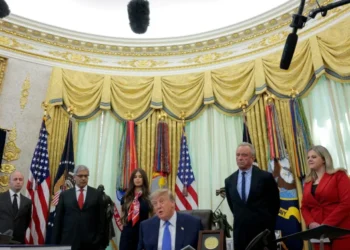
Zoë Schiffer: OK. So the reason that this has come up is that Sam Bankman-Fried is lobbying Trump for a presidential pardon. Basically, he wants the president to come in and be like, “OK, just kidding. Your crimes are forgiven,” and oftentimes this means you can get out of prison very, very early. The reason I think this is coming up is that there’s been some speculation and talk around the White House that Trump might pardon around 250 people for America’s 250th birthday coming up in July.
Brian Barrett: This is on top of, by the way, the thousands of people tied to Jan 6 that he had already pardoned. Anyway, go ahead. Lots of pardons.
Zoë Schiffer: No, yeah, but this would be a new list. Sam Bankman-Fried wants to be one of those people. I would be personally very surprised if he got on that list. Of course, Trump continues to surprise at all times, but there’s a lot of opposition to him getting out of prison because, again, he defrauded many powerful people, and they are very upset with him.
Brian Barrett: And I want to be clear, he’s actively campaigning. He gave an interview from prison to Fox Business News hinting as much.
Sam Bankman-Fried, archival audio: It’d be obviously ultimately up to the president, not up to me.
Reporter, archival audio: Now, have you had any conversations with the White House or anyone connected to the president at all?
Sam Bankman-Fried: I haven’t myself.
Reporter, archival audio: But have, say, your parents or anyone that you’ve been in contact with at all?
Sam Bankman-Fried, archival audio: Can’t speak for them.
Reporter, archival audio: I assume that you would want a pardon from the White House.
Sam Bankman-Fried, archival audio: Absolutely.
Zoë Schiffer: I always forget what his voice sounds like.
Brian Barrett: And I’m sure the prison phone probably doesn’t do it any favors. So he has officially filed for a pardon to the Justice Department’s Pardon Attorney office, but the Trump administration not receptive so far, which, I know you said you weren’t surprised by that, Zoë, I’m a little surprised.
Zoë Schiffer: Trump had said previously that he didn’t plan to pardon SBF, and, again, I think he pissed people off on both sides of the aisle, so I just—not impossible by any means, but it seems like it’ll be a bit of a long shot. He’s also not the only person who is angling for a presidential pardon. This is also going to be going back in your memory bank, but Charlie Javice.
Brian Barrett: I don’t remember the name; I do remember the crime.
Zoë Schiffer: And tell us.
Brian Barrett: So Charlie was convicted after defrauding JP Morgan Chase because she sold her student aid startup, Frank, to the bank for $175 million by lying about how many customers it actually had to a pretty extreme degree. I don’t have it in front of me, but it was one of those things where it was like, “Oh, you could have done a little lie, but you did a big lie.” She was convicted for seven years.
Zoë Schiffer: And she’s got some defenders who are trying to help her out with this. Marc Rowan, who’s Apollo Global Management’s CEO and was an early Frank investor and testified in her defense, wrote a leniency letter to the sentencing judge. Since Trump won reelection, Rowan has also directed millions toward Republican congressional committees, and he also has direct connections to the Trump administration.
Brian Barrett: So she might have a better shot because it does feel like these pardons are largely transactional in a lot of—or at least I would say Donald Trump, I don’t think is controversial to say, is a transactional kind of guy, and so this could be a reward. On the SBF front, just to go back to that quickly, the reason I was a little surprised is ’cause on the one hand, Trump loves crypto and has sort of shown a willingness to pardon other crypto people, like there’ve been a few high-profile crypto pardons.
Zoë Schiffer: Yeah, Ross Ulbricht.
Brian Barrett: Yeah. Ross. We had Binance.
Zoë Schiffer: Oh, right, right, right. That’s even more directly crypto. Ross is more Silk Road drugs but famously ran on crypto, so…
Brian Barrett: But he’s shown a willingness to let crypto crimes off the hook. But, as you were talking, I remembered also a big part of SBF’s deal was he gave a ton of money to Democratic causes and Democratic politicians I think not necessarily because of any deeply held political feeling, but at the time it seemed like the winning horse to back.
Zoë Schiffer: Right. Exactly.
Brian Barrett: Before we go to break, we’ve got two shorter news updates for you. First, SpaceX’s acquisition of the AI coding assistant startup, Cursor. On Tuesday, pretty soon after its IPO, SpaceX announced that it was officially closing the deal for $60 billion. The agreement follows an option that SpaceX secured back in April, which gave it the right to either pay roughly $10 billion for a partnership or acquire the company for $60 billion later in the year. They went the second route, obviously, but why? Why’d they do it? What was up with the timing, Zoë?
Zoë Schiffer: Yeah. I mean, I think this makes so much sense for SpaceX and xAI. If you have a deal with Anthropic, if you’re using the API, Anthropic can’t train on that data, but if you’re a regular customer, the company can. I think there’s this mad dash right now to figure out how can we get more data to train more sophisticated models. Cursor has a lot of that data, and one thing that AI companies have found is that coding-specific data is really good not just for coding but for training the model on all sorts of things, so if you can get a model that gets really sophisticated in that area, it has all of these other benefits. This hasn’t been an area where xAI has excelled so far, and so I think it makes a lot of sense. And seen from that perspective, I had thought 10 billion was going to be really, really cheap. 60 billion’s still—I’m like, “This might end up being a pretty good deal for SpaceX.”
Brian Barrett: Especially when SpaceX is, again, worth on paper $1.75 trillion, right? And if you’re making stock deals, you can afford to spend a lot. And also makes a lot of sense on the Cursor side of it too, right? It is very hard, I think, these days to be a standalone AI company if you’re not one of the big ones. And its market share had been slipping down from 41 percent in June 2025 to about 26 percent in May, so it is partly a lifeline for them. If you’re Cursor going up against Claude Code and GitHub Copilot, that’s pretty tough, so better to be under the xAI-SpaceX blanket.
Zoë Schiffer: Exactly. Exactly. I also think this is Elon Musk’s playbook a little bit. If you talk to people close to him, they’ll often use the term vertical integration, like he likes to own all parts of the supply chain. He doesn’t like to work with third parties unless he absolutely has to, and so now SpaceX controls the energy infrastructure layer, there’s the AI application layer with Cursor and its enterprise software layer, so, yeah, I think on that level also it makes sense.
Brian Barrett: And then, of course, let’s not forget Cursor has four young cofounders, each of whom now worth about $2.7 billion. Good job, Cursor cofounders.
Zoë Schiffer: Love that for them. Love that.
Brian Barrett: Proud of you. Proud of you. Enjoy Dialog next year.
Zoë Schiffer: Yeah, exactly. OK. One more quick hit of news. Earlier this week we reported that Anthropic was shutting down some of its most advanced AI models, Claude Fable 5 and Mythos 5, after the Trump administration imposed strict export controls. We did a bonus episode on that earlier this week, so check that out if you haven’t already. But in terms of an update, as of this recording, it seems like Anthropic remains locked in negotiations with the administration. The two sides have been meeting in Washington, DC this week to kind of hash out the details, but so far no agreement has been reached.
Brian Barrett: Yeah, and they’ve been actively talking. They seem to be at a stalemate that, Zoë, I’m not sure they’re going to be able to get past. We had reporting go live on Monday on the site from Hugo Lowell, who’s our politics senior correspondent, that the White House’s bar for letting Anthropic release Fable 5 back into the world is some sort of guarantee or some indication that it is impossible to jailbreak—you can’t jailbreak it.
Zoë Schiffer: Right.
Brian Barrett: Which is not a thing.
Zoë Schiffer: Just do that. Just make it impossible.
Brian Barrett: Just make it impossible, which we talked about on Monday, but that’s not a promise any of these AI companies can make. You cannot—
Zoë Schiffer: Any tech company.
Brian Barrett: —create a perfectly—
Zoë Schiffer: Jailbreaks are just—
Brian Barrett: Any tech company.
Zoë Schiffer: —part of releasing software. There will always be someone who’s able to get around the controls you’ve put in place.
Brian Barrett: Yeah. And so Anthropic’s argument has been since this first happened, “Look, we can’t guarantee no jailbreaks. What we can do is say it is almost impossible or as close to impossible as we can to do a universal jailbreak. So you will always be able to sort of pick off little pieces of this probably, but in terms of totally blowing this model wide open and getting it to do whatever you want it to do, that we can go ahead and feel pretty confident saying you can’t do that.” But that seems like not good enough, and, again, we talked to you about this before, but if I am OpenAI or if I am Google, I am worried that that’s the bar, ’cause I’m not going to be able to hit it.
Zoë Schiffer: Yeah. I will say those companies have much stronger relationships with the Trump administration than Anthropic does. I haven’t been in the rooms, certainly, but I can just see Dario Amodei not being able to speak Trump particularly well. You could see his advisors just being like, “Just say there’s no fucking way to jailbreak it. Just say the words,” and he’s like, he can’t do it. He’s like, “No, well, actually, it’s, you know, technically not blah, blah, blah, blah, blah.” I just think there—
Brian Barrett: Great. That is a great impression—
Zoë Schiffer: Thank you, I’m so sorry.
Brian Barrett: —by the way.
Zoë Schiffer: All I’m trying to say is very different personality types. I think that Dario has a tendency to be a little didactic and specific in how he talks about these things, and the Trump administration, especially right now, doesn’t appear to have a ton of technical expertise, and so they’re relying on outside experts to understand how bad is bad here. The whole situation is really confusing and doesn’t appear to be resolving any time soon.
Brian Barrett: Yeah, and I think it has woken up Europe and the UK a little bit to the reality that the US might actually cut off its frontier models to other countries, even trusted partners. Meanwhile, they’re pretty far behind on having anything that can compete or even come close. You’ve got Mistral in France, you’ve got some other things going on, but if we do get to this world where there are sort of these balkanized models, that’s going to be tricky for anyone not in the US, absent the rise of open source, which we’ve also talked about, but that’s still a little bit behind.
Zoë Schiffer: Really don’t see that. Really don’t see that for us.
Brian Barrett: Yep, yep, yep. Coming up after the break, we’ll share our WIRED/TIRED Picks for the Week. Stay with us.
Zoë Schiffer: It’s time for our WIRED/TIRED segment. It’s been a minute since we’ve done this, so just to give you a little refresher, whatever is new and cool is WIRED, whatever passé thing we’re completely over is TIRED. Brian, this week you get to go first.
Brian Barrett: Thank you very much. My TIRED is dumb phones that don’t do anything. There’s a trend towards dumb phones, where you can’t access any apps, whatever; it’s just a phone. It’s a good enough idea, but I think it’s like you want to—quitting cold turkey is really hard, but having some sort of manageable amount of a vice is better in the long run, and so my WIRED then is the Commodore. Do you remember the brand Commodore—
Zoë Schiffer: No, I don’t know—
Brian Barrett: —Zoë?
Zoë Schiffer: —what you’re saying.
Brian Barrett: They made computers in the 80s. I’m too old. The Commodore Callback 8020, which is a dumb phone—it is a dumb phone, but it runs just enough. You can run Uber, WhatsApp, Spotify. You can have T9 texting or you can use your voice to text. It has classic games, like Snake. It comes in an edition where it’s a clear plastic thing so you can see the battery inside. The battery is swappable. The camera comes with a filter that makes it look like a ’90s home video. I think it’s wonderful. It’s great. It is the sort of classic flip phone Nokia style, but it allows you to stay just in touch enough with people and with the internet that you don’t feel like, “Forget this; I’m just going to go back to my smartphone.”
Zoë Schiffer: And it reminds you of your childhood with the dinosaurs, which is cool.
Brian Barrett: Thank you. Yes. Thank you. Actually, not even childhood. I would say—
Zoë Schiffer: No.
Brian Barrett: —late teens, early 20s.
Zoë Schiffer: Young adulthood. Cool, cool, cool, cool.
Brian Barrett: Yeah. Yeah.
Zoë Schiffer: Cool. I love that. I’m legitimately going to look up that phone and see if it is for me because I have a tortured relationship with my phone like many people.
Brian Barrett: Yep.
Zoë Schiffer: All right. Brian Barrett, do you remember a little company called Allbirds by chance?
Brian Barrett: Zoë, are you talking about the apparel company that took over Silicon Valley—
Zoë Schiffer: Yes.
Brian Barrett: —10-ish years ago?
Zoë Schiffer: They made horrifically ugly, in my humble and—
Brian Barrett: Sure.
Zoë Schiffer: —personal opinion—actually not humble, I feel strongly about this—little woolen sneakers, which were upsetting, orthopedic-looking just abominations. They have since pivoted to become a compute company, and now they have a new name. They’re called Smartbird.
Brian Barrett: Good. And just to be clear, this is your WIRED?
Zoë Schiffer: This is TIRED. This is TIRED.
Brian Barrett: This is TIRED. OK.
Zoë Schiffer: OK. I’m over this company. Sorry. I feel like every few years someone in Silicon Valley is like, “We reinvented the sneaker,” and they forget that there are many, many companies that have spent hundreds of thousands, nay, millions of dollars on R&D on this very effort that have very good functional sneakers that look a thousand times better and that we actually really didn’t need to direct-to-consumer this. I did, however, recently buy—I know that this is an audio medium, but I’m going to show you my shoes.
Brian Barrett: OK.
Zoë Schiffer: These are the new Miu Miu sneakers, and they’re sick as fuck, thank you.
Brian Barrett: Yep.
Zoë Schiffer: Yeah.
Brian Barrett: They are.
Zoë Schiffer: Beautiful.
Brian Barrett: OK. Good. Yep. Love those.
Zoë Schiffer: Yeah. So that’s WIRED.
Brian Barrett: I will say I agree with you. I think the shift to compute is hilarious. I am angry because I—so I covered this story when it first was announced, it’s official now—at the time they said their name was going to be Newbirds AI—
Zoë Schiffer: That’s so.
Brian Barrett: —and they have backed down from that to be—
Zoë Schiffer: Smartbird.
Brian Barrett: —Smartbird. And I’m furious.
Zoë Schiffer: I want to be in the room as they were debating that. In fact, as we’re talking about this, we have to assign someone to the story. Someone has to go inside, figure out what this rebrand—
Brian Barrett: Yeah. It’s my next big—
Zoë Schiffer: —what this pivot is all about.
Brian Barrett: —investigation. No, I’ll add an extra TIRED. TIRED is Smartbirds. WIRED is Newbirds AI.
Zoë Schiffer: Newbirds on the Block. Mm-hmm.
Brian Barrett: Wow.
Zoë Schiffer: Wow.
Brian Barrett: Newbirds on the Blockchain, Zoë?
Zoë Schiffer: I mean—
Brian Barrett: I think we should probably end our episode now if that’s where we’ve gotten.
Zoë Schiffer: Yes, we should. That’s our show for today. We’ll link to all the stories we spoke about in the show notes. Uncanny Valley is produced by Kaleidoscope Content. Adriana Tapia produced this episode. It was mixed by Amar Lal at Macro Sound. It was fact checked by Daniel Roman. Pran Bandi is our New York studio engineer, Mark Leyda is our San Francisco studio engineer, Kimberly Chua is our senior digital production manager, Kate Osborne is our executive producer, and Katie Drummond is WIRED’s global editorial director.
The post Meta’s AI Workers Are Revolting, Peter Thiel’s Secret Society, and SBF’s Plea to Trump appeared first on Wired.