A federal appeals court on Thursday ruled that the city of Philadelphia cannot prevent the federal government from removing references to slavery at Independence Historical Park in the city, delivering a sharp blow to the city’s efforts to maintain some control over the site.
The ruling reversed a lower court, which had ordered the Trump administration to reinstall exhibits at a historic home where George Washington once lived after the city sued over the changes.
The ruling handed significant authority over the historical district to the Trump administration, which had moved to scrub the references to slavery as part of President Trump’s effort to reshape how American history is portrayed at many federal monuments and institutions.
A three-judge panel ruled that the administration’s move to take down displays commemorating the history of slavery at the site did not amount to a formal agency rule or decision that a federal court could scrutinize.
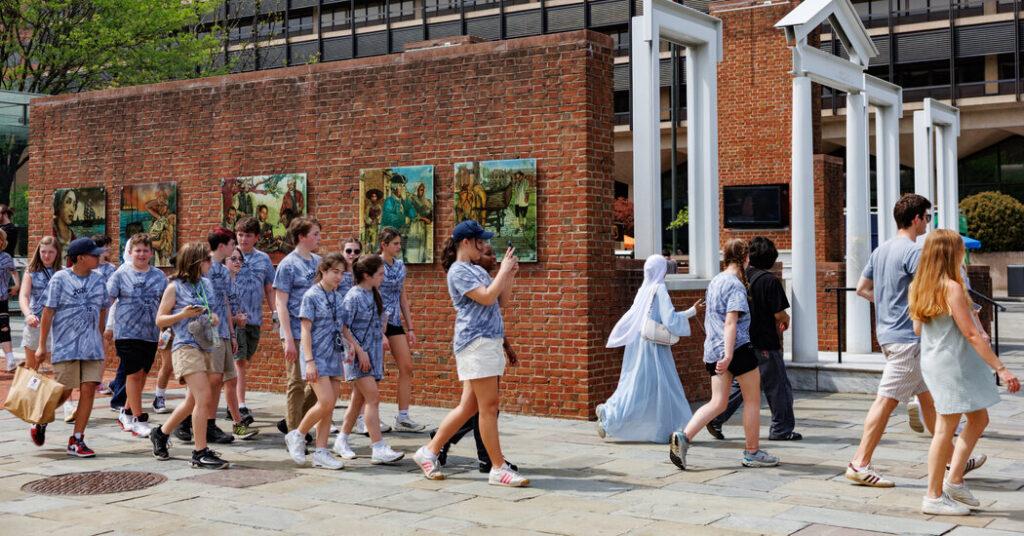
The memorial sits on the site of the mansion where Washington led the fledgling United States as its first president, before the capital was moved from Philadelphia.
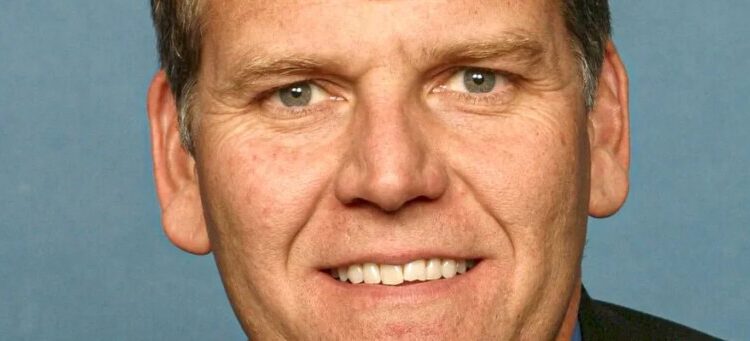
In a winding opinion tracing the same history of the nation’s founding, Judge Thomas M. Hardiman, an appointee of former President George W. Bush, wrote that the struggle for control over the park mirrored the same issues of local versus federal control that had occupied the attention of the founders.
But he wrote that the more recent history of agreements between the city and the federal government governing control of the site left little room for the city to claw back control after it had handed ownership of much of the park, excluding Independence Square, to the federal government more than a decade ago. The memorial to George Washington’s slaves, on the site of his former mansion, were included outside the area the city owns, the appeals court found. The city had argued it was still entitled to a say over any changes.
“This theory is a nonstarter because the city does not own the President’s House or anything in it,” Judge Hardiman wrote.
Under an executive order in March 2025, President Trump directed the National Park Service to scrub references to darker chapters of American history and “focus on the greatness of the achievements and progress of the American people.”
In January, the Park Service proceeded to remove placards and turn off video displays commemorating the history of slavery, honoring nine enslaved people who worked at George Washington’s house, including his chef and maid. The material also included more general interpretive displays about the legacy and economy of slavery in the United States.
The following month, Judge Cynthia M. Rufe of the Federal District Court for the Eastern District of Pennsylvania issued a sharp opinion ordering the administration to restore the exhibits. Their removal, she found, affected Philadelphia in “a personal and individualized way.” Invoking George Orwell’s “1984,” she accused the Trump administration of “dismantling objective historical truths.”
Judge Rufe concluded that the city “has a statutory right and expectation to mutual agreement” on any changes or alterations to the park, even after it entered into cooperative management of the site with the federal government in 2006.
But the appeals court disagreed, finding that the 2006 agreement transferred ownership of the site to the federal government when it expired in 2010.
“The City contends that it suffered a property injury,” the opinion on Thursday stated. “But the city does not own the President’s House. Nor does it own any of the exhibits included at the site.”
Judge Hardiman added that the Park Service had designed a series of replacement panels that were still “full of historical context” and “acknowledge the evil of slavery, including its injustices and hypocrisies.” He echoed claims made by the Justice Department during arguments earlier this month that the Park Service could preserve those details without returning the site to its original state before January.
The appeals panel also included Judge L. Felipe Restrepo, an Obama appointee, and Judge Peter J. Phipps, a Trump appointee. The opinion noted no dissents.
The post Philadelphia Cannot Force Mention of Slavery at Historic Home, Court Rules appeared first on New York Times.