In one weekend, three accidents.
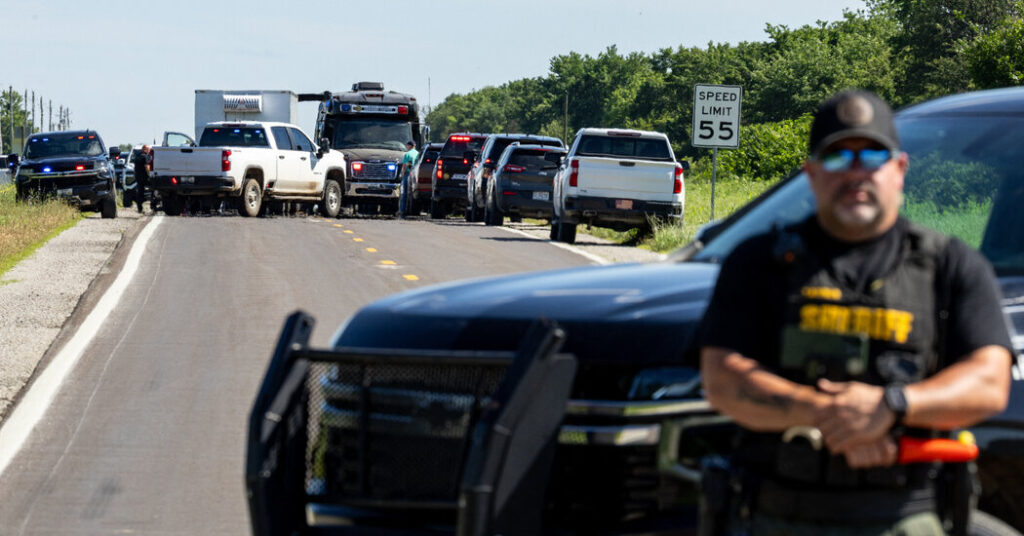
A plane full of skydivers climbed 100 feet over Butler, Mo., and came down inside the airport fence — 12 dead.
Near Moab, Utah, Andy Lewis, slacklining’s first world champion, who once walked a line at Madonna’s Super Bowl halftime show, died after a tandem BASE jump went wrong.
And in Brazil, a 21-year-old woman was thrown from a bridge for a rope jump, with the clips on her harness empty. The crew appears to have forgotten to attach them. She fell to her death.
Strip away the circumstances and the odds, and the victims all faced the same thing, brains built to keep them from danger, screaming the obvious: You are about to step out of an airplane. You are about to fall off a bridge, or down a cliff’s edge.
Each went anyway.
Which leaves questions: Why do this at all? And why, after a weekend like this, go back up?
Jeff Shapiro can speak to both. He has known dozens of people who have lost their lives in high-risk pursuits, ranging from ice climbing and mountaineering to jumping from mountain cliffs in a wings suit.
“You get into one of those sports, and you’re going to lose people,” he said. “But if you’re involved at a reasonably high level in four or five of them, you’re going to lose a lot.”
A professional adventure athlete, Mr. Shapiro is based on the Oregon coast, though “based” is loose for someone so often on the road. He just returned from 10 days guiding clients on a paragliding trip across Brazil.
For many of us, extreme sports may look like a death wish — a way for adrenaline junkies to get a fix. Mr. Shapiro says it is the opposite.
“If you’re getting a big adrenaline rush from these things,” he said, “and that is why you are doing it, you are doing it wrong.”
The pull for many isn’t necessarily the thrill, he said. It’s scale — being put in your place by something enormous.
“I wasn’t in nature, I was nature,” Mr. Shapiro said, echoing a quote from the painter Jackson Pollock about his art. “I’m not in traffic, I am traffic.”
Step close to real consequence, and the ego loses its grip. What rushes behind it is humility, gratitude, an in-the-now presence so complete that “the part of your brain that recognizes time doesn’t even work anymore,” he said.
For others, the pull of extreme sports comes from a different place. Blake Thacker, 25, a software engineer at Garmin who had recently interned at NASA, was training to become a certified skydiving coach when he died in the Missouri crash over the weekend.
For him, the draw was precision — the rigorous preparation, the physics of each drop, said his father, Richard Thacker.
“It’s not like he was some daredevil,” Mr. Thacker said. “He didn’t have a motorcycle, he didn’t do a skateboard.” His mother, Sherry Thacker, remembered the way that he reassured her. “Mom, I know this is a risky sport, but I’m not a risk taker.”
Kenneth Carter has measured the difference between the way that extreme sports enthusiasts and others process fear. A psychology professor at Emory University, Dr. Carter found that extreme athletes tend to run on a different chemistry — less cortisol, more dopamine.
So a moment of panic for someone like Dr. Carter, who calls himself a “chill seeker,” becomes a moment of clarity for people like Mr. Shapiro. The experience, the professor said, is the flip side of a high: The noise drops away, time stretches, the eye widens.
Jumpers describe being able to pick out every crack in the rocks and canyons as they fly by.
The fear never leaves, and they do not want it to. It is used as information. Running from it is what does the damage — let it harden and a kind of fearful stiffness spreads, off the drop zone and into the rest of life.
Which helps explain why when one of them dies, the others go back up. The morning the plane went down near Kansas City, a skydiver had just landed. She watched the same plane carry her friends up, and then crash. That night, she jumped again.
Mr. Shapiro understands the impulse. He nearly quit flying once, in 2005, after he tumbled a hang glider into a storm cloud and barely brought it down. He asked himself why he flew, he recalled, and the answer settled it.
“If I’m going to stop doing this based on fear and doubt,” he said, “I might as well stop everything. Go hide in the corner and get a job in a cubicle and never do anything that involves risk.”
He flew the next day.
The post Why Extreme Sports Enthusiasts Keep Jumping After a String of Tragedies appeared first on New York Times.