Terrorism is evolving, sometimes almost beyond recognition. The pace of radicalization is accelerating. Attacks have become increasingly basic, unsophisticated and cheap. For some, terrorism seems to be like a craving, a source of dopamine to satisfy carnal impulses.
Quick preparation, convenience and mass production: Welcome to the age of fast-food terrorism.
A growing proportion of terrorist perpetrators are very young, with minors now representing up to a third of the counterterrorism workload in several European countries. Terrorism historically has been a youth problem, appealing particularly to “military age males” between 18 and 35. But today’s profiles are getting much younger, with arrests of individuals as young as 12 becoming almost daily occurrences.
These young perpetrators are mostly radicalizing online, where they spend a good part of their lives and are regularly bombarded with extreme content, mostly on social media platforms such as TikTok, Instagram and YouTube. Like fast-food marketing, terrorist propaganda online seeks to engage young brains in desperate need of affirmation, searching for a more defined identity or a grievance to latch on to. This propaganda is not designed for a refined palate, but for the individual in search of instant gratification.
Several counterterrorism services have released public reports to raise awareness and vigilance against this phenomenon.
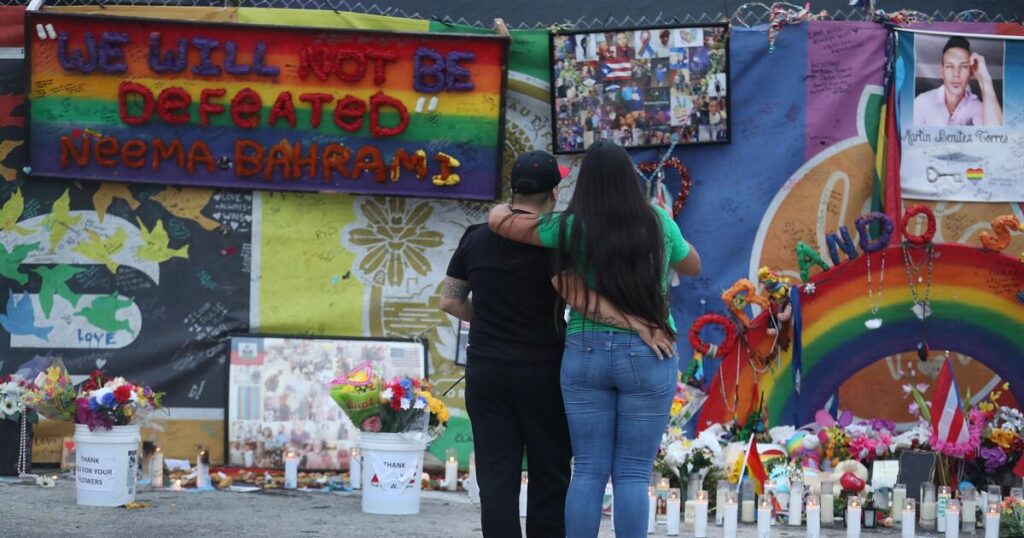
It is not just the young age of the perpetrators, however, but also the accelerated pace of their radicalization. A process that could previously take months or years is now regularly a matter of weeks, as recently reported by counterterrorism services, including the French DGSI. The rate of radicalization is akin to a production line, and it has been in the works for years across the ideological spectrum, from domestic terrorists and antigovernment extremists to jihadists. Well-known terrorists, including the Orlando gay club shooter and the Chattanooga gunman who targeted Marines, flirted with extremist ideology on and off before radicalizing quickly, over the course of months, and then launching their attacks.
Numerous research studies have demonstrated how quickly and easily new digital users are confronted with harmful content, including terrorist material, without even actively searching for it. This includes content across ideologies, ranging from jihadi, white supremacist and misogynist. Compared with the clandestine and secretive nature of terrorist organizations in the 20th century, which required serious devotion and commitment to join, terrorism is only a few clicks away for any teenager in 2026.
Another key trend among young terrorist actors is their limited knowledge of or interest in ideology. While radicalized teenagers spend much time watching and sharing terrorist content, they seem more fascinated by the aesthetics of violence than by the underlying ideology. It is not rare to come across adolescents who spend an equal amount of time consuming jihadi and far-right content. When terrorist perpetrators care about explaining their motivation, for instance, through a manifesto or through online interactions, their ideology appears more often a patchwork of keywords and ideas than a serious intellectual construct. While ideology remains relevant to certain individuals, it increasingly serves as a veneer laid atop a visceral urge for violence.
This dilution of ideology is not completely new. Several years ago, then-FBI Director Christopher Wray highlighted the phenomenon of “salad bar terrorism,” in which individuals pick and choose beliefs from myriad, at times contradictory, belief systems. This has also been labeled ideological convergence or composite violent extremism. A decade ago, it had already been shown that many young individuals joining the Islamic State in Syria had less interest in the jihadi ideology than in the promises of adventure and violent predatory subcultures. And there are famous historical figures of terrorism — such as Carlos the Jackal in Venezuela — who always seemed more interested in violence, sex and money than in ideology or political goals.
While ideology has long been central to the definition of terrorism, that has never been its only facet. Several decades of research have demonstrated that radicalization is varied: People adopt extreme views and engage in risky criminal acts for a wide array of reasons, including love, friendship, exhilaration and a quest for significance and belonging. In a similar vein, some teenagers seem to be searching online for status, much more than for a higher meaning in life.
In truth, what seems to motivate many of today’s terrorist perpetrators is emotions, mainly anger. Many recent terrorist plots appear impulsive — extremely amateurish in nature and poorly prepared. Very personal grievances become a key trigger for action.
Just as fast food seeks to mimic traditional cuisine but doesn’t quite taste the same, fast-food terrorism doesn’t quite match the standards of traditional terrorism, to the point of confusing experts and investigators. Increasingly, debates arise over specific cases to determine whether they meet the criteria for terrorism. In the absence of a clear ideology or adherence to a terrorist group, in the absence of an underlying terrorist network, is it really terrorism? In contrast, in the presence of clear mental symptoms, can the perpetrator be considered a rational actor and therefore potentially a terrorist?
All these questions come to bear in the case of so-called nihilistic violent extremism. With groups such as 764 or No Lives Matter, any ideology appears secondary — if present at all — to a predatory approach for young, vulnerable recruits. Violence is an end in itself. While recognizing the severity of this phenomenon, most security services are unsure whether to treat it as a terrorist or a criminal matter.
It remains unclear exactly what is driving this trend of fast-food terrorism, but it seems clear that it has something to do with the digitalization of our societies. New studies, notably in the neurosciences, demonstrate various negative effects of digital consumption on individuals: It increases social isolation, depression and grievances, while also diminishing intellectual capacities, such as critical reading and emotional control. In other words, the digital age is making people more vulnerable to radicalization, socially and intellectually, while increasing their exposure to extremist content exponentially.
Of course, terrorism remains a fringe phenomenon, and only a few individuals will radicalize into violence. But just like fast food, terrorism has now become available anytime, anywhere.
Thomas Renard is the director of the International Centre for Counterterrorism in the Hague. Colin P. Clarke is the executive director of the Soufan Center.
The post TikTok-era ‘fast-food terrorism’ is replacing ideological struggle appeared first on Los Angeles Times.