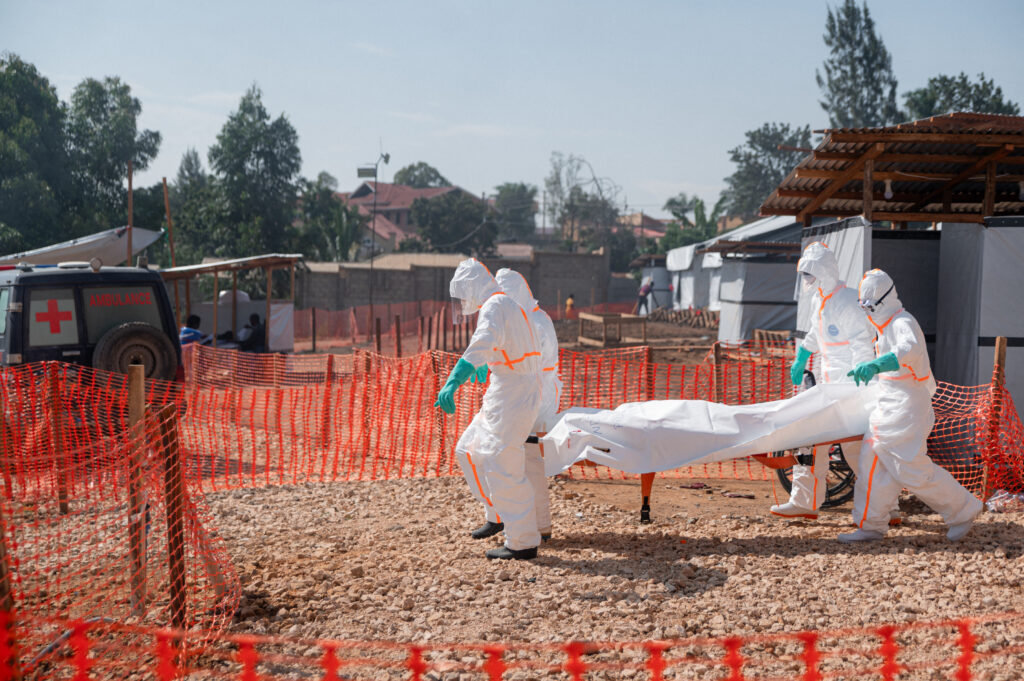
It’s been a month since the World Health Organization declared the Ebola outbreak in the Democratic Republic of Congo a public health emergency. Global attention to the crisis has since waned, but the virus remains far from contained. Without sustained leadership from the United States, this could directly threaten Americans.
Confirmed Ebola cases rocketed past 800 this week, with nearly 200 deaths, according to Africa’s Centers for Disease Control and Prevention. By comparison, the worst Ebola epidemic on record, which began in 2014 and ultimately claimed more than 11,000 lives, took more than three times as long to reach that number of cases.
The outbreak is the result of a rare strain of Ebola called Bundibugyo. Most tests could not detect the virus as it began to spread across eastern Congo, which has been plagued by conflict and extreme poverty.
Tens of thousands of people are living in cramped and unsanitary displacement camps, where health officials fear the disease will proliferate in the coming weeks. The strain has no vaccine or treatment.
Violence has made it extremely difficult for international health workers to enter the region and offer help. Meanwhile, Congolese health resources have been strained past their limits. Officials have traced fewer than 60 percent of all known contacts with infected patients. The rate is even lower in hot spots like the Ituri province. Laboratories are backlogged, and health workers are struggling to access protective equipment.
Making matters worse, many locals do not trust Ebola treatment centers. Multiple facilities have been attacked in recent weeks as conspiracy theories about their purpose run rampant. Attackers burned down one location last month, resulting in 18 patients fleeing.
Jay Bhattacharya, the acting director of the Centers for Disease Control and Prevention, has vowed to move “aggressively” to address the outbreak, and the State Department issued a statement last week that it has committed $270 million to aid the response. The administration also said it is working with Congress to provide $50 million to develop “medical countermeasures.”
Still, the government’s capacity to manage global disease outbreaks is limited after the CDC shed hundreds of employees last year. The administration has also slashed aid to support health systems for countries such as Congo. Meanwhile, it has discouraged American doctors from working in Congo by requiring them to quarantine in makeshift facilities in Kenya, as opposed to containment units built for that purpose in the United States.
The longer Ebola goes unchecked, the higher the chances that the virus will arrive on U.S. soil. Judging by last decade’s outbreak, the crisis could also end up costing taxpayers billions of dollars.
The post Remember Ebola? appeared first on Washington Post.