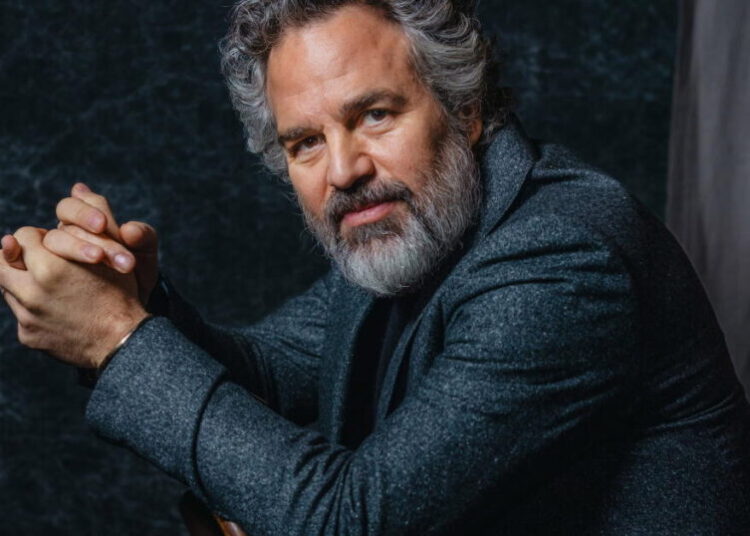
You’ve probably never heard of Daniel Moraff. He went to Brown and was excited by Senator Bernie Sanders’s 2016 presidential campaign and spent years as a local organizer in Pittsburgh and New York while involved with the Democratic Socialists of America.
Today he’s emerging as a new force in politics specializing in populist outsiders. He discovered Dan Osborn and Graham Platner, showing a knack for finding unlikely politicians with real charisma and skills. As we now know, Mr. Platner also comes with a somewhat checkered past and real, potentially costly flaws.
But Mr. Moraff, in contrast to his somewhat bombastic candidates, is quiet and unassuming in person and approaches his job like a casting director. He looks for a particular type: military veterans with blue-collar jobs and no electoral experience but an interest in politics and (typically) labor unions.
Mr. Moraff is not the only person seeking fresh blood for the Democratic Party. Other groups, like the Bench, are recruiting and supporting challengers in tough races, often in red states. But his early success is a sign of just how desperately the Democrats need new approaches to candidate recruitment — and new kinds of candidates.
The 2024 election showed that the party is simply not large enough to command a majority of the country. Building a newer and hopefully larger tent requires a different set of skills, more willingness to jeopardize parts of the existing coalition, more outsider personnel and ultimately someone willing to run the kind of risky underdog campaigns that put Donald Trump and Barack Obama in the White House.
Rebuilding the party and bringing in new people, with less investment in things as they are, will help the party decide what it is about — which policy commitments are genuinely central and which merit flexibility or abandonment.
Though President Trump has sunk to new lows in public approval, five months out from the midterms, Democrats’ own standing with the public remains rotten. That is not just the view from the public — Democrats face a crisis of confidence among their own supporters.
The party establishment has been discredited. Rank-and-file Democrats simply no longer believe that the people who brought us Hillary Clinton, Joe Biden and Kamala Harris actually know what it takes to win. This doesn’t mean conventional recruiting is always broken; in the North Carolina Senate race, Roy Cooper, the former governor, seems to be doing well.
But Janet Mills in Maine was a perfect example of how it can often go wrong. Though a two-term governor, she is 78, and by the time she entered the Maine Senate primary, she was relatively unpopular — in part because the state is suffering from some of the fastest-rising electricity prices in the country. Name recognition is only helpful if people like you. And right now people don’t like Democrats.
In Ohio, Democrats were quick to unite around Sherrod Brown, a former senator, as their champion. The party is still optimistic about the race, but he is polling worse in his matchup than James Talarico — a fresh face who gets to paint a contrast with a scandal-plagued opponent — in Texas is doing in his. When you need a rebrand, it doesn’t make much sense to rely on retreads.
Many loyal Democrats get that the party desperately needs change, including new faces and new people who signal that change. Mr. Moraff helped create the circumstances under which Mr. Platner, a 41-year-old oyster farmer with no political experience, could beat Ms. Mills. Mr. Platner appears to have come out of nowhere, but someone had to provide support and infrastructure. Much of that was provided by Mr. Moraff, who has also been a driving force behind Mr. Osborn’s independent Senate runs in Nebraska (both this year and in 2024).
Mr. Platner’s success at wresting the Senate nomination away from an incumbent governor is remarkable, but as the waves of revelations about Mr. Platner’s tattoos, Reddit posts and personal indiscretions remind us, reaching outside conventional channels and normal vetting processes for political talent certainly carries risks and downsides.
Mr. Moraff himself is not a Democratic insider or a strategist. In the terms popular with the Silicon Valley types whom he doubtless hates, Mr. Moraff is “high agency.” He saw a void and moved into it. He doesn’t accept the view that good candidates need to have a traditional résumé, or that to be the guy behind the guy in a critical Senate race, you need to pay your dues by managing House campaigns or toiling for multiple cycles at the national party committees.
Mr. Moraff is also working with House candidates like Brian Poindexter in Ohio and Nate Powell in Washington State, who are cut from a similar labor-populist ideological cloth.
His approach to candidates is not the only new one. In many places, blue-collar union politics lacks much resonance. Consider San Francisco Mayor Daniel Lurie, who is polling as the most popular big-city mayor in America. A philanthropist and an heir to the Levi Strauss fortune, he also ran and won as an outsider looking to shake up the political establishment — but he’s something like the opposite of a left populist.
Mr. Lurie’s watchword is “common sense.” His big achievements are cracking down on the routine disorder for which San Francisco became infamous and simplifying permitting for the city’s small businesses. The core of his politics is precisely that the city has big problems that clearly cannot be laid at the feet of the technology industry or billionaire entrepreneurs.
Lis Smith, a communications consultant who helped build Mr. Lurie’s national profile, is also a lead adviser to Majority Democrats, a network of moderates looking to change the Democratic Party in much the way that Bill Clinton’s Democratic Leadership Council changed it starting in the late 1980s. The aforementioned Bench is an aligned organization, with overlapping donors, recruiting and supporting challengers in tough races. Some Bench candidates are very conventional politicians, but many very much fit the outsider mold.
Bobby Pulido and Johnny Garcia are both running for the House in red-skewing, gerrymandered South Texas districts. Mr. Pulido is a Tejano music star talking about the need for a “tough but fair” immigration system. Mr. Garcia is a sheriff’s deputy who describes himself as an “old-school Democrat.”
The Bay Area is very different from South Texas, and the pitches are accordingly different. But what these three have in common — and in contrast to the left populists — is an effort to squarely address Democrats’ weaknesses on crime and cultural issues rather than simply change the conversation to battling the oligarchy.
Still, the insider-outsider contrast does apply in some races. Bob Brooks is a firefighter running for a House seat in Pennsylvania with the support of both the Bench and Mr. Sanders; Mr. Brooks defeated several primary opponents with more experience in politics and government.
For the most part, though, moving in the direction of fresher faces is going to necessarily mean more ideological conflict rather than less. The process will be contentious and make existing party leaders uncomfortable.
In seeking out something better, Democrats will also run the risk of ending up with something worse. But Democrats can’t deny any longer that their fundamental problem is not Mr. Trump or the Republicans — at least not only them — but the low regard in which they themselves are held by the American people. Even if it gets messy, the party needs this process.
Matthew Yglesias (@mattyglesias), a contributing Opinion writer, is the author of “One Billion Americans: The Case for Thinking Bigger” and writes at Slow Boring.
The Times is committed to publishing a diversity of letters to the editor. We’d like to hear what you think about this or any of our articles. Here are some tips. And here’s our email: [email protected].
Follow the New York Times Opinion section on Facebook, Instagram, TikTok, Bluesky, WhatsApp and Threads.
The post The Democrats Need Better Candidates. This Guy Knows How to Find Them. appeared first on New York Times.