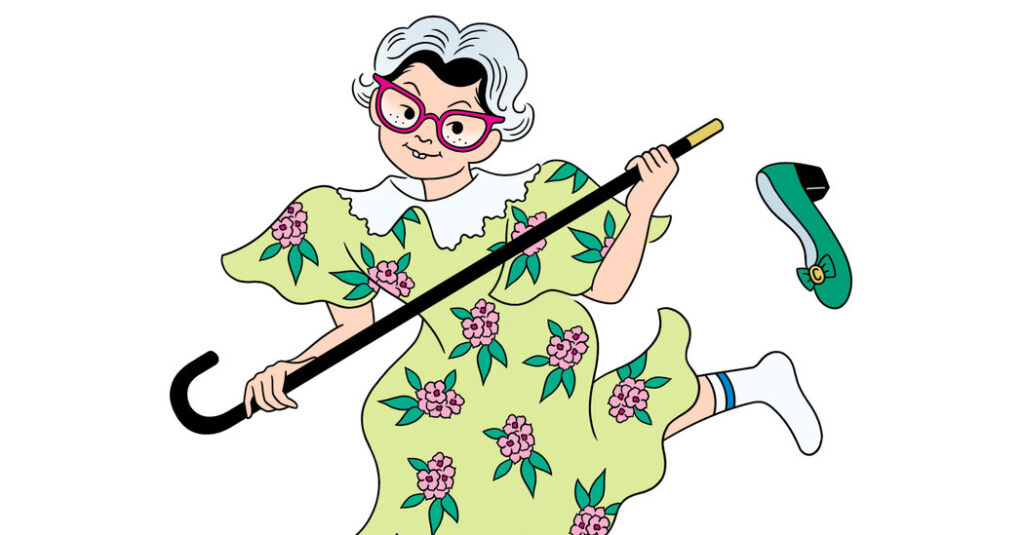
My brother shared in our family group chat a video of his 11-year-old son doing a comedy routine imitating our mother — his grandmother — who is in her 80s. The routine borrowed some real traits but exaggerated her into a foolish caricature. Other adults at the dinner table when it was filmed laughed and encouraged him.
My mother, who is in the group chat, lives across the country, so the video was her introduction to the joke being made at her expense. She was hurt, though she responded graciously, writing to her grandson that she was glad he made everyone laugh and that he had the makings of a good stand-up comic. My own daughters, who see their grandmother daily, found the video sad.
Was it appropriate for the adults to encourage a child to use his elderly grandmother as the butt of a joke? Or for my brother to send the video to her? — Name Withheld
From the Ethicist:
Mocking Granny is a time-honored family sport, like teasing your little sister, and about as edifying. Families can be particularly careless with the feelings of the elderly, condescending to them as lovable figures of fun. The fault doesn’t lie with the 11-year-old who turned her into material, though. It lies with the adults who delightedly treated the performance like a tight five at the Comedy Cellar. Your brother then made things worse by serving the roast to the roasted. The initial encouragement was unkind, and sending the video to your mother was thoughtless. If your nephew is young enough to learn better, your brother is old enough to have known better.
Readers Respond
The previous question was from a reader who wondered whether her daughter’s friend’s mean-girl behavior merited an intervention. She wrote:
I’m the parent of a middle-school girl, and for what it’s worth, I also have professional experience working with children. My daughter, who is kind and makes friends easily, has been complaining daily about a girl in her friend group. She and her friends find this girl mean, bossy and disrespectful. … Understandably my daughter and many of her friends have begun distancing themselves from her because of the stress she causes. I know the girl’s mother, and though we are not close friends, we are part of the same small parent group. … She once told me that her daughter has trouble figuring out how to fit into a group, but I don’t know whether she understands the full extent of the problem. … My daughter does not want me to share her accounts with the girl’s mother. Still, as someone who cares deeply about children and their development, I wonder whether I should say something so her mother can find the right support or intervention. — Name Withheld
In his response, the Ethicist noted:
So this girl is guilty of bragging, bossiness, needling her peers and being defensive when criticized. Is this a developmental crisis, or is it within the bounds of fairly ordinary middle-school behavior? … Bear in mind, too, that you’re hearing one side of a social dispute. … Then there’s the fact that your daughter spoke to you in confidence. You’re giving full weight to her testimony and rather little weight to her stated wishes. … It might be better to ask your daughter harder questions about how the group is treating this disfavored classmate, encouraging basic decency without trying to force friendship. If after that you remain convinced that the other girl has problems that call for therapeutic intervention, you should tell your daughter why you think the mother needs to know before you share your concerns with this woman.
(Reread the full question and answer here.)
⬥
Middle school is triggering for young people and parents alike. Your daughter is asking for your support in handling a challenging social situation, not your intervention. It’s very difficult to be the helpless parent hearing about the same set of issues over and over again. But that’s exactly what you need to do. Do not throw your daughter (and your relationship with her) under the bus. You are going to need that strong bond when larger issues loom, as believe me they will. You can’t solve her friend’s social problems, and it’s possible you could inadvertently make them worse. — Janet
⬥
There is another option: Let the school counselor know. Sometimes counselors are able to meet with students and share behaviors they’ve noticed and make suggestions. Sometimes they can guide the friends. Either way, they are boots on the ground who may be able to both see the whole picture and intervene in a teaching, caring manner. — Jasmine
⬥
The ability to make and keep friends as a child is a proxy for all kinds of mental and social health outcomes. Significant social problems can indicate other developmental or emotional issues that can be addressed. This child needs help, and I would say that the writer should push forward in some way to help the other mother see that. Given that the other mother has mentioned her daughter’s problems, perhaps a first step could be for the writer to make a time to chat about this and to draw the other mother out — and, with empathy, suggest some resources that might help. — Karen
⬥
Our child attended school for a few years with a mean, demanding, bossy and often insulting peer. Years later, this peer looked up our child to apologize for their earlier behavior, explaining that they had lived in an emotionally abusive home and had been jealous of children who seemed to be happy with their parents. I realized that if we had focused on intervention with the peer’s parents, that could have made their situation even worse. Focusing on our own child’s positive self-assessment and basic goodness was the best thing we could do. — Paula
⬥
One thing I would add would be to talk to the daughter about how to help her navigate mean behavior. It’s important to learn how to speak up to defend yourself and others from being mistreated. Simple responses such as “That hurt my feelings” or “That’s not a nice thing to say” would be a way to give feedback while also setting healthy boundaries. — Virginia
The post My Nephew’s Comedy Routine Skewers His Grandma. Should the Adults Be Laughing? appeared first on New York Times.