In the spring of 2021, the cancer field was abuzz over research that suggested a simple early-detection blood test could find dozens of different cancers, including many for which there is no routine screening.
Four and a half years later, the chatter has only gotten louder: The maker of the test, called Galleri, released new data suggesting its performance had improved.
A number of companies are vying to develop such multi-cancer early-detection blood tests. And though none have been approved by federal regulators — and they cost hundreds of dollars — people are still seeking them out through employers, concierge practices and even major academic centers.
GRAIL, the company that manufactures Galleri, said a total of 420,000 tests had been prescribed thus far, up from 180,000 as of March 31, 2024. The company plans to apply for approval from the Food and Drug Administration next year, and has spent millions lobbying for legislation that would give Medicare the authority to cover the tests.
But despite the demand, there is limited research on the tests’ effectiveness, and whether the benefits outweigh the potential harms — like offering a false sense of security. And the medical field is not yet equipped to make sense of their results, with doctors worried about how to evaluate positive results and unsure whether insurance will pay for follow-up tests.
“It feels like the airplane is being built while flying,” said Cristian Tomasetti, the director of the Center for Cancer Prevention, Early Detection and Monitoring at City of Hope, a cancer center in Southern California.
What the Tests Do (and Don’t Do)
The idea behind early-detection blood tests is simple: When cancer is caught earlier, it is usually easier to treat.
“When you find an early cancer and you can cure it, it is exhilarating,” said Dr. Elizabeth O’Donnell, who directs a multi-cancer early-detection clinic at Dana-Farber Cancer Institute in Boston. “You feel like you’ve just done something amazing for someone, especially in a cancer that doesn’t have a screening test.”
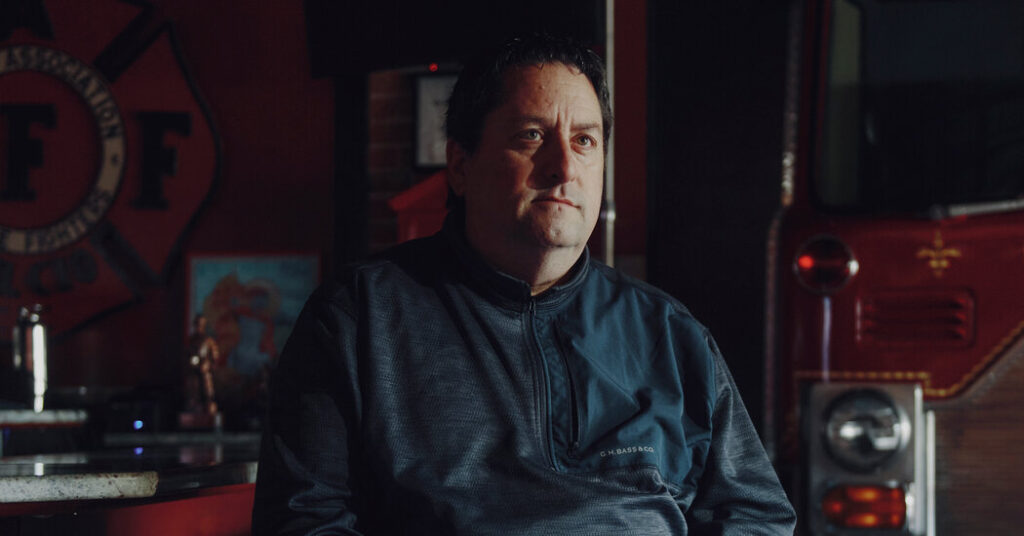
William Hill, a 56-year-old firefighter in Brockton, Mass., took a Galleri test last year at a conference for firefighters, who are often exposed on the job to a number of carcinogens.
His blood was sent to a laboratory in North Carolina, where DNA fragments were extracted and analyzed for patterns that suggest whether cancer is present and, if so, what type.
Two weeks later, Mr. Hill got the result. Cancer signal detected.
“I was hoping it was wrong,” said Mr. Hill, who had previously been treated for testicular cancer.
But it was right, he learned, after he went to Dana-Farber for more tests and an abdominal CT scan. They showed metastatic testicular cancer. Immediately, he began treatment.
In retrospect, Mr. Hill realized that the back pain and frequent urination he had been experiencing before the blood test were a result of a mass pressing on his kidney. But at the time, he chalked the symptoms up to old age and his job.
It’s hard to say whether getting the test changed his long-term outcome. But Mr. Hill credits it with getting treatment started early.
“If I hadn’t had that test, I probably wouldn’t have thought it was cancer,” he said. “I probably would have waited and the mass in my abdomen would have grown even more.”
Cases like Mr. Hill’s offer hope. But there is not yet evidence that these tests reduce the risk of death from cancers they find. There is such evidence for breast, cervical, colon and lung cancer screening, and it comes from large, randomized controlled trials that take years.
Studies led by GRAIL and other test makers have supplied the bulk of the evidence so far. In GRAIL’s most recent study, 99 percent of roughly 23,000 people screened with Galleri got a negative result. Four in 10 of the positive results were later deemed false. The test missed 60 percent of cancers that went on to be detected within a year, picking up cancer 40 percent of the time.
Put another way: “They found fewer cancers than they didn’t find,” said Ruth Etzioni, a professor of biostatistics at the Fred Hutch Cancer Center in Washington State who studies early detection.
Dr. Joshua Ofman, the president of GRAIL, said in an interview that the false-positive rate for the Galleri test was far lower than that of some conventional cancer screening tests (0.4 percent of those tested, compared with about 10 percent for mammograms, for example). He also said the Galleri test was less likely to pick up slow-growing cancers not likely to cause harm, though currently there appears to be little independent evidence to support that claim.
The Potential Harms
GRAIL has touted data from its study showing that Galleri detected slightly more than half of cancers at early stages. But that’s similar to how many of the same cancers are found at those stages without the test, said Dr. Etzioni, who performed a rough, unpublished analysis of national cancer data for comparison.
Even if the tests do find cancers earlier than conventional screenings, it’s not clear they will save lives. The cancers may never become life-threatening — or they might be so aggressive they don’t respond to treatment no matter the stage, said Dr. Scott Ramsey, the director of the Hutchinson Institute for Cancer Outcomes Research at Fred Hutch.
“Without knowing the natural history of the cancer and whether picking it up early actually alters that natural history, yes, it looks like you’re living longer but you may have just given yourself an extra period of worry,” he said.
With overdiagnosis comes the potential for overtreatment, which costs both individuals and the health system. One example is prostate-specific antigen (P.S.A.) testing for prostate cancer. There was considerable enthusiasm in the 1990s for using the test as a screening tool.
“We took a lot of prostates out of men based on P.S.A. tests and a finding of early stage prostate cancer, which left them with a lifetime of impotence and incontinence,” said Dr. Ramsey. But later, trials showed that the surgery did not improve survival rates for men with less aggressive cancers, he added.
Dr. Ramsey fears the same may happen with early-detection blood tests. Unless there is a randomized trial designed to assess the effect on survival, “we aren’t going to know” whether those risks are worth it, he said. (GRAIL is currently conducting a randomized, controlled trial of its test in England. The trial is not designed to study effects on mortality; rather, it is designed to show effect on the proportion of late-stage cancers detected, Dr. Ofman said.)
Then there is the stress. Dr. Alex Krist, a family physician at Virginia Commonwealth University and Inova Health System, is participating in a nationwide study funded by the National Cancer Institute to evaluate early-detection blood tests. People inevitably face anxiety from a positive result, even if follow-up testing finds no cancer, he said.
And negative results can falsely reassure people.
In 2022, Dr. Vershalee Shukla, a radiation oncologist and co-founder of the Vincere Cancer Center in Scottsdale, Ariz., and Capt. Scott Figgins of the Mesa Fire and Medical Department, began a cancer screening program for Mesa firefighters. They had requested city funding to administer the Galleri test and a grant from the Federal Emergency Management Agency to pay for screenings beyond those typically covered by insurance.
About 500 people participated. One test came back positive.
Dr. Ofman said GRAIL was very clear that people should continue with routine screenings even if the Galleri test delivered a result of “no cancer signal detected.”
But after the negative results, many firefighters were slow to come in for their additional screenings — delaying them, in some cases, for months.
“It gave them a false sense of security,” Dr. Shukla said.
Capt. Matt Kobylinski was among those who took the test. He worked on special teams, including those that worked with hazardous materials and technical rescue, later becoming a battalion safety officer. He got a Galleri test at a fire station in February 2022, when he was 45. It came back negative. He didn’t return for other screening tests that were part of the pilot, including a colonoscopy, until more than a year later.
“It didn’t seem like it was very urgent,” Capt. Kobylinski said.
When he finally went in for his colonoscopy, doctors found Stage 4 colon cancer. He went through surgery and a year of chemotherapy.
Capt. Kobylinski wasn’t the only one. Over 20 months, doctors found 14 cancers among the 500 firefighters who had received a negative Galleri test. They were dumbfounded.
“Every single one of them said, ‘Why did the Galleri test not catch this?’ ” Capt. Figgins said.
Piloting the Test in High-Risk Groups
For now, medical associations and groups that issue screening guidelines do not recommend the tests. Some doctors do offer them; others tread carefully, helping evaluate results that patients bring in from other places, or offering tests only as part of research.
At Dana-Farber, Dr. O’Donnell is studying whether the tests can deliver a benefit beyond traditional screening in two high-risk populations: military veterans, who can have increased exposure to carcinogens, and those with a strong family history of cancer or inherited cancer-causing mutations.
The National Cancer Institute study of which Dr. Krist is a part aims to assess whether a large-scale, randomized controlled trial measuring the test’s effect on cancer mortality is feasible, how to design it and how to work up positive results.
Dr. Krist is starting to get questions from patients about the test and whether they should get it, he said. He says no, unless they go through a clinical trial.
“We don’t know enough to know if this is going to help you,” he tells them.
Dr. Shukla agrees. If she were in primary care, screening low-risk, healthy people, “I would be worried that maybe I am doing an excessive test that may cause a complication,” like invasive follow-up, she said, or may cost the health system unnecessarily.
She stopped using the Galleri test in her screening program for firefighters, but she has added another test, Cancerguard, to her program, which includes all recommended screenings. Cancerguard looks for more types of biological markers than Galleri, which Dr. Shukla thinks could make it better at finding cancer earlier and in a younger population.
It, too, is unproven. But Dr. Shukla hopes the data she collects can help improve the tests, and she feels compelled to try something after losing firefighter after firefighter to cancer.
“I screen a very, very high-risk population with a lot of different cancers,” she said. “I need to utilize all of the technology that’s available to me.”
Nina Agrawal is a Times health reporter.
The post Cancer-Detecting Blood Tests Are on the Rise. Do They Work? appeared first on New York Times.