
Robinhood has a message for workers losing their jobs: The company isn’t struggling. You are.
That’s the crux of Tuesday’s layoff memo from the CEO of the trading platform. It’s the latest example of a high-profile company trimming head count while simultaneously saying it’s doing well.
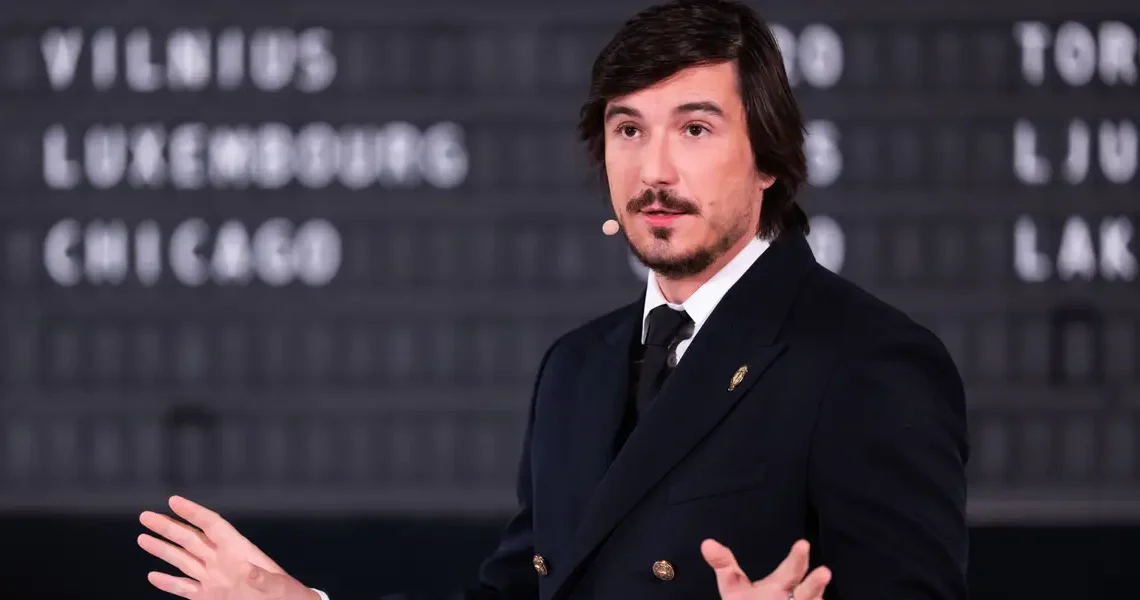
“Robinhood’s business has never been stronger,” wrote Vlad Tenev while announcing plans to reduce 10% of the company’s workforce. Robinhood had 2,900 full-time employees at the end of 2025, according to a February securities filing.
Tenev didn’t explicitly call the “Robinhoodies” being let go low performers, as Meta CEO Mark Zuckerberg did of staff booted from his Facebook parent last year. Tenev did, though, draw a clear contrast between the workforce Robinhood is shedding and the one it wants to keep.
“Our execution is strong today, but our ambitions require us to continuously raise our own bar,” he wrote, while saying he was grateful to those departing. “The goal is to maximize our talent density.”
Anthony Klotz, a professor at the University College London School of Management, said the memo’s subtext is clear: “This was a performance-based decision.”
‘No job is 100% secure’
Tenev’s statement illustrates how the rationale for layoffs has evolved in recent years. Instead of citing weak business conditions, some executives are arguing that cuts are necessary to create leaner organizations staffed by fewer, higher-performing employees. For workers losing their jobs, though, the distinction may offer little comfort.
“The overarching message for everybody is that no job is 100% secure,” said Lee Harding, a recruiter for a global search firm.
For those at Robinhood in particular, he expects the takeaway to also be personal: If he were among those let go, he said he’d interpret Tenev’s message as meaning “I’m not good enough.”
Robinhood declined to comment.
In a securities filing Tuesday, Robinhood said the cuts come as June’s month-to-date average daily trading volumes hit record levels across equities, options, and prediction markets. That follows the company’s April report that first-quarter cryptocurrency revenue dropped 47% year over year to $134 million, reflecting weaker retail trading amid a slump in crypto markets.
Operating lean
Microsoft, Block, and several other employers have also described their businesses as robust while conducting layoffs. Some have cited AI as a reason for job cuts while also encouraging still-employed workers to embrace the technology.
A common thread in recent layoff memos is a desire to cut down on middle-management layers. The change reflects lessons from companies’ overhiring during the pandemic, AI’s automation capabilities, and economic uncertainty, said Melissa Swift, founder and CEO of organizational consultancy Anthrome Insight.
“When you operate lean, you can pivot more quickly,” she said.
Robinhood framed the job cuts around removing layers, demanding “high performance,” and creating opportunities for its “most talented people.” Those words appear to be aimed as much at the workers who remain as those who are leaving, said Richard Smith, a professor at Johns Hopkins Carey Business School who runs the Human Capital Development Lab.
“Organizations aren’t firing their top talent,” he said, meaning that others could be at risk.
Moving forward
On one hand, the memo could create anxiety for those who remain.
“Workers left behind are likely thinking: ‘I could be the low performer tomorrow,’ ” Swift said.
Alternatively, Robinhood’s language could reassure workers who survived the cuts that management views them as part of the company’s future and believes it has retained its strongest people, Smith said.
Signaling an intent to “take care of the remainder” can ease concerns among workers — and prospective employees — who could worry that more layoffs are coming, he added.
At the same time, he cautioned against assuming everyone affected by Robinhood’s cuts was a low performer. Businesses often eliminate jobs as roles become less necessary, Smith said.
Read the original article on Business Insider
The post The subtext of Robinhood’s layoff memo: It’s not us, it’s you appeared first on Business Insider.