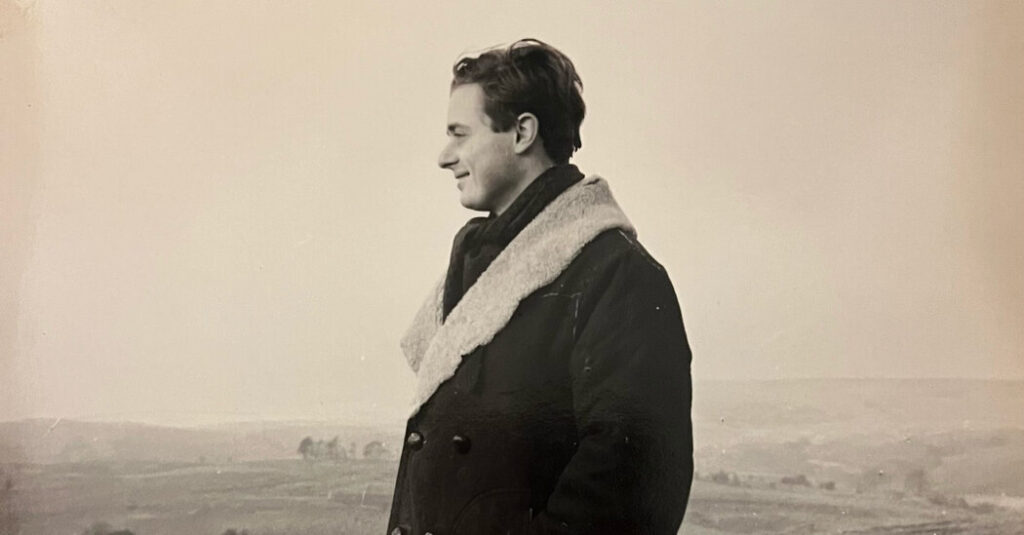
David Pryce-Jones, a British writer whose world-spanning interests, balanced by a rock-ribbed opposition to communism and support for the state of Israel, made him a powerful and longstanding conservative voice in Britain and the United States, died on Nov. 17 at his home in London. He was 89.
His daughter Jessica Pryce-Jones confirmed the death, from kidney failure.
Mr. Pryce-Jones was first and foremost a political writer, and his essays and dispatches could frequently be found in right-leaning outlets in Britain like The Telegraph and The Spectator, and in American equivalents like The New Criterion and National Review.
He was staunchly pro-Israel and anti-Communist, and he held great antipathy for those who he thought should know better; he was a constant critic of the British historian Eric Hobsbawm, among other leftists.
“He was a man of the right, but he was quite broad in his social circle,” said Daniel Johnson, a writer and the editor of TheArticle, an online journal, “as long as he didn’t feel you were betraying the deep values of Western civilization.”
Mr. Pryce-Jones was much more than a polemicist. The author of 10 novels and 18 works of nonfiction, including biographies, travelogues and histories, he was what was once known as a man of letters.
“He had an expansive humanity about him,” Roger Kimball, who as editor of The New Criterion and Encounter Books published much of Mr. Pryce-Jones’s later work, said in an interview. “He knew how the world worked.”
Among Mr. Pryce-Jones’s nonfiction were a biography of Graham Greene; a travelogue about Israel; political analysis, particularly of the Arab world; and two memoirs, including “Signatures: Literary Encounters of a Lifetime” (2020), a series of character sketches of people who had inscribed books to him.
He seemed to have known everyone. He counted Saul Bellow, William F. Buckley Jr. and the British American historian Robert Conquest among his friends. When the writer V.S. Naipaul received the Nobel Prize in Literature in 2001, he invited Mr. Pryce-Jones and his wife, Clarissa, to be his guests at the award ceremony in Stockholm.
Mr. Pryce-Jones wrote with a droll British wit, even on the most serious of topics. Profiling the Iraqi leader Saddam Hussein in National Review in 2003, he wrote that Mr. Hussein’s “air of gravity, and the lordly way he smokes a cigar as he preens himself on Iraqi television, prompts curiosity about what can really be going on in his head.”
Mr. Pryce-Jones was to the intellectual manner born. His paternal great-grandfather, Pryce Pryce-Jones, was a wealthy merchant who founded the world’s first mail-order business. David’s father was Alan Pryce-Jones, the longtime editor of The Times Literary Supplement, and young David followed in his footsteps to Eton and Magdalen College, Oxford.
His father’s family was Welsh, not English, and his mother, Thérèse (Fould-Springer) Pryce-Jones, was Jewish, from a French and Austrian family — a heritage that placed David a small but critical step apart from the true blue bloods of Britain’s literary set and that shaped his lifelong sense of being an inside-outsider.
He was especially critical of the antisemitism that he said wound its way through Britain’s moneyed classes and intellectual circles. He took the subject head on with his 1976 biography of Unity Mitford, one of the celebrated Mitford sisters, who was so great an admirer of Adolf Hitler that she shot herself when World War II began, believing it meant that they could never be together. (She survived, but died in 1948.)
Mr. Pryce-Jones showed that far from being a quirky outlier in 1930s Britain, Ms. Mitford was widely admired, and that her pro-Nazi sentiment was shared by many of the same British elite who, just a few years later, would declare themselves sworn enemies of Hitler.
In the years following the terrorist attacks of Sept. 11, 2001, Mr. Pryce-Jones became a leading figure of what might be called the Islamo-pessimists, a loose group of writers and thinkers — among them, the historians Bernard Lewis and Elie Kedourie — who believed that the Muslim world was largely antagonistic toward Western ideas about democracy and human rights, and that conflict between the two sides was inevitable.
His critics, of whom there were many, accused him of essentialism and racial stereotyping, reducing the breadth of the Middle Eastern world to an extreme interpretation of Islam held by a small minority. Mr. Pryce-Jones was unmoved.
“The fact of Western success does not bring with it any responsibility for Muslim failure,” he wrote in National Review soon after the attacks. “They have to sort that out, and they will too, because it’s a truth as old as mankind that hate ends up destroying the hater.”
David Eugene Henry Pryce-Jones was born on Feb. 15, 1936, at his maternal grandfather’s palatial home in the affluent Meidling district of Vienna. His mother, known as Poppy, was the daughter of a French banker and an Austrian heiress; through her, David was a cousin of the British actress Helena Bonham Carter.
Months before Germany annexed Austria in 1938, the family moved to the outskirts of Paris. Two years later, with the German invasion of France imminent and his parents away in London, David and his nanny, Jessie Wheeler, fled south through Spain, where a relative, the Spanish diplomat Eduardo Propper de Callejón, was helping thousands of Jewish refugees escape across the border.
They ended up in Tangier, Morocco, and David finally rejoined his parents in Britain in September 1941.
Mr. Pryce-Jones described his childhood as a bookish, friendless one, though not without excitement. His father was an especially gregarious intellectual, and their home was a pageant of world-renowned writers and politicians.
“The house was full of proofs and people talking about books, and that’s what you did,” he said in a 2020 YouTube interview with the writer Tom Gross.
In the same interview, Mr. Pryce-Jones said that when he was about 18, he began to make friends, just in time to matriculate at Oxford. He graduated with a degree in history in 1959.
That same year, he married Clarissa Caccia, the daughter of the diplomat Harold Caccia, who was the British ambassador to the United States at the time.
In addition to their daughter Jessica, his wife survives him, along with two other children, Adam Pryce-Jones and Candida Mostyn-Owen; nine grandchildren; and two great-grandchildren.
After serving with the Coldstream Guards, the regiment charged with protecting the monarchy, Mr. Pryce-Jones was the literary editor of The Financial Times and then The Spectator.
He published his first novel, “Owls and Satyrs,” in 1961. By 1963, he was ready to leave steady employment for the life of a freelance writer, wherever that might take him.
“There used to be a type like David Pryce-Jones,” the writer Jay Nordlinger said in an interview. “They were mainly British. They were generalists. They kind of knew everything. There aren’t people like that anymore.”
Clay Risen is a Times reporter on the Obituaries desk.
The post David Pryce-Jones, Wide-Ranging Conservative Writer, Dies at 89 appeared first on New York Times.