In February, Los Angeles Metro began selling T-shirts that said “Ride the D.” They sold out in 24 hours. Metro restocked. They sold out again.
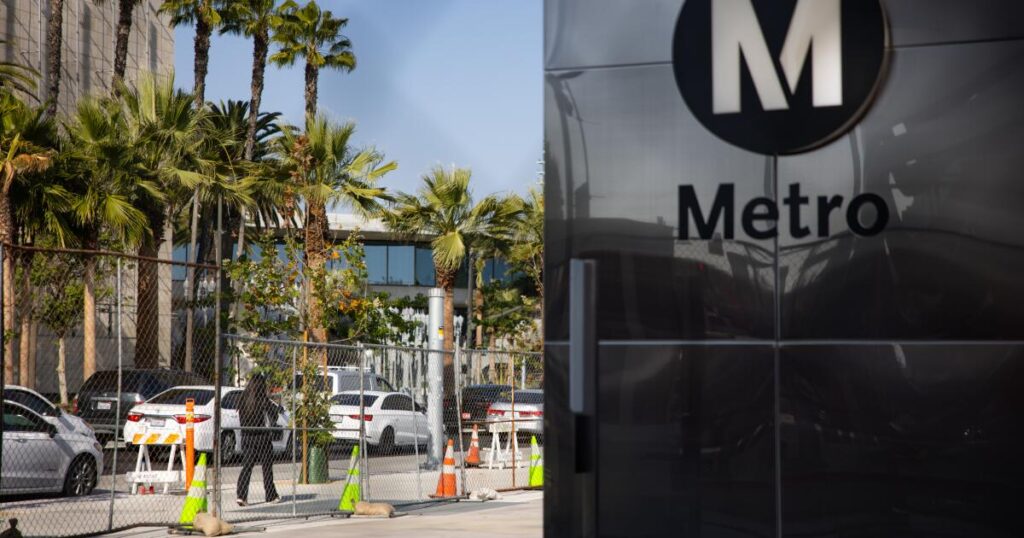
The shirts were a joke, but the demand they pointed to was not. When the D Line’s three new Wilshire Boulevard stations came online on May 8, a Los Angeles subway opening felt like a cultural event — for the first time in a generation.
It should have. A subway under Wilshire Boulevard was first funded by voters in 1980. The three stations took 46 years to build. Many of the Angelenos who voted to fund the original line never lived to ride it.
Now consider Madrid. The Madrid Metro reaches every corner of the city, on time, for $1.65. Right now, the city is building a four-mile underground extension of Line 11 for about $110 million per mile. The first four miles of the D Line cost about $900 million per mile. Eight times as much, and Madrid’s project will be finished in under four years.
I chose Madrid because it is not a low-wage autocracy that bulldozes whatever it wants; Spain has environmental laws, strong labor protections and democratic governance. What it does not have is a permission system engineered to maximize objections. Madrid’s regional government has real authority. Its engineers work in-house, not through endless layers of consultants. Its stations are standardized instead of designed from scratch one by one. The gap between California and Madrid is process and law.
California has allowed a patchwork of gatekeepers to make 46-year subways a predictable outcome. Unless the next governor works with the Legislature to change the rules, future transit projects will face the same fate.
Consider how this works in practice. The Beverly Hills Unified School District spent more than $15 million in school bond money — funds intended to fix aging classrooms — on lawsuits trying to stop the D Line from running under Beverly Hills High School. The district lost every round, and yet the suits added years to the project.
In 1962, Marin County pulled out of the Bay Area Rapid Transit system before construction began, leaving this wealthy suburb of San Francisco without rail and dooming the long-planned Geary Subway that would have served the densest neighborhoods on the West Coast. BART’s extension to downtown San José was projected in 2014 to cost $4.7 billion and open this year. It is now projected to cost $12.75 billion and open in 2037.
Every wealthy enclave gets a veto — or at least a right to stall progress while attempting a veto. Every rider pays the bill.
The cost of the avoidable procedural delays is bigger than the project budgets themselves. Los Angeles drivers spent 86 hours stuck in traffic last year and lost an average of $1,575 in time and productivity, according to INRIX. Nationally, congestion drained $85.8 billion from the economy. Every year California fails to build the transit it has planned, those numbers compound. The Wilshire corridor alone moves more than 30,000 bus riders a day. With their long commute times, they are the ones absorbing the cost of every Beverly Hills lawsuit.
California already knows how to fix this. It just did, for housing. As Angelenos were lining up for Ride the D shirts, Sacramento had just finalized Senate Bill 79, which overrides local zoning near transit stations and lets the state approve apartment construction projects that cities seek to block. The premise was simple: Housing near transit is too important to let one suburb’s parking concerns dictate a region’s future. The Legislature, after years of trying, finally agreed.
The same logic applies to the tracks themselves. A transit version of SB 79 could do three things. When a rail project is in an adopted regional plan, cities ought to have 90 days to issue construction permits, knowing the work will proceed whether or not they act. Urban rail extensions would receive a narrow California Environmental Quality Act exemption, extending the same logic California already applies to lighter projects such as bus rapid transit, light rail in existing rights-of-way and zero-emission rail. And any lawsuit challenging a transit project would have to be resolved within 270 days, with cases that exceed the deadline subject to dismissal. That’s the same expedited timeline California already uses for designated infrastructure projects. None of this is radical.
Preemption alone will not close the whole gap. Even Madrid’s advantage isn’t only about permitting. Researchers at New York University’s Transit Costs Project have spent years documenting why American transit costs eight to 12 times more than comparable projects in Italy, Sweden and Spain, and local veto power is only part of the answer. California also needs in-house engineering, standardized station designs and procurement built around economies of scale. The next governor will need to take on those problems too. But preemption is the first step, and it is the one the Legislature can take next session.
California’s two candidates for governor will spend the next five months talking about housing prices and the cost of living. Neither has yet proposed the most concrete thing a governor could do to lower both: Let California build transit again.
Payton Rockwood, a student at the Stanford Graduate School of Business, is a former transportation strategist.
The post The Wilshire subway took 46 years. Future projects should skip the decades of objections appeared first on Los Angeles Times.