- In today’s CEO Daily: Diane Brady interviews Cigna CEO David Cordani.
- The big leadership story: Inside Vietnam’s fast-growing economy.
- The markets: Mixed globally as the Nikkei 225 touches a new intraday high.
- Plus: All the news and watercooler chat from Fortune.
Good morning. The hardest decision for a CEO isn’t just knowing what to build. It’s knowing when to stop.
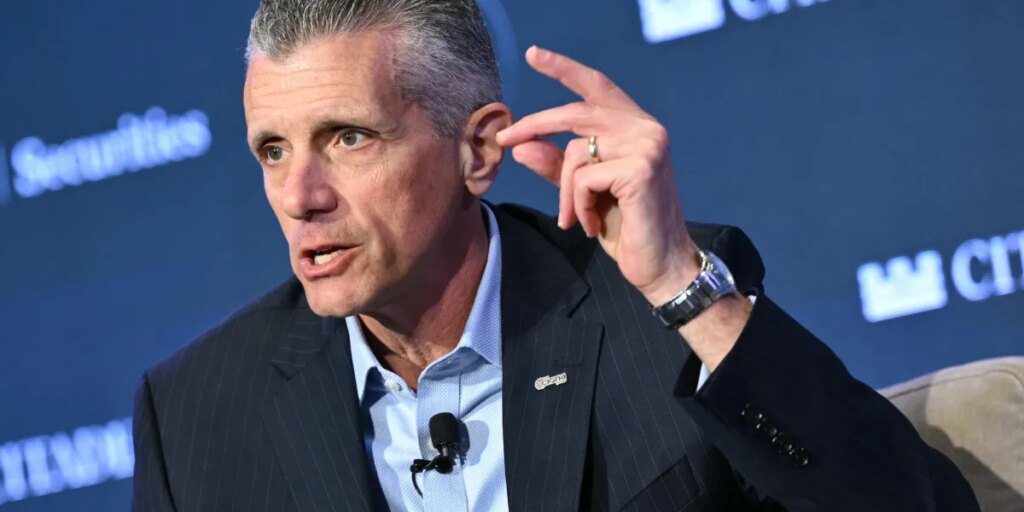
Not so for David Cordani, who grew Cigna from $18 billion in annual revenue to $275 billion over 17 years, in part through the 2018 Express Scripts acquisition that gave rise to the Evernorth health services business. Cordani is stepping down as CEO on July 1, becoming executive chairman. I spoke with him recently about the industry, AI, and what it actually feels like to hand over the keys.
On the his ‘leadership moment.’ When COVID-19 hit, Cordani was on the executive committee of the industry’s trade association. The question on the table: would they cover all vaccination costs? “I asserted that we need to,” he told me. Within two hours, they had an agreement and a plan worked out with HHS and the White House. Then he pushed further: would they proactively commit to covering all COVID-related services, regardless? “It was silent,” he said. “I postulated, if not, if not now, when? The board never said, ‘Let’s see the business case and the EPS impact.’ We said our mission guides this decision. To me, that is a leadership moment.” Cigna was the first major health insurer to waive patient costs for treatment.
On AI in health care. Cordani is measured about the impact AI will have. “Sometimes we overestimate the impact in the first two years and underestimate the impact over the first 10 years,” he said. He doesn’t believe AI is ready to make clinical decisions but sees real value in curating information to support them. His other concern: “It makes cyber challenges even more significant.” Worth keeping in mind as your own teams push for faster AI deployment.
On what leadership actually requires now. “Leadership today is less hierarchical, it’s less authoritative, it’s more coaching and enabling,” he said. “It has to have authenticity and vulnerability, and it has to have fluidity and dynamism in it.” His biggest regret? Not listening actively enough, early enough. “The impatience of a type A action orientation gets in the way of truly understanding.”
On letting go. “When you’re in the CEO role, you’re in the service of the company,” he said. “I challenge myself not to become too attached to the identity of CEO.” His definition of success: a transition so seamless he’s “somewhat forgotten” because successor Brian Evanko and his team will be so effective. After 25 years in leadership roles, he admits he’s going into an unknown. “I’m trying to be intellectually honest. I’m trying not to lie to myself,” he said. “I will seek to be an active part in helping the health and wellbeing systems evolve, because as a society we’re better off if people have higher levels of vitality.”
And a proven way to maintain that vitality is to continue to find a sense of purpose in what you do. Contact CEO Daily via Diane Brady at [email protected]
The post CEO David Cordani built Cigna into a $275B juggernaut but now wants to be ‘somewhat forgotten’ appeared first on Fortune.