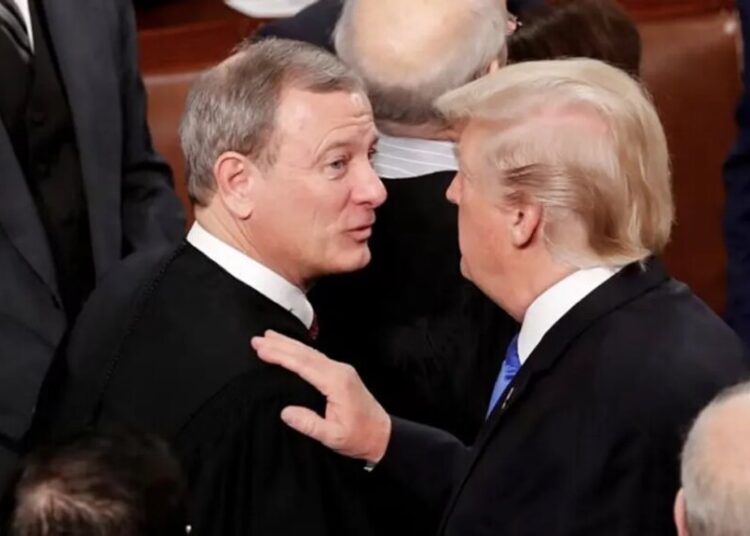
No matter how desperately Democrats may want to move beyond them, or just forget about them altogether, the Bidens keep popping up.
Jill has a memoir out (“View From the East Wing”), and Joe is working on one, too. Hunter emotes all over social media, and the Democratic National Committee has grudgingly released a report blaming Kamala Harris’s 2024 defeat in part on her reluctance to break with her old boss. On the final page of her book, Jill makes plain that the Bidens are determined to stick around: “As Dylan Thomas wrote, we will not go gentle into that good night, but rage, rage against the dying of the light.”
Nothing like quoting from a poem about defiance in the face of age and mortality to remind people of what went wrong with Joseph R. Biden Jr.
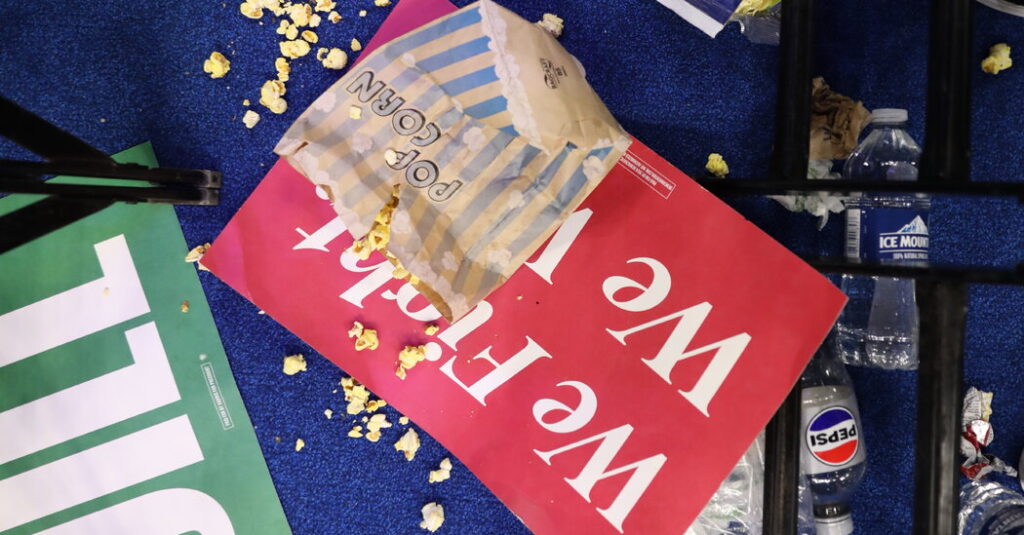
Maybe they’re hanging around because they feel that they never got their due. The Biden presidency was an odd one, overshadowed by the man who would be both its predecessor and its successor. During the four years that the Bidens lived in the White House, we all still lived in the so-called Trump era. Joe, whose eternal quest for the White House had a whiff of the obsessive, never even got a raucous, balloon-dropping convention, first because of Covid and then because he was out.
Now, almost exactly two years removed from the debate night that ended Biden’s political career, can his presidency be judged on its own merits, or did Biden matter mainly because he denied Donald Trump a second term — and then handed him one?
In “The Presidency of Joseph R. Biden: A First Historical Assessment,” a collection of historians and social scientists, led by Julian Zelizer of Princeton University, takes an early cut, and the judgments draw blood. The administration was “an ominous interregnum,” writes one; Biden was “better suited for a time gone by,” offers another; his presidency “ended somewhere between tragedy and farce,” concludes one more.
The book is the latest in a Princeton University Press series passing judgment on recently departed U.S. presidents (Zelizer edited similar volumes on Trump, Barack Obama and George W. Bush), and its chapters methodically review the Biden administration’s record on policy and politics: The battles with the Supreme Court and the efforts to prosecute the Jan. 6 rioters. Biden’s equity agenda in education and racial justice. The failings of “Bidenomics” and the pandemic crisis. The fights over transgender rights — which the president called “the civil rights issue of our time” — and border security. The challenges posed by China and Russia. And the two fateful withdrawals, one from Afghanistan, the other from the 2024 race.
Taken together, the historians’ assessments point to a recurring challenge for Biden: His substantive defeats at times offered temporary political advantages, but his major successes failed to deliver sustained political benefits. And that is how you become a one-term president.
Consider the Supreme Court’s 2022 decision in Dobbs v. Jackson Women’s Health Organization, which ended the constitutional right to abortion. Initial outrage against the ruling gave Biden and the Democrats “a potential political lifeline,” writes Mary Ziegler, a legal historian at the University of California, Davis, and provided a boost for the Democrats in the 2022 midterms. Yet Biden was “unable to channel the rage” that many Americans felt about the decision, Ziegler argues.
Even Harris, who became the administration’s top post-Dobbs proponent of abortion rights, could not adequately articulate — either as vice president or as the last-second nominee — what she would do about the matter, other than run on it.
In a sense, Dobbs defeated the Democrats twice over. Not only did it undermine abortion rights, but by improving the party’s midterm performance, it reaffirmed the belief among Biden and his advisers that he had enough support, in the public and in the party, to seek re-election. We know how that turned out.
Persistent inflation and a permissive border policy became dead weight on the Democrats’ 2024 prospects, but even Biden’s signature accomplishments failed to deliver much political gain. “Biden defied cynics as he pushed through a massive legislative agenda during his first two years,” Zelizer writes, citing the American Rescue Plan, the Inflation Reduction Act and the Infrastructure Investment and Jobs Act. “However, legislative success did not translate into political strength.” His ambitious climate policies likewise “failed utterly as a political strategy,” writes Paul Sabin, a Yale historian, and “yielded few political benefits in the 2024 electoral campaign, where climate change was barely mentioned.”
Politicians’ constant compulsion to blame the gap between policy victories and political support simply on poor communications, or worse, poor “messaging,” is a bit too pat, both self-serving and self-exonerating. If only they knew about all the great things I’ve done! But Biden — who, by late in his term, “had become among the most inaccessible presidents in modern history,” Timothy Naftali of Columbia University writes — did himself few favors on that front.
“He did not just fail to tout his achievements; he seldom even tried,” Michael Kazin, a historian at Georgetown, complains. On education policy, Biden’s “lack of a declarative, coherent message largely ceded to his opponents the upper hand in defining his education legacy,” writes Natalia Mehlman Petrzela of the New School.
Biden should have “framed his vision more decisively and enthusiastically,” she argues, as well as better countered attacks from the right that accused him of “left-wing ideological capture,” of supporting curricular changes that focused on identity, inequality and grievance.
It is harder to deflect such attacks, however, when they are not entirely off the mark. As Mehlman Petrzela herself writes a few pages later, “the most defining aspect of Biden’s administration is ideological: the embrace of ‘equity’ as a guiding principle.” And Princeton University’s Khalil Gibran Muhammad hails Biden as “America’s first equity president” and seems to wish that the president had made that case with greater frequency and greater force.
In her memoir, Jill Biden reimagines her husband’s communications struggles as something between a mistake and a virtue. “While Joe was in office, I think he and I both erred on the side of silence, dignity and letting news cycles run their course,” she explains. Now she wonders if she should have engaged with the news cycle more aggressively, especially right after the president’s Hindenburg-level disaster of a debate against Trump in June 2024.
“We were trying so hard to reassure everyone that we didn’t take the time to acknowledge that he looked very unwell in that debate, to say to the public: ‘Yes. That was bad, no doubt.’”
Biden’s struggles with communication surely flowed in part from his age — read “Original Sin” by Jake Tapper and Alex Thompson to see how his staff shielded him from the public as his condition deteriorated — but they may also reflect that he was an imperfect vessel for the positions he felt compelled to take. The cradle Catholic ambivalently supporting abortion rights. The author of the 1994 crime bill as a champion of racial justice. The Democrat who won the nomination precisely because he was perceived as more centrist and moderate, the not-Bernie candidate who could beat Trump, while also pledging to deliver “one of the most progressive administrations in American history.”
Is it that Biden communicated poorly or that he didn’t quite believe it all himself?
The one arena where Biden seemed most devoted to a particular cause, more faithful to a long-held belief, was one that would split his party on generational and ideological grounds: his dedicated backing of Israel after the brutal Hamas attack on Oct. 7, 2023. “Whatever credibility the administration gained from its unswerving support of Israel was lost when Biden declined to exercise enough leverage to change Israeli actions that caused so many civilian casualties,” writes Daniel Kurtzer, a former U.S. ambassador to Egypt and Israel and now a scholar at Princeton.
The unpopularity of the Biden administration — including its record on inflation and the sense that it was, let’s say, less than forthcoming on the president’s true condition — is reason enough that any former official from Team Biden may struggle to win the Democratic nomination in 2028.
But, to the extent that foreign policy plays a role, Israel and Gaza may prove a crucial dividing line as well. Even Jill Biden stakes out her territory, writing in her memoir about the Post-it notes she left for the president on the bathroom mirror, warning him about Prime Minister Benjamin Netanyahu of Israel.
“Net has to stop,” the first lady wrote. And in another: “Don’t let BN use your goodness.”
As I look back on this presidency, it seems clear that Biden’s most persistent pitch was not about foreign policy, or even about specific domestic legislation, as much as it was about a certain feeling about America. Biden wanted to save the nation’s soul, he told us repeatedly, which to him basically meant saving it from Donald Trump. The videos that kicked off his campaigns for 2020 and 2024 were all about Trump: The first focused on Charlottesville, the second on Jan. 6.
“Biden was an unlikely person to be put in charge of carrying out the grandiose mission of saving the nation’s soul,” Zelizer writes in the book’s introduction. The 46th president was never a particularly strong orator, especially so as he aged, and he had not yet articulated a distinctive vision of national identity and purpose. During the 2020 campaign, even Biden’s own pollster couldn’t make sense of it. “No one knows what this soul of America bullshit means,” he said.
In “View From the East Wing,” Jill Biden tries to clarify. The Bidens “resolved to create a new beginning for the country after four years of toxic politics,” she writes. They hoped Americans “would remember how good unity felt.” And she asserts that “the country was a kinder place” with her husband in the West Wing.
Even accepting this platitudinous mission statement, that new beginning barely got started. The good memories remain distant. And a kinder America feels ever more remote. “The soul of America, if Trump were the measure, had not been saved,” Zelizer writes of the Democrats’ loss in 2024. “Biden had failed to fulfill his fundamental promise.”
But failure does not always mean departure. As Dylan Thomas wrote, wise men at their end know dark is right. Yet the Bidens still rage, rage against the dying of the spotlight.
The Times is committed to publishing a diversity of letters to the editor. We’d like to hear what you think about this or any of our articles. Here are some tips. And here’s our email: [email protected].
Follow the New York Times Opinion section on Facebook, Instagram, TikTok, Bluesky, WhatsApp and Threads.
The post The Verdict on Biden Is In appeared first on New York Times.