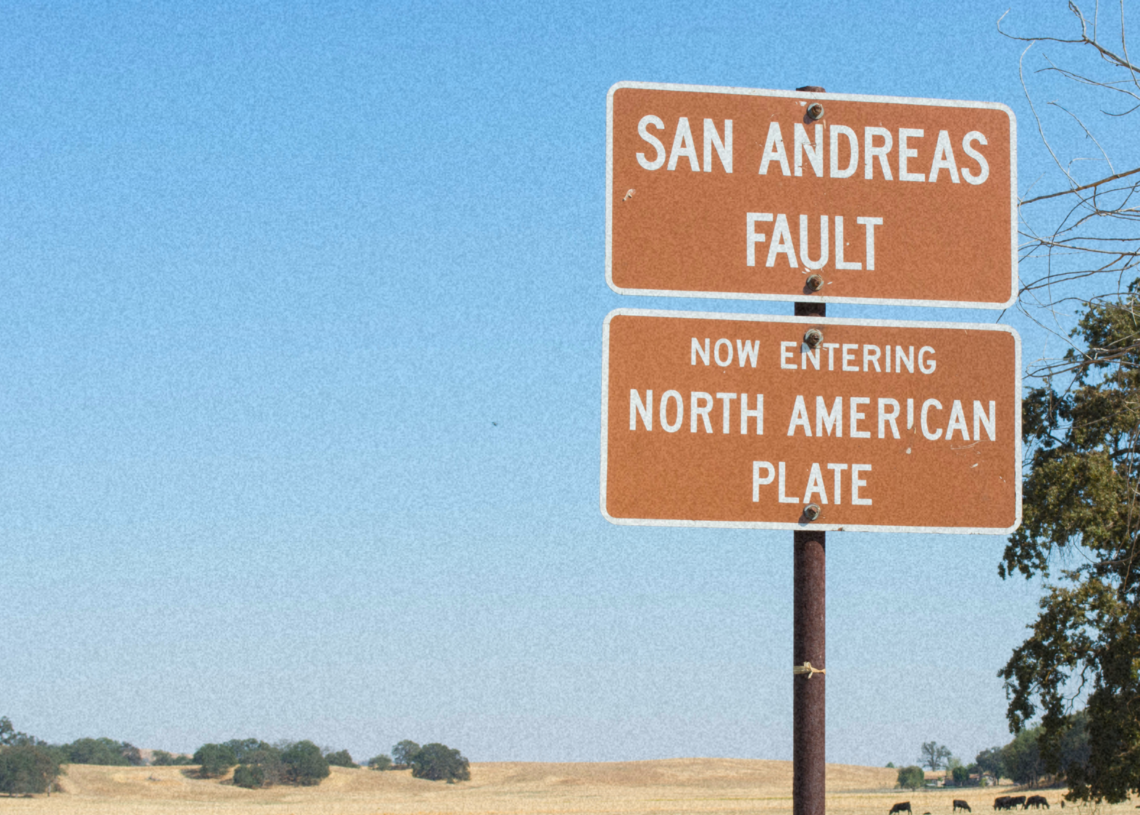
Californians have been worried about “the Big One” for decades. That one massive, apocalyptic earthquake that will rip the state to shreds. While those fears have not yet borne out, new research suggests that stress levels on major faults beneath Southern California are now so high that a catastrophic earthquake may be inevitable.
According to a study published in the Journal of Geophysical Research: Solid Earth, tectonic stresses along Southern California’s two most dangerous fault systems, the San Andreas and San Jacinto faults, have reached their highest levels in at least 1,000 years.
However, the findings don’t predict an imminent earthquake. Even after years of technological advancement, earthquake prediction isn’t terribly reliable. The study isn’t 100 percent predicting that a cataclysmic earthquake is absolutely going to hit California in X amount of time. All it’s saying is that the geological conditions for such a quake are increasingly present in the region.
Researchers at the University of Bern reconstructed a millennium of earthquake activity using geological evidence, historical records, radiocarbon dating, and advanced computer simulations. Their model tracked how stress accumulates along faults over centuries and how past earthquakes influence nearby faults.
Researchers Have Their Eyes on Southern California’s Earthquake Gate
The most concerning region is an area northwest of LA called Cajon Pass, the convergence point of the San Andreas and San Jacinto faults. Researchers call this area an “earthquake gate.” Just as a gatekeeper can determine whether or not a person gains entry into a hot new club or attains knowledge of a cool new restaurant, an earthquake gate determines whether a quake remains confined to one fault or starts jumping to another to create a much larger chain reaction.
The team’s model found that stress levels on both fault systems are nearing ranges commonly associated with earthquakes that break out across multiple faults at the same time. The larger the rupture, the larger the quake, potentially creating one so big that it affects LA, but then spills over into San Bernardino, Riverside, and even way out east into the Coachella Valley.
The last time a megaquake hit the region was way back in 1857, when a 7.9 magnitude earthquake devastated the area. Human society has grown more complex in the nearly 200 years since. While we have made huge advancements in earthquake-proofing, there’s just no way of truly knowing what will happen if another 7.9 magnitude or higher earthquake strikes.
The post Southern California Faults Hit a 1,000-Year Stress Peak. Is a Megaquake Next? appeared first on VICE.