Craig Fehrman is the author of “This Vast Enterprise: A New History of Lewis & Clark.”
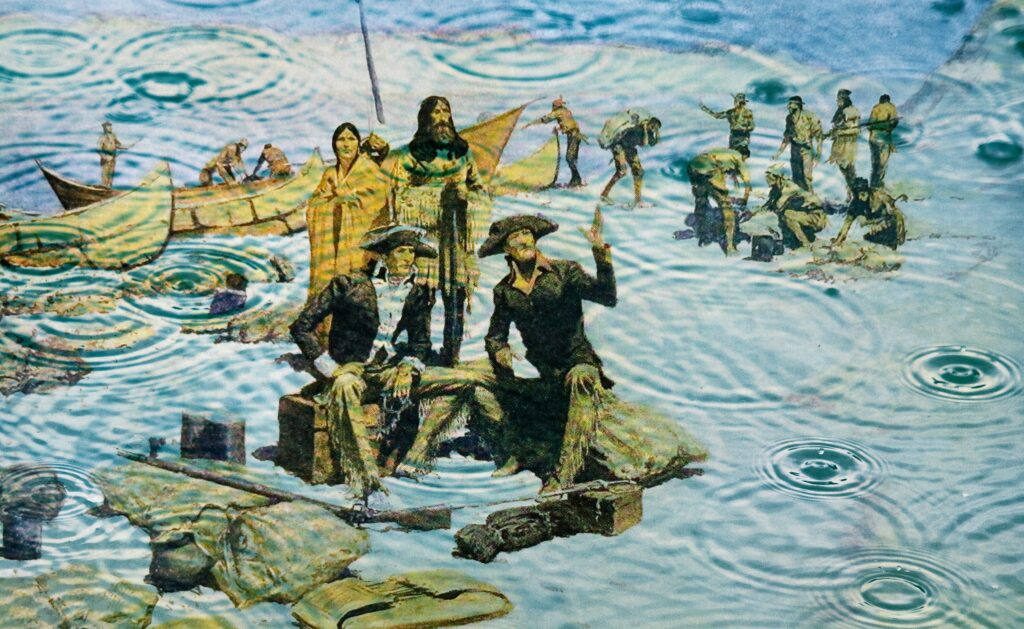
On June 15, 1806, Meriwether Lewis faced something unexpected: rain. He and his famous expedition were finally headed home — and ready to recross the Rocky Mountains. Then they woke to weather that forced them to wait. After an hour or two, they decided to push on. “As it had every appearance of a settled rain,” Lewis wrote in his journal, “we set out.”
This summer — 250 years after Thomas Jefferson’s Declaration, 220 years after President Jefferson’s expedition got drenched — Americans are revisiting our history. Much of the commentary has been marked by hindsight, by calls to celebrate (or critique) what we’ve become. But here’s a truth that should be self-evident: People in the past did not know what would happen next. They lived their lives like we live ours, trapped in the present tense, uncertain about the future.
The journals of the Lewis and Clark expedition are among the best places in American history to see this. In fact, they can teach us to read all of that history differently, with an eye toward human experience and unpredictable outcomes. In those journals, the captains and their men recorded more than a million words — day by day, worry by worry, choice by choice.
On that soggy June morning, Lewis and his men tried to follow some of the same Native roads they had followed the year before. In 1805, they had moved west toward the ocean. Now they were moving east toward home, though the rain made everything slippery. “It is with much difficulty our horses can get on,” Lewis wrote.
The next day went worse. The captains were literally retracing their steps — Lewis noted their return to Hungery Creek, which William Clark had named the previous fall because “we have nothing to eate.” (The explorers ended up dining on one of their horses.) But the route still surprised them. While the rain had stopped, the road ahead was blanketed in deep snow.
The snow made it easier to move — the crust was so thick their horses could walk on top of it, avoiding sharp rocks and fallen trees, though that crust would sometimes break and plunge a horse down to its belly. But the snow also made it impossible to stay on track. Even the tree blazes marking the road were buried.
Lewis and Clark specialized in information. Before returning to the Rockies, they’d learned as much as they could about the way home — by interviewing Native leaders, by tracking river heights to gauge how fast the snow was melting. Once they entered those “tremendious mountains,” as Clark called them, they kept learning. They looked for trees that were missing bark, knowing it was a sign that people had passed by and eaten the bark to stay alive.
None of this helped them keep the road. On June 17, only two days after heading out, they decided to turn around, a bitter but wise choice. Lewis called it a “retrograde march.”
The captains dispatched some men to try to hire a Native guide. While they waited, they debated other solutions. They could go back to the Rockies and send a scout party ahead, with Clark blazing trees himself. They could attempt a new and radical route, swinging far to the south. There were no good options.
Thankfully, they found a guide who would lead them. They made it through the Rockies. And yet their journals hint at how many ways their journey could have gone. They could have died in those tremendous mountains. They could have made it through but at a slower pace, possibly leading Lewis to skip a hunting trip a few weeks later — a trip where he was accidentally shot in the buttocks by one of his men.
Each precarious moment and potential turning point in Lewis and Clark’s journals — and there were hundreds of such moments — underlines that they could not see or control what was to come. The past was not inevitable, and neither is the future. The fate of America has never been predestined — not in 1776, not in 1806, and certainly not today.
This is a good perspective on history — and on life, especially in an age when so many things feel controlled by algorithms, by partisan gridlock, by bureaucratic inertia.
When I want to remind myself that I can still make choices, I read an entry from Lewis and Clark. The National Endowment for the Humanities helped fund a free online edition of the 13-volume “Journals of the Lewis and Clark Expedition,” meticulously edited by Gary Moulton. You can pull up any day from the expedition. You can read about the explorers’ fears. You can read about their hopes. You can see them struggle with uncertainty.
And then you can click the “next” button and see what they did about it. You can see that, even when it rains, we push on.
The post Think you can see America’s future? Learn from Lewis and Clark. appeared first on Washington Post.