I can’t remember the man’s name, or the year we met, but I remember the conversation we had. It was the early 2010s, at a customer seminar I conducted for my former employer, back when I worked in tech; he was a client, flown up to New England from the south. The world, we agreed over cafeteria chocolate chip cookies at lunch, while everyone else made small talk about the weather, becomes a far better place when people travel to places either far-flung or foreign, meet folks they never would have otherwise, and connect with their cultures and lifestyles. Satisfied with this accord, we shook hands, went back to the classroom, and recommenced corporate droning.
[time-brightcove not-tgx=”true”]
For the last decade and a half, I have wracked my brain to find the perfect turn of phrase for describing that brief interaction while at the same time properly weighing it as a key moment of my late 20s. As it happens, the Brazilian filmmaker and screenwriter Kleber Mendonça Filho had that phrase tucked in his pocket all along like a kerchief: “You might have one of the best conversations in your life waiting for a flight with somebody from Oklahoma, or from the south of Italy, that you just happen to talk to for 16 minutes, and you’ll never see that person again,” Mendonça Filho told me in a recent exchange. “That’s the logic of life.”
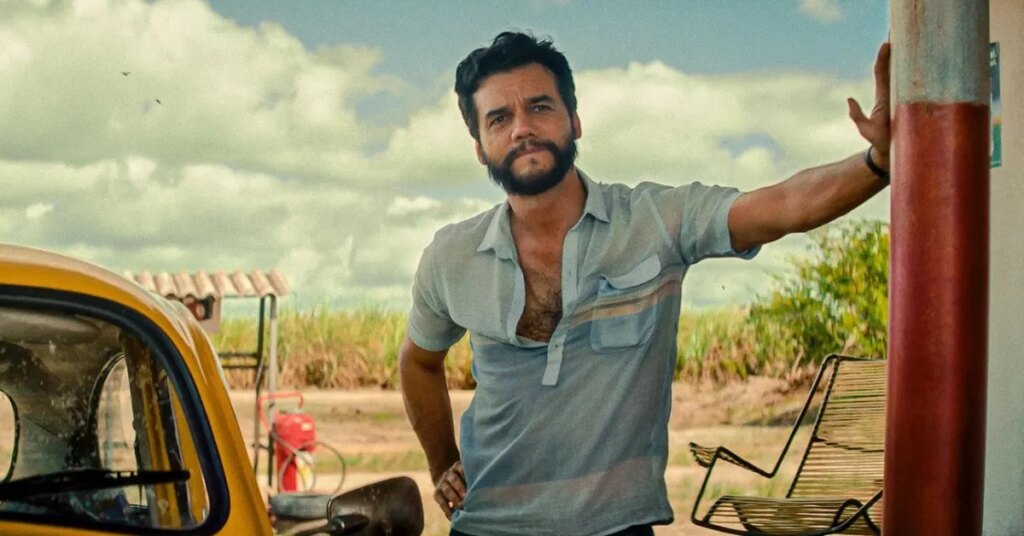
The logic of life. It sounds mathematical and scientific to the ear, but it’s the primordial “stuff” of Mendonça Filho’s cinema, embodied in his latest film, The Secret Agent, where Armando (Wagner Moura), a man who is seemingly more than meets the eye, turns out to be more and less at the same time: not the slick, cool spy implied by the title, but a person attempting to flee grave injustice, though this description does no justice to the gravity of Armando’s circumstances. He is a father attempting to reconnect with his young son, Fernando (Enzo Nunes), and an academic who’s drifted out of his lane and into that of clandestine operations. The film is tense, until it relaxes; it is loose and airy, until it swiftly, and cruelly, constricts. If one walks into it expecting to see a foreign arthouse James Bond film, one will be disappointed; if one is aware of Mendonça Filho’s aesthetic—roomy and unhurried, but relentlessly alert at the same time—one will be rewarded.
Even uninitiated audiences who practice patience may embrace The Secret Agent as a story of the moment, given the ominous backslide into authoritarianism developed nations around the globe are currently experiencing. The pieces are in place to designate the film as Contemporary and Important, after all, having cleaned up at this year’s Cannes Film Festival; Moura won Best Actor, and Mendonça Filho won Best Director, the FIPRESCI Prize, and the Art House Cinema Award, while the movie itself received a nomination for the Palme d’Or. These successes come on the heels of Walter Salles’ I’m Still Here, likewise fixated on political turmoil in mid-1900s Brazil, winning Best International Feature Film at the 97th Academy Awards. The timing has symbolic power, and that power has irresistible pull.
But affixing The Secret Agent to current international politics requires an acknowledgment that the film’s story pertains less to Brazil’s present than its past. Today, the country is under administration by its center-left Workers’ Party and its leader, Luiz Inácio Lula da Silva; in 1977, the year in which the film is set, Brazilians suffered through military strongman General Ernesto Geisel’s governance following his rise to power and the presidency in 1974, deep into Brazil’s 21-year military dictatorship.
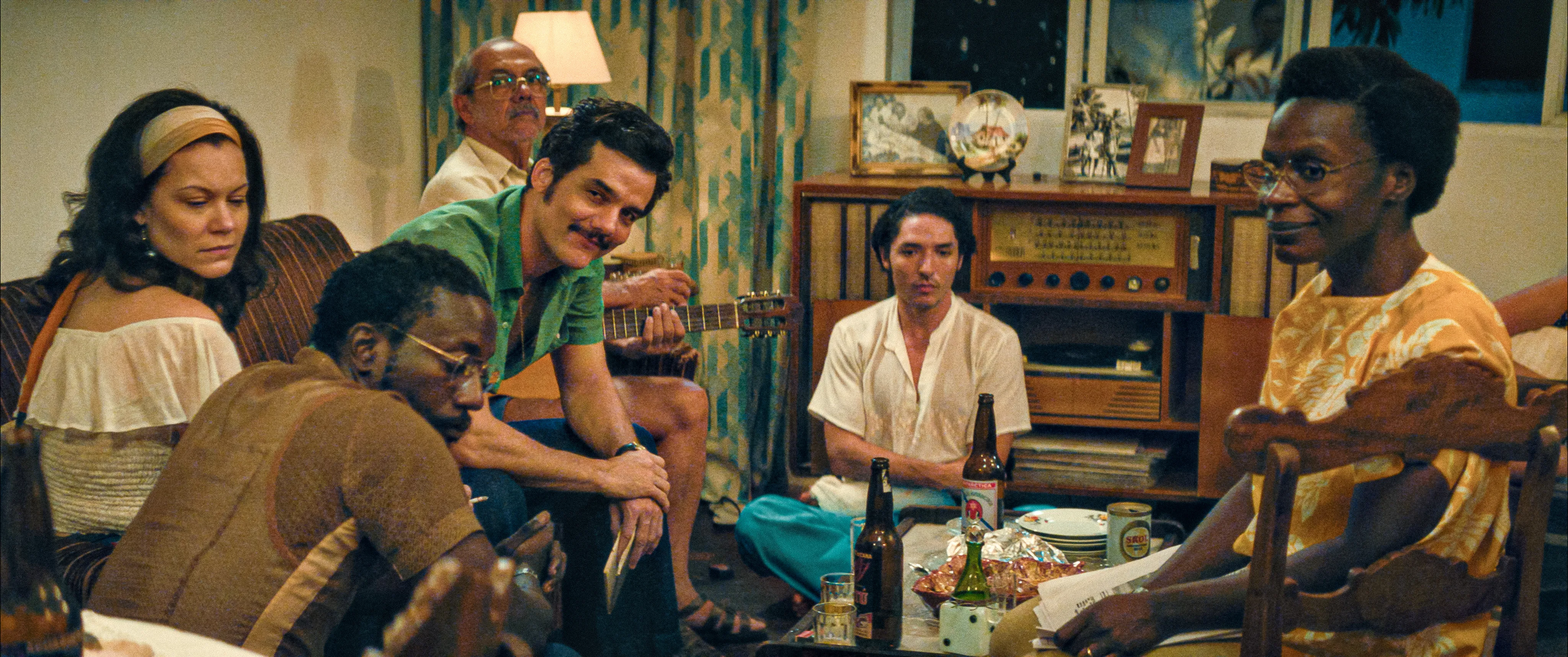
One may be inclined to interpret The Secret Agent as a mirror held up to the impact of right-wing political brute force on a citizenry; such a reading wouldn’t be completely wrong. But Mendonça Filho, the son of a historian, structures the film as a reminder first and a reflective surface a distant second. “Brazil has a thing with memory,” Mendonça Filho explains. “Sometimes I think Brazil would rather not remember things. It’s almost like a self-inflicted amnesia to avoid discussing its unpleasant past.” Making a film about late 1970s Brazil without invoking Geisel’s presence is, at least to an extent, impossible. In The Secret Agent, Geisel effectively makes cameo appearances via the framed portraits that pepper the film’s interior compositions; he’s less a character, and more an ominous element of mise-en-scène that casts a shadow over these shots.
Perhaps because Geisel is represented in the film, Mendonça Filho doesn’t talk about him; he instead brings up Dilma Rousseff, Brazil’s 36th president who served from her 2011 inauguration until her 2016 impeachment. “She herself was tortured in the military dictatorship,” Mendonça Filho says. “And when (Jair) Bolsonaro comes into power, discussing the (National Truth Commission), he says that only dogs look for bones.” Maybe that societal amnesia Mendonça Filho refers to isn’t self-inflicted after all; men like Bolsonaro seem to do just fine attempting to bludgeon atrocities from Brazilians’ recollections on their own.
Nestled within that context, The Secret Agent functions as a kind of memory exercise, where civilian life under Geisel’s presidency is experienced at the ground level. A spy film with the same context would be a hoot, especially under Mendonça Filho’s direction; see Bacuaru, his 2020 codirecting effort with Juliano Dornelles, for proof. (Imagine John Carpenter’s Assault on Precinct 13, but set in the sertão rather than South Central.) But his interests in The Secret Agent lie in observing humanity alive and well in spite of the influence of authoritarianism.
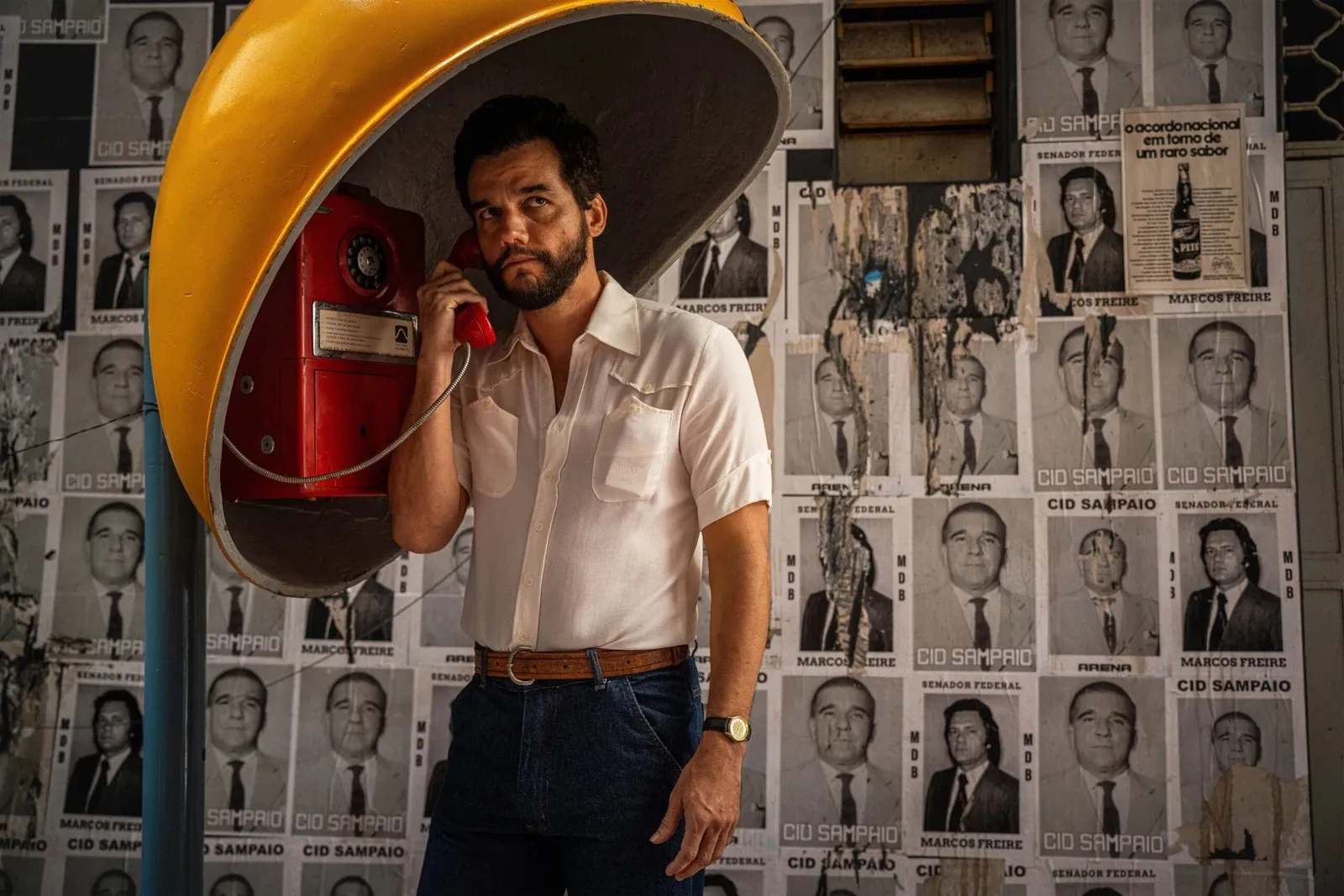
Mendonça Filho’s philosophy about “the logic of life” plays a central part in fostering that interest. “There is one kind of playbook in filmmaking, that you have to keep the story moving,” he says. “I actually believe that I keep my stories moving all the time. It’s just that I love the idea of giving a narrative the logic of life.” He brings up Dona Sebastiana (Tânia Maria), the matriarch presiding over the apartment complex where Armando moves in alongside other political dissidents fleeing from persecution and imminent death; if The Secret Agent isn’t the sort of picture people congregate over to gab about “fan favorite” characters, she has become one nonetheless, likely owing to the casual coarseness and air of mystery layered over her abiding sense of compassion. “It’s become a very popular discussion point,” Mendonça Filho says, laughing. “People are completely obsessed. They actually write me on social media, and they have memes saying, ‘Please tell me what did Sebastiana do in Italy? I need to know what she did in Italy. It’s unacceptable that this 77-year-old woman will say, ‘I’ll take it to the grave, but I did three things in Italy.’”
In another movie, Sebastiana, as a character, would never have the liberty to mention in passing her possibly lurid, but almost certainly exciting Italian hijinks; in another movie still, we might find out what the three things are in a post-script title card. The fondness and attention Mendonça Filho shows her by writing little moments for Maria’s performance to shine is integral to his filmmaking. At points throughout the narrative, there is a sense, emanating from behind the camera, that Mendonça Filho yearns to pivot from Armando–or for that matter, the protagonists in any of his other films–and follow, for instance, Dona Sebastiana, or Claudia (Hermila Guedes), Armando’s neighbor and eventual lover, or Hans (the late Udo Kier), playing a Holocaust survivor mistaken, seemingly willfully so at times, as a Nazi fugitive by the corrupt police chief Euclides (Robério Diógenes). The logic of life allows for such digressions, and such digressions occur in miniature in The Secret Agent: in the way Sebastiana holds court with Armando and his fellow refugees, or Hans dances in the street during a carnival celebration.
The logic of life is fickle, though. In September, Brazilian business leaders beseeched the Brazilian Academy of Cinema to nominate Marianna Brennand’s Manas as the country’s representative for the 98th Oscars over The Secret Agent. Mendonça Filho’s antagonist here is an erstwhile Eletrobas executive who holds a grudge against Armando; one doesn’t need to read between those lines to intuit the motivation behind the short-lived campaign for Manas, a drama invested in child sexual exploitation within Amazon rainforest communities. For Mendonça Filho, this is history repeating. Political sabotage quashed his 2016 film Aquarius from being entered as a candidate for the 89th Oscars, though grant that there’s a massive gulf between government interfering in this process versus a cabal of entrepreneurs; and grant also that there’s a gulf between 2016 Brazil and 2025 Brazil. “I think given all the obstacles and all the challenges for the Lula government to come in after four years of the far right basically working with a wrecking ball every day, I think we are in pretty good shape,” Mendonça Filho says. “This whole idea of being in a democratic society is back.” This, perhaps, explains why The Secret Agent is doing well at the Brazilian box office, despite its focus on the past—that allergen to Brazilians’ sensibilities. (Not coincidentally, I’m Still Here did well domestically, too, as the highest-grossing Brazilian film since the COVID-19 pandemic.) “My experience as a Brazilian is that Brazil would rather avoid the past,” Mendonça Filho adds. “Of course as a filmmaker, I’m quite the opposite. I think the past is an endless source of understanding, and also of stories.” And in that, the logic of life, as well.
The post How The Secret Agent Appeals to the Brazilian Collective Memory appeared first on TIME.