The United States and Iran are expected to finalize a deal within the next 24 hours, a move that would extend the fragile ceasefire in the months-long war, Pakistan’s prime minister said Saturday — though Tehran cast doubt on the prospect, and U.S. officials did not immediately confirm it.
Shehbaz Sharif, prime minister of mediator Pakistan, said in a post on X on Saturday the two sides were “closer to a peace deal than ever before,” with finalization “likely expected” in the next day. A deal could be signed electronically followed by technical talks next week, he said.
Sharif’s comments come a day after officials from the United States, Iran and Pakistan outlined the proposed ceasefire agreement. The deal was said to be in its final stages, though logistics to decide when or where an agreement would be signed were not yet agreed — and key aspects of terms to ensure longer-term peace appeared in dispute.
On Saturday, Iran’s Foreign Ministry spokesman Esmaeil Baqaei said in comments posted by state-run media that no agreement would be signed Sunday, although he did not rule out it happening in the days ahead.
The White House did not immediately respond to a request for comment.
The prospect of a deal between the U.S. and Iran comes after one of the most intense weeks of conflict since the ceasefire began in April.
Sharif wrote on social media Friday that the “agreed upon text of the peace deal has been reached.” Pakistan has acted as the main mediator between Washington and Tehran since the ceasefire was declared in April.
A senior Trump administration official confirmed in a call with reporters Friday that the two sides were 80 to 85 percent of the way to reaching a deal but added that there was still uncertainty that the Iranians would agree.
Hours later, U.S. Central Command said it downed multiple Iranian attack drones attempting to strike commercial ships in the Strait of Hormuz. Since last weekend, the conflict has intensified, as Israel carried out airstrikes in southern Beirut, targeting the Iran-backed militant group Hezbollah. Iran fired missiles Sunday at Israel, which then retaliated, and Iranian forces downed a U.S. helicopter in the strait Monday.
Switzerland’s Foreign Ministry said Saturday it had been in touch with both the U.S. and Iran, and had proposed the country as a possible venue for signing an agreement.
Officials suggested that the initial deal would extend the ceasefire for 60 days, during which time Iran would be expected to reopen the vital Strait of Hormuz and work with the United States to dismantle nuclear material in the country that could be used to create a weapon. In exchange, Iran would eventually receive relief from sanctions and the U.S. blockade, as well as access to billions of dollars in frozen assets — but would have to reach certain benchmarks that would be set through further negotiations.
Iran’s foreign minister, Abbas Araghchi, told state media Friday that although he was “hopeful” about the prospects of a deal, some of the terms he described differed — including the future of the Strait of Hormuz.
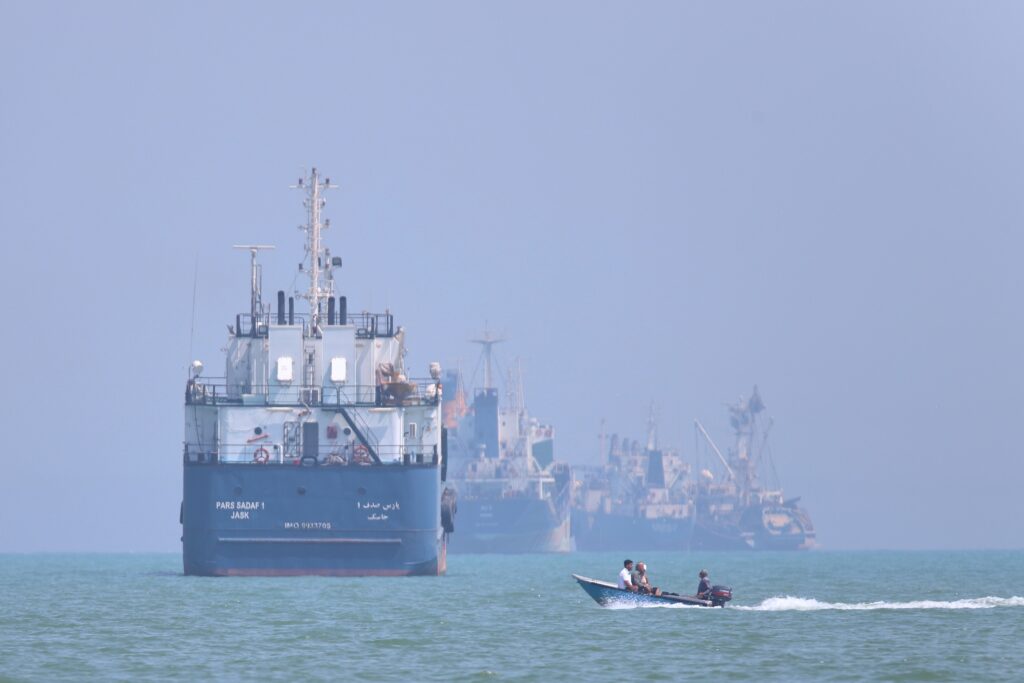
The nearly four-month war has strangled global shipments of oil, gas and other commodities through the strait and driven a global spike in energy prices.
Israel is not party to the negotiations, and the extent to which Israel’s clashes with Hezbollah in Lebanon could derail any agreement also remains unclear. On Saturday, Israel ordered residents of towns and villages in southern Lebanon to evacuate and said it had intercepted a “hostile aerial target” that had crossed into Israeli airspace from Lebanon.
Experts have said that substantial agreements for a longer-term peace appear only far on the horizon, and the terms remain uncertain.
Mohammed Baharoon, the director general of B’huth, a Dubai research center, said he believes that immediate steps taken by either the U.S. or Iran will be about “confidence-building” for future negotiations — and still leave both countries further apart than they were when negotiations began under the second Trump administration in April 2025.
Baharoon said attacks in the past week by Iran have made clear Trump’s relative weakness and the strength of hard-liners in Iran’s government, who now see themselves as “the policemen of the Arab world.”
“The ones who have benefited from this are the hard-liners in Israel and Iran,” he said.
Adam Taylor and Suzan Haidamous contributed to this report.
The post U.S. and Iran close to finalizing deal, mediator Pakistan says appeared first on Washington Post.