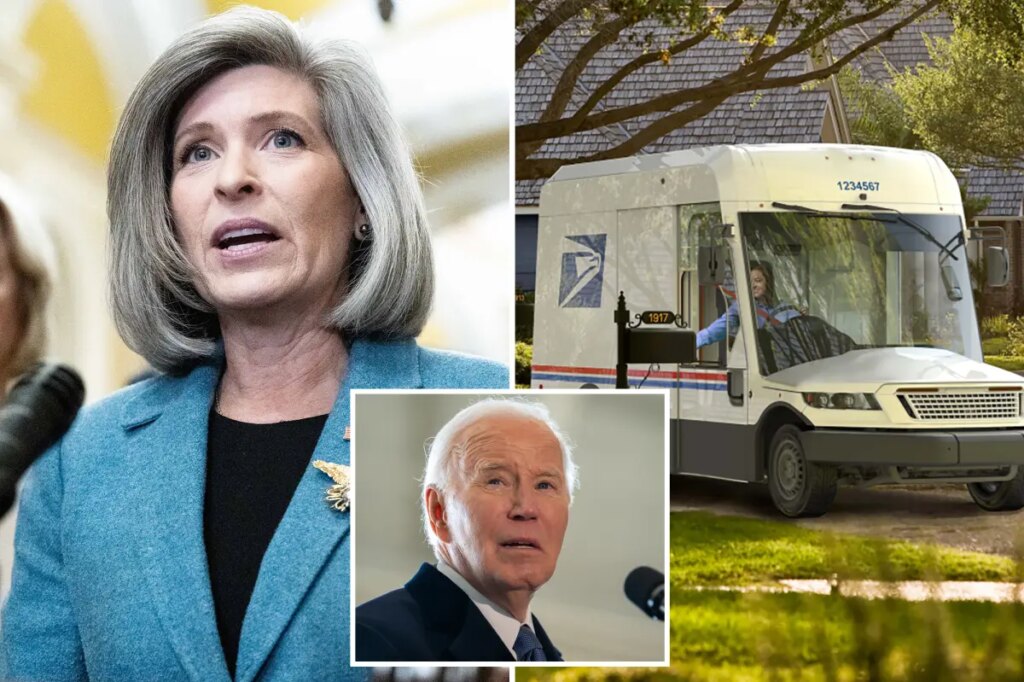
WASHINGTON — The US Postal Service’s promised all-electric fleet is still woefully behind schedule, with more than $3 billion in taxpayer funding out the door and just 612 of the expected 35,000 battery-powered delivery trucks built, according to a letter sent to Sen. Joni Ernst (R-Iowa) and obtained by The Post.
Former President Joe Biden’s 2022 Inflation Reduction Act (IRA) set aside $3 billion for what Ernst has since ripped as a green “boondoggle” that saw almost all of that amount paid to Wisconsin-based defense contractor Oshkosh to build the environmentally friendly mail trucks.
Ernst, who chairs the Senate’s DOGE caucus, said in July of this year that with $2.6 billion paid to Oshkosh and just 250 trucks produced so far she was “working to cancel the order and return the money to the sender, the American people,” as part of a rescissions package passed by Congress.

As of Nov. 10, a USPS executive told the senator, only 612 Next Generation Delivery Vehicles that are battery-electric powered (NGDV BEVs) are on the road bringing mail to 15 sites across the nation.
“[T]his number grows weekly,” added Peter Pastre, vice president of government relations and public policy at USPS, in the Nov. 17 letter to Ernst.
Pastre’s disclosure means 362 NGDV BEVs were made by OshKosh in a little more than 100 days, working out to a rate of between three and four trucks per day.
Pastre added that another 2,010 Ford E-Transits are off the lot and delivering mail at 65 locations nationwide, while another 6,727 have been delivered but not deployed.
Those vehicles, however, are ordinary “left-hand drive vehicles” that can’t go on the same routes as the right-hand drive NGDV BEVs.
In addition, 6,651 charging ports — around three times the number of vehicles currently being used — have been “commissioned at 75 sites,” according to Pastre, who claimed that none of the $3 billion appropriated under the IRA will be “available for rescission.”
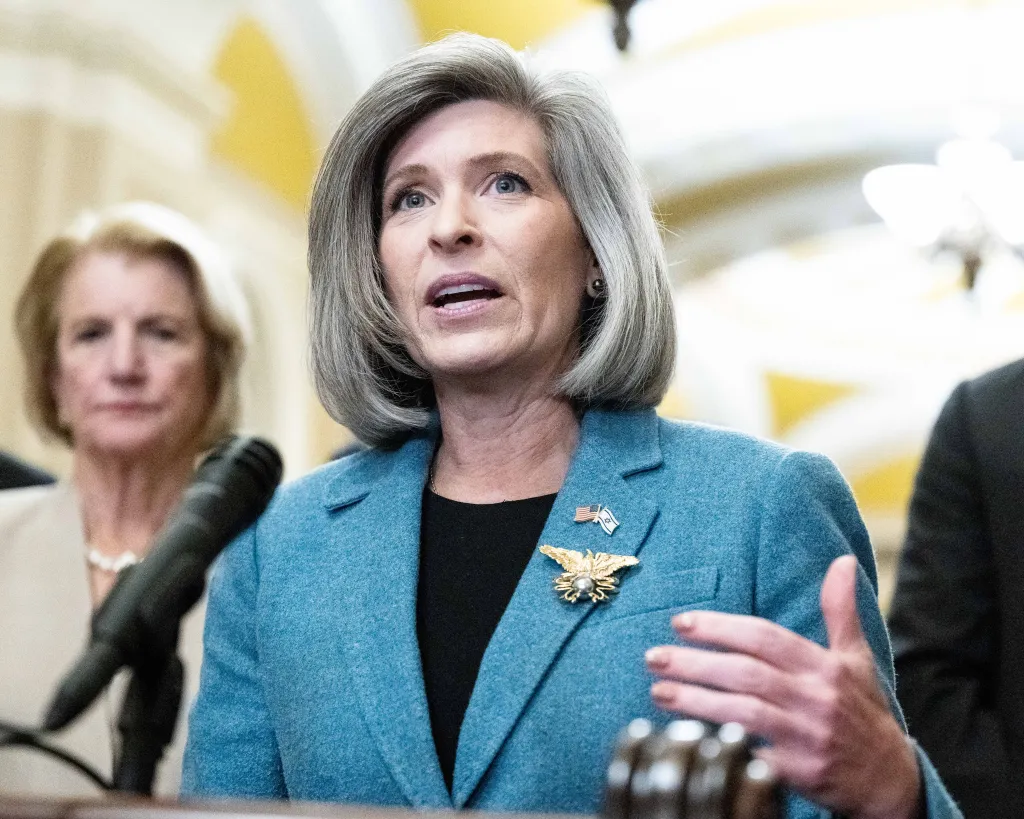
“Here is a ‘fact check’ for the USPS — spending $1.7 billion to produce only 612 EVs is a tremendous waste,” Ernst said.
“As if that was not bad enough, they purchased 6,727 additional EVs that aren’t even being used. Instead of spending another billion dollars on an EV fleet that’s lost in the mail, it’s time to pull the plug on this boondoggle and return the money to sender — the taxpayers.”
The “greening” of USPS was part of a $10 billion project to have 106,480 new vehicles in its fleet by Sept. 30, 2028, around 60,000 of which were supposed to be next generation and 35,000 of which were supposed to be battery-electric powered.
“Despite some of the concerns expressed in the media and by your office, the vehicle testing and corrections that led to a modest adjustment in the delivery schedule have not been out of the ordinary for a situation in which a supplier is outfitting an entirely new manufacturing facility and creating an entirely new purpose-built vehicle,” Pastre claimed.
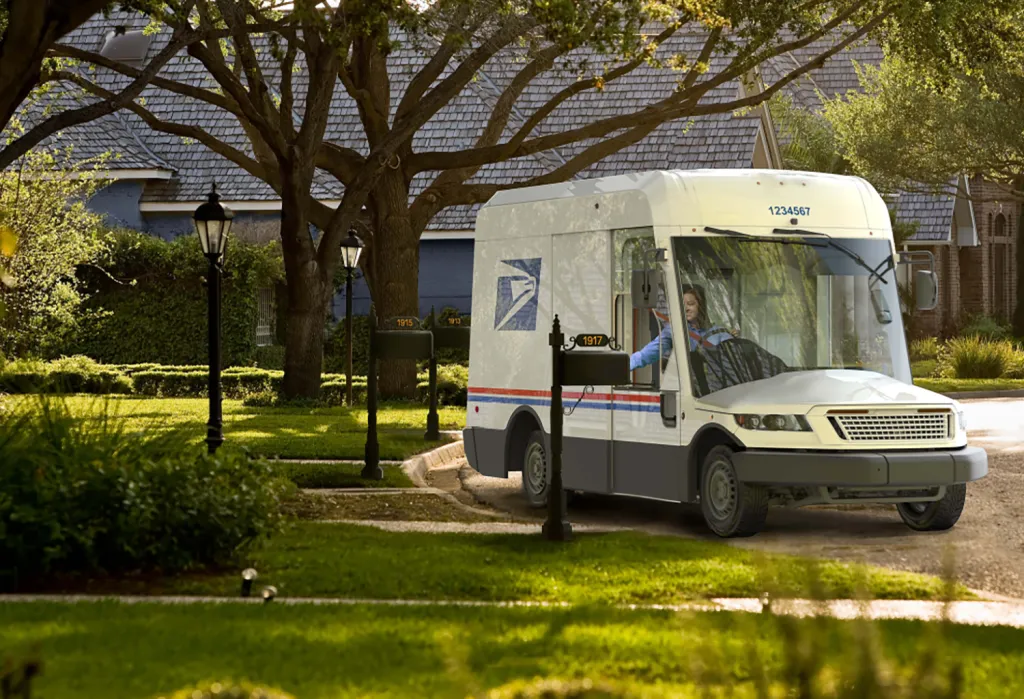
The old fleet of Grumman Long Life Vehicles, which date to 1987, are expensive to maintain, loud, fuel-inefficient, and have been known to burst into flames.
But the production of Oshkosh’s updated trucks were plagued by issues that included leak testing that resulted in “water [pouring] out as if [the vehicles’] oversize windows had been left open in a storm,” the Washington Post reported in December 2024.
“This is the bottom line: We don’t know how to make a damn truck,” one person involved with the manufacturing process told the outlet.

The company’s factory in Spartanburg, SC was only able to make one mail truck per day at the start of the process. Records obtained by the Washington Post found projections that up to 80 trucks per day would be built once production got underway.
The Biden administration had expressed a commitment to the USPS acquiring “100% electric” postal vehicles starting in 2026.
On Monday, USPS put out a press release claiming it is still on track and boasted of acquiring “45,000 battery-electric next-generation delivery vehicles and 21,000 commercial-off-the-shelf battery-electric vehicles” by the end of fiscal year 2028.
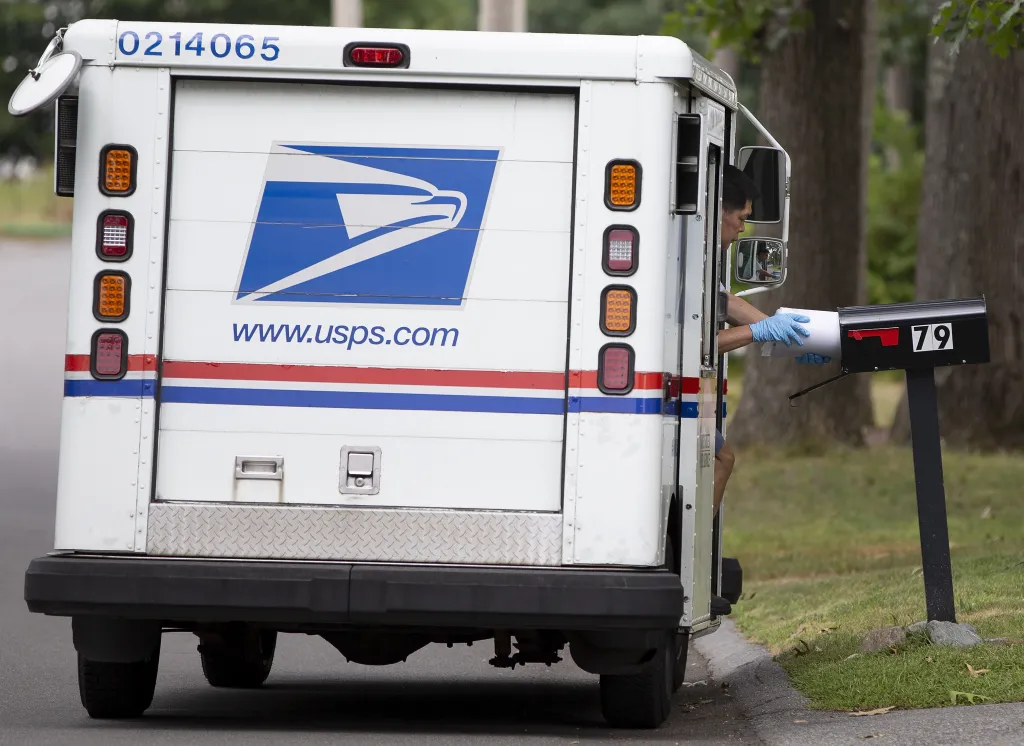
“So far, more than 35,000 new vehicles are on the road,” the release added, without clarifying that many of these appear to still be using internal combustion engines.
Pastre told Ernst that “the Postal Services has plans to acquire 40,250 internal combustion delivery vehicles” and has already acquired 26,341, noting in his letter the “delivery of 2,602 NGDV ICE vehicles, 14,489 Mercedes Metris, and 9,250 Ram Promasters.”
“Additionally,” the Monday press release read, “USPS is upgrading infrastructure at its facilities with the addition of charging stations for the zero-emission electric vehicles, of which over 14,000 have already been purchased,” though its unclear which firm or firms made those vehicles.
President Trump has floated the possibility of merging USPS with the Department of Commerce, citing the mail delivery service’s capital losses of an astonishing $9.5 billion in fiscal year 2024.
A rep for the Postal Service did not immediately respond to a request for comment.
The post USPS electric vehicle fleet behind schedule with $3B in taxpayer funds spent — and only 612 trucks built appeared first on New York Post.