This is an edition of The Atlantic Daily, a newsletter that guides you through the biggest stories of the day, helps you discover new ideas, and recommends the best in culture. Sign up for it here.
Photos of air travel in decades past can cause almost visceral pain for a modern flier. Faded or sepia images show sharply dressed people eating real food in spacious seats. Sometimes the pictures are juxtaposed with the sardine-tin discomforts and unappetizing food of contemporary air travel, and they’re usually accompanied by well-deserved swipes at air carriers. But passengers deserve some blame too. One thing I notice in those photos is that the window shades are always up.
Nothing can make a lengthy flight packed in an aluminum tube feel good, exactly, but having the shades closed is a reliable way to make it worse. On a recent long-haul trip, I was struck that as soon as passengers boarded the plane—well before sunset—nearly everyone in a window seat within my line of sight closed their shades.
Proving empirically that this is a trend would likely be impossible, but I’ve sensed this happening more in recent years, and Redditors and correspondents to advice columns have noticed too. The culprit is easy to identify. My (hypothesized) trend corresponds neatly with the growing ubiquity of in-flight entertainment systems, which have gone from a novelty on long flights to a standard service. The moment passengers are forced to switch their phones to airplane mode, they become desperate to get their digital fix. As the screens have become standard, airlines have phased out their in-flight magazines, which often included delightful and quirky prose by good writers. At the very least, they had a crossword and a sudoku.
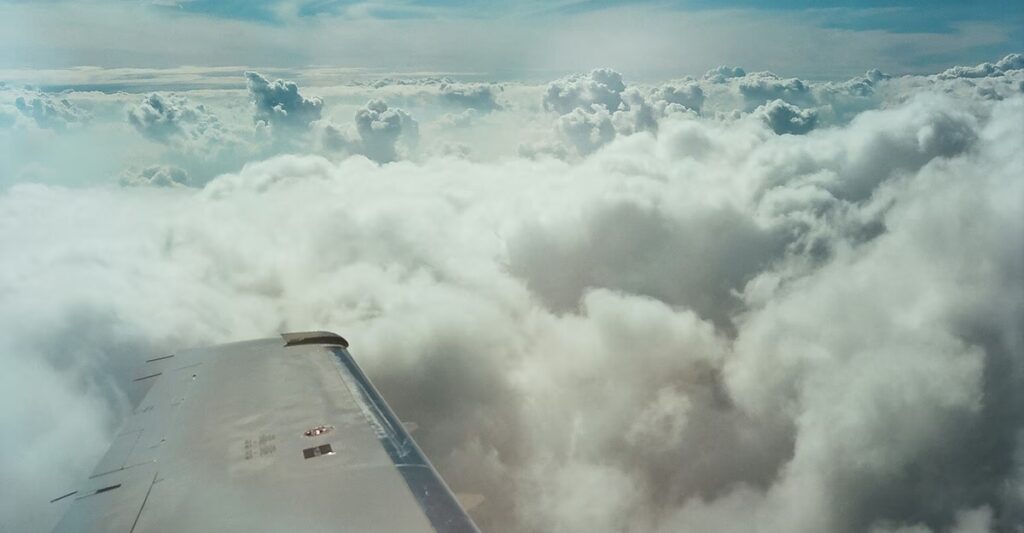
When the shades are drawn so quickly, passengers miss out on both the fascinating machinations of infrastructure—the strange vehicles, markers, and signs that make airports work—and the natural beauty of the landscape. If the window shades are up, as my colleague Henry Grabar wrote for Slate a couple of years ago, “you will see the ballet of the tarmac workers, parks and lakes you never knew existed, patterns of development and infrastructure, customs of land ownership, and finally, the lines of the earth itself.”
I remember being glued to the window as a child, first watching the takeoff process, then attempting to recognize landmarks as we ascended. After that, I would be mesmerized while trying to read the shapes of the landscapes or clouds. At the end of the flight, I’d eagerly search for first glimpses of wherever I happened to be landing, trying to figure out what was in store once I got off the plane. When I fly with my children today, they still eagerly jockey for the window seat—as siblings have for as long as they’ve been flying—but as soon as one of them has won the privilege and gotten seated, they start asking to get on the entertainment system. In their defense, everyone around them is doing the same thing.
The tyranny of the entertainment system doesn’t just produce an unnaturally gloomy cabin. It also makes anyone who tries to resist it into a bad guy. I like to read on flights, especially if I am deprived of a view out the window; it’s some of the best uninterrupted time I can get with a book. But I still wince before turning on the reading light above my seat. No passenger has asked me to turn it off—yet—but they do recoil and stare when I turn it on. I can blame them only so much; it feels weird to be the only or one of the only people using it, and given how tightly packed the seats are, others are going to get some of the glow. (The final episode of Curb Your Enthusiasm closes with an argument over whether a passenger has the right to open her window shade in order to read.)
When I whined about this to my Atlantic Daily co-pilot, Will Gottsegen, he told me that he’d experienced the same thing. “People are now so unused to seeing people read a book on airplanes that they’re mystified when someone tries it,” he said. He also pointed out that passengers on many flights can turn the light on only if they find the button in the entertainment system: “You can’t even perform the one non-screen activity without engaging with the giant, greasy screen inches from your face.”
Those screens have become so oppressive that the Swedish filmmaker Ruben Östlund is working on a black comedy about a flight from the United Kingdom to Australia in which the entertainment system goes down and passengers “are forced to face the horror of being bored,” per Deadline Hollywood. No release date has been set, but it honestly seems like something I’d consume on a flight. It can’t be too awful—it’s got Keanu Reeves and Kirsten Dunst—and at least no one will glare at me for watching it.
Related:
Here are three new stories from The Atlantic:
- Thank you for your attention to this birthday.
- Caity Weaver: The whimsy and heartbreak of America’s garage sales
- The data-center panic is overblown, Elias Wachtel argues.
Today’s News
- Shares of SpaceX opened at $150, about 11 percent above their $135 initial-public-offering price, which gave the rocket and satellite company a valuation of roughly $1.8 trillion. The debut made Elon Musk the world’s first trillionaire.
- A federal judge denied a last-minute appeal from the Kennedy Center’s board to keep President Trump’s name on the building’s exterior, ruling that Trump’s name must be removed from the building by today and that plans to close the institution for two years must be halted.
- Pakistan’s prime minister said that the United States and Iran have agreed on the final text of a peace deal and are working out next steps; officials said that the agreement requires approval from Tehran.
Dispatches
- The Books Briefing: Emma Sarappo on a surprisingly human story about aliens
Explore all of our newsletters here.
Evening Read
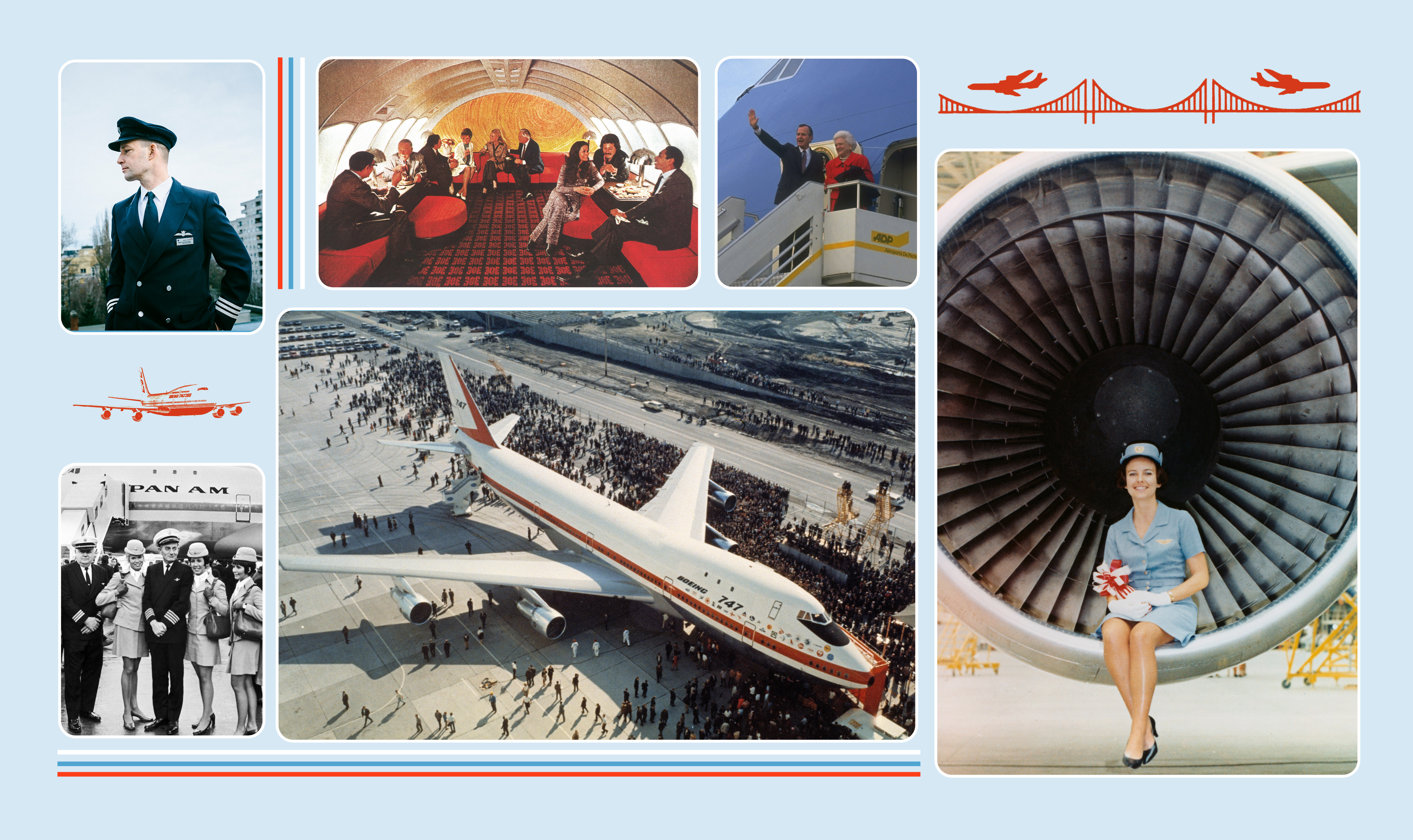
The Boeing 747 Begins Its Final Descent
By Ian Bogost
Through the heat haze, airplane tails rose from the desert. As I steered off the interstate toward Pinal Airpark, in Marana, Arizona, I got my first view of a corpse in full: a stark-white Boeing 747, its wings sheared off, its passenger doors open to the dust and wind, a rickety set of airstairs inviting no one aboard. The plane was a memory, a ruin, but its swooping, humped nose was still striking—a visage that signaled the freedom of movement in the Jet Age.
I was arriving at this desolate site north of Tucson, where airplanes go to die, to mourn the 747, the original jumbo jet—a.k.a. the Whale, the Longreach, the Sky Cruiser, the Mother of All Airliners, the Queen of the Skies. For 50 years, the aircraft was the principal host of Important Journeys: a young student’s trip to study abroad in Paris, a first-generation American’s pilgrimage to their ancestral home in Hungary, an Iranian family fleeing the 1979 revolution. Combining the immensity of an ocean liner and the elegance of a swan, the 747 is the only commercial jet that deserves to be called beautiful. Over the past two decades, airlines have stopped using it as a passenger plane and replaced it with smaller aircraft that are more efficient, but far less majestic and memorable. The 747 was once a symbol of American might, invention, progress, and populism. Now it embodies the decline of all of those values.
More From The Atlantic
- Magic mushrooms, but better
- Americans are already paying dearly for the national debt.
- The work that goes into “effortless” style
- Galaxy Brain: Jomboy on robot umpires and the future of baseball
- Olivia Rodrigo has no chill, Spencer Kornhaber argues.
Culture Break
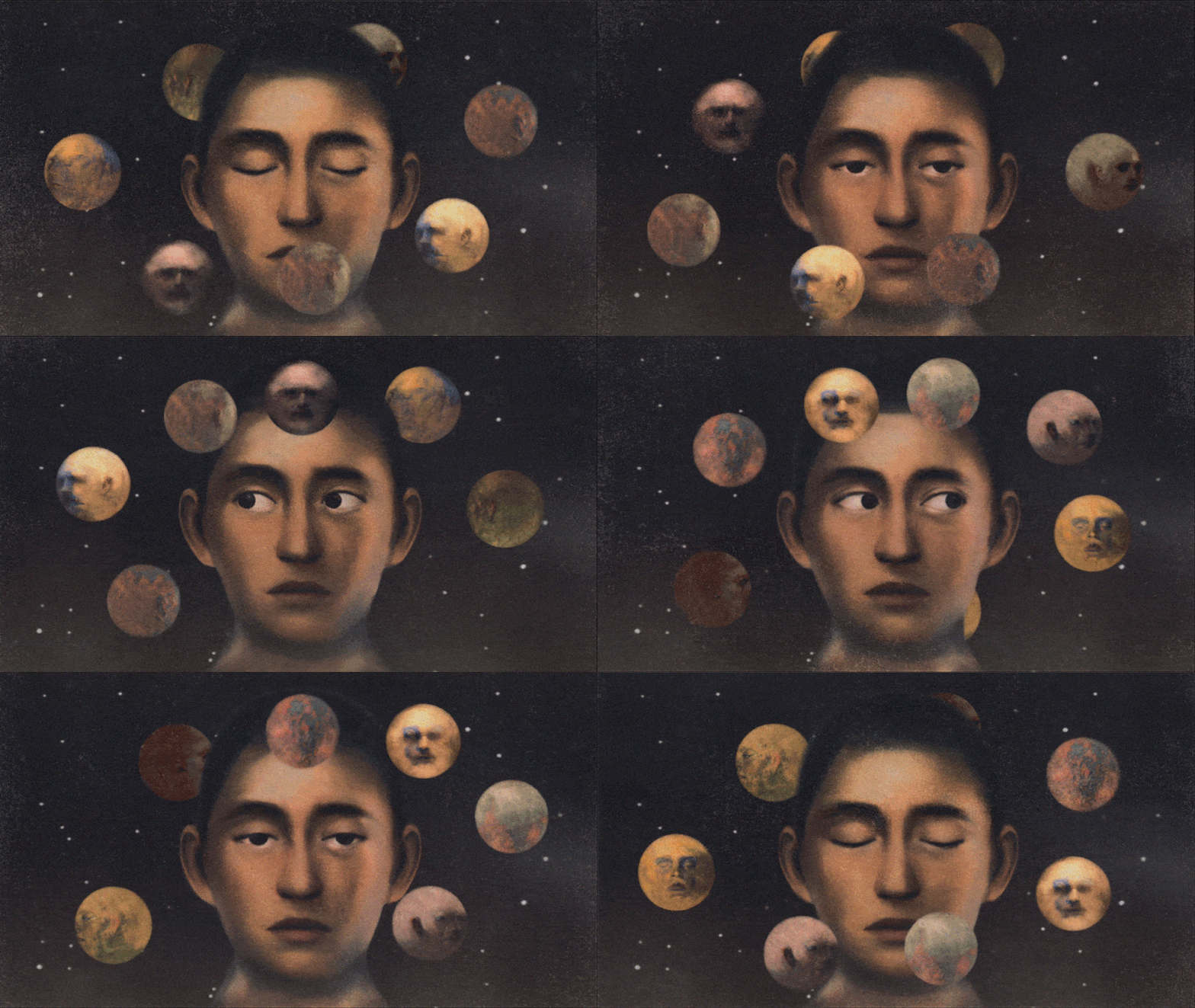
Read. Alexandra Oliva recommends six books that take you to space.
Explore. The rental service Nuuly is taking over America’s closets, Annie Joy Williams writes.
Rafaela Jinich contributed to this newsletter.
When you buy a book using a link in this newsletter, we receive a commission. Thank you for supporting The Atlantic.
The post Leave Your Airplane-Window Shades Open appeared first on The Atlantic.