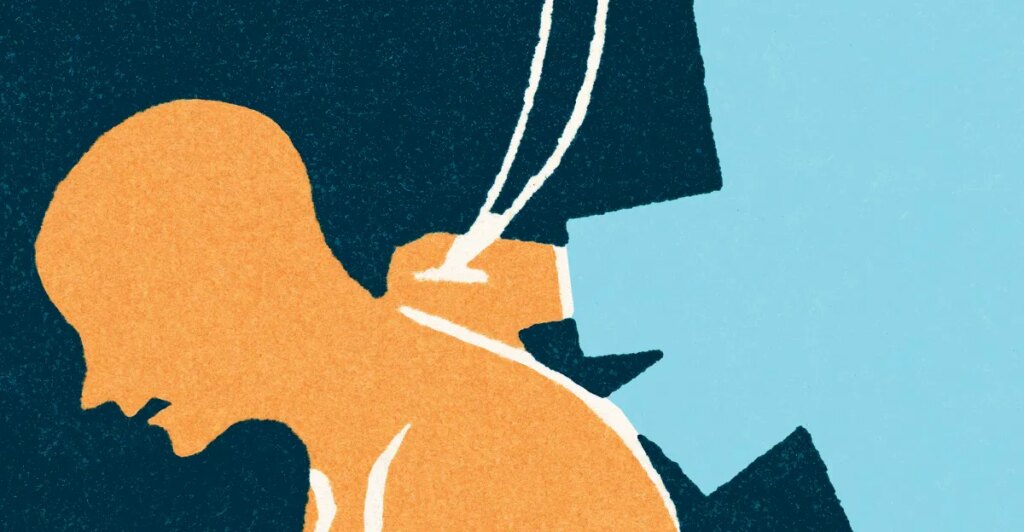
Let’s be frank: When you go to see your personal doctor or stop at an urgent care for a quick visit, you probably don’t always tell the physician the whole truth and nothing but the truth. According to one major study, between 60 and 80 percent of US adults have reported they withheld at least one pertinent piece of medical information from a healthcare provider during a visit.
And we do it for the most natural and human reasons. The most common explanations that patients gave for declining to disclose relevant information were not wanting to be lectured, not wanting to be judged for their behavior, and being embarrassed. Women, young people, and the people with the worst health (according to their own self-report) were most likely to hold something back.
If you have faced discrimination from society because of who you are, you may feel more distrustful of the medical system and its practitioners. Research has found that people who have faced prior discrimination are more likely to withhold information from a healthcare provider. And doctors sometimes earn that distrust, especially when it comes to women and people of color. Our era of do-it-yourself medicine only adds more barriers between patients and their doctors. One survey found that more than 40 percent of US adults who had used alternative or complementary medicine did not disclose that fact to their primary care doctor.
Doctors bear some of the blame for this disconnect. But, at a time when people say they want more agency over their healthcare, the rest of us have to hold up our side of the conversation, too. Here’s how to think about how honest you should be with your doctor.
The key question you should ask yourself about being honest with your doctor
There is no shame in feeling uncomfortable sharing information with your doctor. I spoke with Dr. Ronald Epstein, a professor of family medicine at the University of Rochester Medical Center who has written extensively on patient-doctor communication and authored the book Attending: Medicine, Mindfulness, and Humanity as a guide for doctors who want to practice a more humane kind of medicine. Epstein said he’s been tempted to not tell his doctor when he misses doses of his prescribed medication because he felt embarrassed, and even withheld information once when he didn’t want to spark a lot of burdensome follow-up work; he had fallen down while skiing after bumping into a rock. Because Epstein is 71, his provider routinely screens for any recent falls, and he knew that answering “yes” would lead to a range of tests and consultations with specialists. So he answered “no,” because he felt certain the fall had been a freak accident, not a symptom of an underlying health problem.
I appreciated Epstein making that confession, because it was a reminder that any of us, even somebody who has committed much of their career to open doctor-patient communication, can be tempted to hold something back from a doctor because it seems like it’ll be a hassle.
But even as he shared it, he offered a warning to other people not to follow his example.
“The danger in doing that, of course, is if someone actually fell while turning around on a landing while going downstairs, that could signal some kind of balance or neurologic disorder,” he told me.
To state the obvious, your clinician can’t provide you with the best care if they don’t know everything about your health. That’s especially important in high-stakes situations. One study found that one in four patients who were experiencing an imminent threat to their well-being — depression, suicidal ideation, abuse, or sexual assault — withheld that information from their doctor. Once again, they feared being embarrassed or being judged.
So, to start with, there are certain things your doctor really needs to know if they are going to properly evaluate your health and that you should never lie about or withhold:
- Which prescription drugs you are currently on
- Whether you’re actually taking them as prescribed
- Any other substances you are consuming, including those that are legal but potentially harmful (like tobacco or alcohol) and ones that are illegal, and how much/how often you are using them
Even if it is awkward or you fear judgment, the risks in withholding that kind of information are high. Beyond that, Epstein suggested one question that every patient should ask themselves when interacting with a doctor.
Sign up for the Good Medicine newsletter
Our political wellness landscape has shifted: new leaders, shady science, contradictory advice, broken trust, and overwhelming systems. How is anyone supposed to make sense of it all? Vox’s senior correspondent Dylan Scott has been on the health beat for a long time, and every week, he’ll wade into sticky debates, answer fair questions, and contextualize what’s happening in American healthcare policy. Sign up here.
“I think the key question for patients to ask themselves and for families to ask themselves is: Would withholding this information threaten or enhance the health of the person involved?” he told me.
Doctors have a responsibility to make their patients feel comfortable enough to be honest. But from the patient’s perspective, this question cuts to the heart of the matter. If you withhold a certain piece of information from your provider, does it put your and a loved one’s health at risk? You should also ask the inverse of this question: Could sharing the information lead to a better outcome for you or your loved one?
At the end of the day, these are judgment calls for each individual to make. But think the situation through and be honest with yourself. Are you really equipped to be the judge of whether a certain piece of information is relevant to your or your loved one’s health — or should you let the doctor decide? If you withhold some information, Epstein said, “you’re taking the risk that you know better versus being transparent and letting your doctor make that judgment.”
Communication between doctor and patient is a two-way street
Building a good relationship between doctors and patients is, as Epstein put it to me, “a shared responsibility.”
“There are two aspects of any healing tradition. One is the technical and instrumental pieces. That is the drugs you prescribe, the surgeries, the manipulations you do,” he said. “The other is relational. That is the achievement of shared understanding, trust, confidence, and sometimes optimism so that people can really make decisions on their own behalf and feel empowered.”
Epstein trained at Harvard Medical School in the 1980s, as the AIDS crisis was beginning, and he still recalls the sometimes awkward conversations doctors and the people they were treating had to have about sex. Even though the stakes were clearly life and death, many doctors were too embarrassed to ask detailed questions about people’s safer sex practices. Sex, drugs, and money remain sensitive and uncomfortable subjects, but they can have a huge bearing on a person’s health.
Doctors can easily build walls between themselves and their patients without even realizing it — and, sometimes, even a subtle change can make patients feel more welcome. Asking “are you taking your medications daily?” in an abrupt, scolding fashion could lead a person to lie and say yes to avoid being judged. A softer approach — “it’s hard to remember to take pills every day, how are you doing with that?” — could yield more honest answers for a question that has serious clinical implications.
“If the pills are something that if you miss a dose, you might suffer severe consequences, then it can be life and death,” Epstein said.
People often feel nervous during medical appointments — I know that’s true for myself — and Epstein said doctors should take care to make sure their patients are absorbing the information. Asking them to repeat back instructions, for example, can act as a backstop to avoid any miscommunication.
Sometimes, the solution can be as simple as phrasing questions in an open-ended way. “Do you have any more questions?” could lead to a quick “no” from an anxious patient, while posing “what questions do you have?” might invite a more open dialogue.
Epstein has a favorite Frank Kafka quote that illustrates the challenge: “To write prescriptions is easy. To come to human understanding is difficult.” Good medicine requires both.
The post The secrets you shouldn’t keep from your doctor appeared first on Vox.