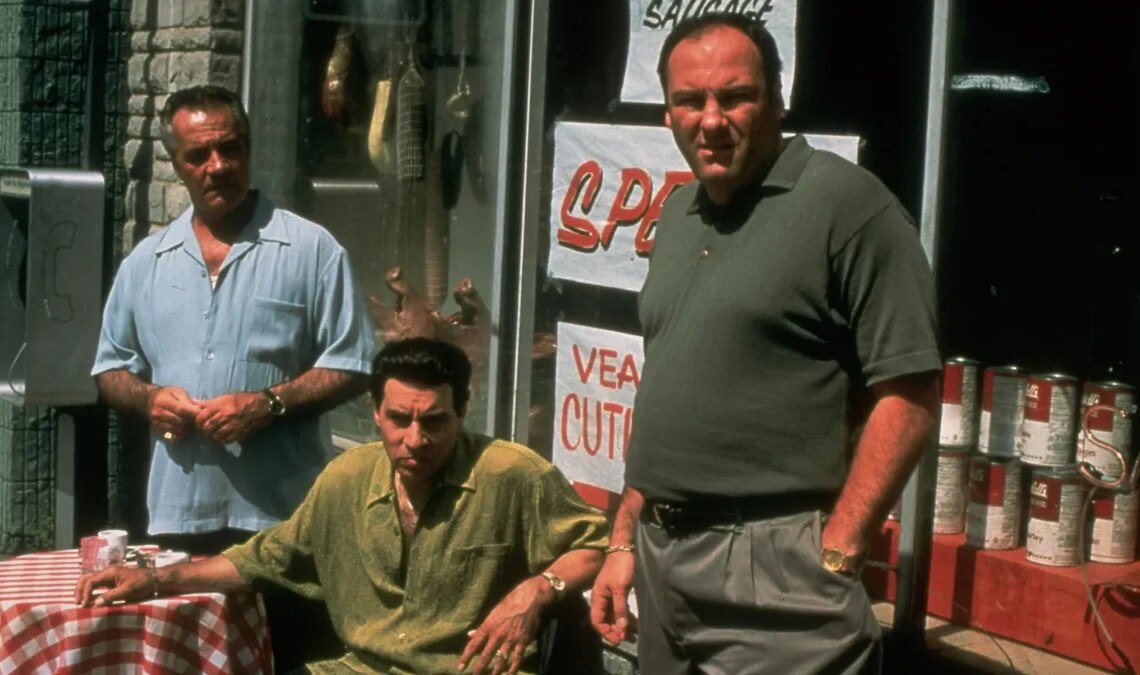
June 10, 2007, marked the end of a television era when The Sopranos finale aired on HBO.
Six seasons of complicated, introspective, violent, messy storylines that changed the landscape of television. Without The Sopranos’ depth in both narrative and character, there would be no Breaking Bad, The Wire, Boardwalk Empire, or Mad Men. Seven years of golden-age TV culminated in this moment, sparking divisive arguments that persist nearly two decades later.
When the series finale ended by fading to black on the Soprano family while Journey’s “Don’t Stop Believin’” played on the diner jukebox, many fans almost couldn’t believe what they’d seen. Was that it? They lamented. That can’t be it! The song cuts off on an ominous “Don’t stop—“. Tony Soprano’s fate, and that of his family, is left to languish in limbo forever.
Series creator David Chase has since refused to offer any insight into that ending. Except to defend his music choice. For example, he once said that Tony would have listened to Journey when he was younger. “He would’ve liked that song as a kid or a young man,” Chase said of “Don’t Stop Believin’”, speaking with Noisey in 2015. “That would have been part of his playlist.”
Music was such an important element of The Sopranos that it was almost like its own character. Chase imbued his series with his own rebellious rock ‘n’ roll taste and refused to make any compromises. With that spirit in mind, here are three more iconic music moments from The Sopranos.
Frank Sinatra’s “It Was a Very Good Year” Opens Season Two of ‘The Sopranos’
For the opening montage in the season two premiere, Frank Sinatra’s “It Was a Very Good Year” played over scenes of the characters looking into mirrors or staring off into space. David Chase explained that this song choice was in part a commentary on the first season’s success. The only time the show’s music ever went “meta,” he explained. But it was also representative of the foundational themes of The Sopranos: death, aging, mortality.
“At absolute bedrock, that’s what The Sopranos was about: how we use our time on Earth,” said Chase. “And that was one of the first instances of presenting that theme musically. That’s why we had people by themselves looking in mirrors off into space. They’re reflecting.”
Mazzy Star Sets the Tone as AJ Learns More About His Dad’s Mob Ties
At the end of the season one episode “Meadowlands”, there’s a quick Mazzy Star needle drop that creates a sentimental tone while also reflecting reluctance. AJ begins to learn more about his dad’s mob connections, aided by strange occurrences with bullies and hints from his sister. As the family gathers at Jackie’s funeral, AJ watches Tony closely. He watches his interactions with those around him and even notices the government surveillance.
As Mazzy Star’s “Look on Down From the Bridge” begins its dream-pop intro, Meadow sees AJ watching and shoots him a look. “See what I mean?” that look says. When Tony spots his son, he smiles and winks. But AJ doesn’t smile back. The tenderness of Mazzy Star creates a feeling of reluctance to believe the truth. But it’s almost like a reluctance to be reluctant at all. The softness of “Look on Down From the Bridge” is contrasted by what AJ is learning. But its inclusion, however brief, still highlights the layered confusion, questions, and possible reluctance to accept the truth that’s right in front of him.
Tony Soprano Sings “Dirty Work”
A seemingly unimportant scene from the season three premiere quickly became an iconic moment in The Sopranos lore. That is, when Tony Soprano sings along to Steely Dan’s “Dirty Work” in the car. The scene itself is already funny, considering Tony’s monotone delivery and unimpressed expression. Additionally, there’s the representational meaning of “dirty work” considering his role in the mob, and even his legitimate front as a “waste management consultant”. But contextually, it provides a look at our main character in a state of blissful ignorance.
Before this, the FBI thoroughly bugged the Soprano household. Tony is unaware that his car is bugged and indulges in an unguarded moment, believing he’s alone in the car. On many fronts, this scene is unassumingly lighthearted, becoming an anthem of the modern workplace commute. But in context, it becomes anticipatory, paranoid, even sinister.
The post On This Day in 2007, This Beloved TV Series Ended on a Divisive Note, Plus 3 More Iconic Soundtrack Moments appeared first on VICE.