New York City has had nine mayors in my lifetime (since I was born in 1960), soon to be 10; none, until now, has suggested making bus rides free citywide. It’s a big idea that would be transformative not only for riders, but for the ecosystem of the city as a whole in terms of clean air, less congestion and easier foot traffic.
As a New York City lifer, I believe that anything that makes the city better and more affordable is worth pursuing. Making this happen, though, is definitely not free given estimated costs of $650 million to $1 billion per year in forgone revenue.
The good news is that the city already owns an asset worth at least that much every single year, which we simply give away. We walk past it every day: the curb.
I’m not the first to propose the idea of converting free street parking to a paid system. Donald Shoup, an economist and urban planner, pioneered some of these ideas and Transportation Alternatives has laid out its own detailed case for New York City.
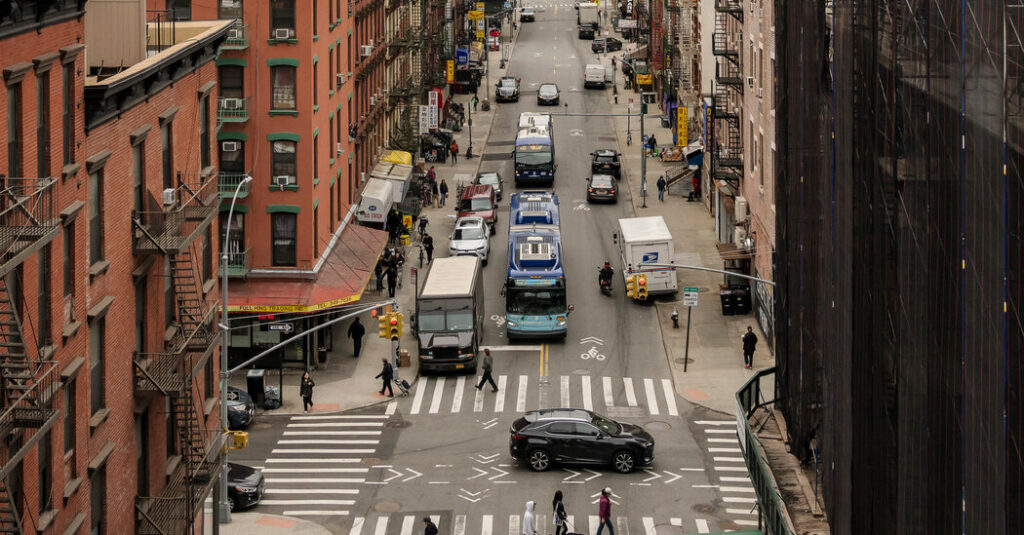
There are roughly three million on-street parking spaces in New York, according to city estimates. Only about 80,000 are metered. The rest are free. These vehicles occupy public land and yet they pay nothing. They sit for days, even weeks, while most New Yorkers, who don’t own cars, pay to move.
If the city simply managed this space rationally — using meters where demand is high and affordable residential permits where it’s not — it could generate more than a billion dollars a year, enough to fund free buses and improve sidewalks. The smartest way to fix New York’s parking giveaway is to start in Manhattan, where demand is highest, and then extend a fair permit system to the other boroughs. Using publicly available data from the city and state, as well as other organizations that have examined these issues, I have done my own back-of-the-envelope calculations about how Mayor-elect Zohran Mamdani can pay for his plan to offer free buses, one of the cornerstones of his campaign.
Manhattan has roughly 140,000 curb spaces suitable for metering. Installing pay-by-plate meters — using technology the Department of Transportation is already rolling out — would cost about $100 million. Those spaces could each generate roughly $5,000 a year, producing around $700 million annually, nearly enough to fund free buses by itself.
Outside Manhattan, the city could add 60,000 to 100,000 metered spaces in high-demand corridors — Downtown Brooklyn, Long Island City, Jamaica, Fordham Road — earning roughly $120 million to $350 million more. That brings total potential metered revenue to around $820 million to $1 billion a year.
In lower-density neighborhoods, the right tool isn’t a meter but a residential parking permit. Residents would pay a modest annual fee — say, $250 a year, or less than a dollar a day — for guaranteed neighborhood access. Nonresidents and commuters would pay hourly through the already existing ParkNYC app.
With (according to the U.S. census) roughly 1.1 million to 1.3 million drivers in the other boroughs eligible, that alone would raise about $275 million to $325 million a year. Together, the hybrid system of meters and permits could conservatively yield $1.1 billion to $1.6 billion a year in revenue — more than enough to fund free buses and reinvest locally.
New York has already shown that smarter parking policy works. In 2009, the PARK Smart pilot in Park Slope, Brooklyn, raised meter rates modestly during peak hours — to $1.50 an hour from 75 cents — and extended time limits on the meter. The results were immediate: Parking availability improved by about 20 percent, double parking declined, and merchants reported no loss of customers. That small experiment proved that rational pricing can make neighborhoods function better.
The hybrid model is both fiscally and politically balanced. In Manhattan and other dense areas, metered pricing ensures turnover and reduces traffic from drivers hunting for spots. In the other boroughs, low-cost permits make drivers part of the solution without penalizing them. Everyone contributes something and everyone benefits from better buses, cleaner air and safer streets.
Permits are standard in major cities — Washington, London, San Francisco — where residents pay modest annual fees to park in their neighborhood. Parts of London even scale fees by vehicle emissions, aligning climate and equity goals. New York is late to this conversation: The City Council approved a residential permit plan in 2011, but Albany never authorized it. With state lawmakers again considering bills to allow pilot projects, now is the time to act.
Some drivers will denounce this as a “cash grab.” But for decades, the city has handed out billions in free public real estate to a small minority of residents. Roughly 45 percent of city households own cars, but in Manhattan, only one in four does. Asking drivers to pay a fair rate for using public land is just that: fair.
And unlike a tax, this is voluntary — you pay only when you park. A $250 annual permit is cheaper than a month in a typical garage. In addition, the city can promise that a portion of revenue will stay local — for crosswalk improvements, street trees and neighborhood safety projects.
Pairing free buses with paid parking says we value people in motion more than cars at rest. The technology exists, the tools have been used before here and elsewhere, and the cost is dwarfed by the benefits. No new taxes, no Albany handout is needed to turn an economic asymmetry into a shared civic dividend.
Start with Manhattan. Add residential permits in the other boroughs. Use the revenue to make the buses free.
For decades, New York has charged the people in motion while subsidizing the people at rest. We can reverse that.
Mr. Mamdani, to make the bus free, start by making the curb fair.
Nicolas Rohatyn is the chief executive of the Rohatyn Group.
The Times is committed to publishing a diversity of letters to the editor. We’d like to hear what you think about this or any of our articles. Here are some tips. And here’s our email: [email protected].
Follow the New York Times Opinion section on Facebook, Instagram, TikTok, Bluesky, WhatsApp and Threads.
The post This Is How Mamdani Can Pay for Free Buses appeared first on New York Times.