Ever wondered why you can’t stop eating chips and have cravings for sodas and cookies, even though you know they aren’t good for you? Turns out, it’s because these products were designed to be addictive.
In fact, much of it comes from the same people who made a living selling another highly addictive and harmful product: cigarettes.
A new series of articles in the American Journal of Public Health explored the history and health impacts of ultra-processed foods and drew a direct line between their rise and Big Tobacco. During the 1980s, two of the biggest tobacco companies, Philip Morris (now known as Altria ) and R.J. Reynolds (now Reynolds American), diversified their business holdings at a time of declining cigarette sales by aggressively expanding into the food industry. (Both companies did not respond to requests for comment.)
The two companies managed to acquire a long list of major brands, such as General Foods, Kraft, Del Monte, Nabisco and 7Up. Food became such a central part of their businesses that, at one point, it accounted for about 30 percent of R.J. Reynolds’s portfolio and about half of Philip Morris’s. The companies have since shed these holdings.
One of the articles examined more than 100 internal industry documents that became public through litigation against tobacco companies. As lead author Tera Fazzino, an addiction researcher and associate professor at the University of Kansas, explained to me, the companies not only integrated their food and tobacco distribution and sales operations but also directly applied lessons from tobacco manufacturing to food products.
For instance, king-size sodas, cookies and other food products were modeled on king-size cigarettes, which had successfully increased consumption. “Light” and “low-fat” foods similarly mirrored earlier efforts to sell “light” and “low-tar” cigarettes. Companies even used the same technology that extracted nicotine from tobacco to reduce fat in food — and targeted the same consumers.
“They developed these [nicotine] products to specifically retain customers who might otherwise have quit due to health concerns,” Fazzino said. “Then they did the exact same thing with their food products.”
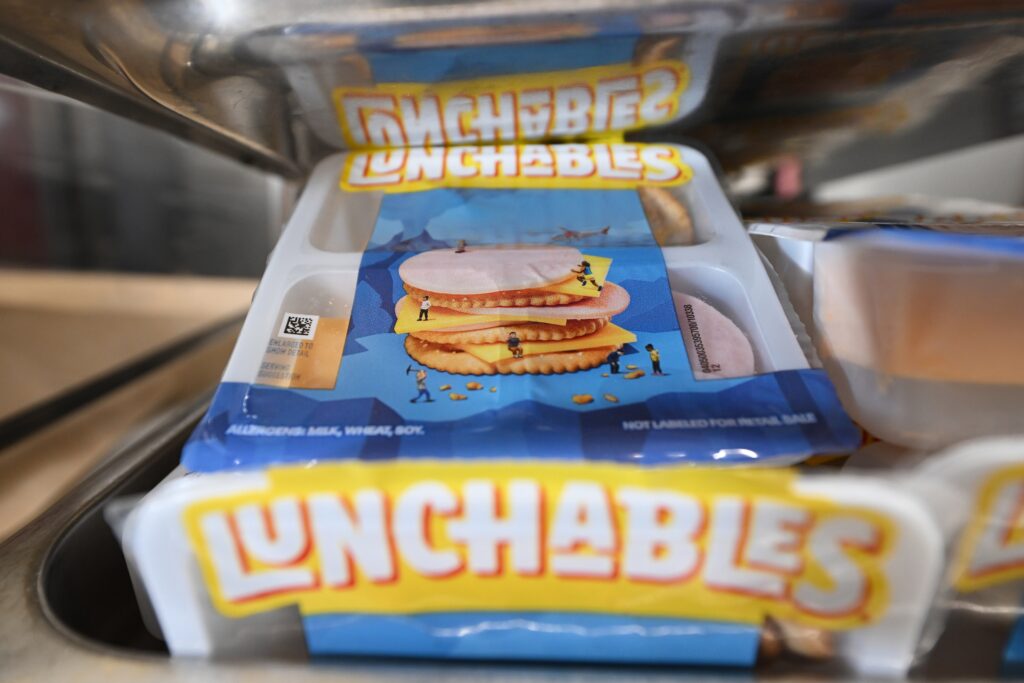
Another insidious practice was reformulating food products. Laura Schmidt, a professor at the University of California at San Francisco, wrote a case study on how Philip Morris developed and marketed Lunchables. She documented how tobacco companies brought decades of expertise in flavor engineering to the food business, with extensive libraries of colors and additives and sophisticated techniques, such as measuring brain waves, to identify the precise combinations of chemicals that triggered reward pathways.
They applied the same approach to food, optimizing what researchers call hyper-palatable, which are products engineered with combinations of fat, sugar, sodium and other additives that are difficult to stop eating. The goal was to create a quick burst of reward that fades rapidly so that consumers had to come back for more.
In addition, tobacco companies understood that attracting young consumers was essential for establishing lifelong habits, and they quickly applied the same strategy to food. One of the first products R.J. Reynolds acquired was Hawaiian Punch, which at the time was marketed as an adult cocktail mixer. The company rapidly transformed it into a child-focused brand. The same playbook would later be used for hundreds of products such as Kool-Aid, Jell-O, Oreo and Teddy Grahams.
“Children are really, really vulnerable to this kind of messaging,” Schmidt said. “The goal is to hook the consumer at the younger possible age because, as you grow up, they have instilled brand loyalty in you.”
These tactics worked. Fazzino estimates that hyper-palatable foods now make up about 70 percent of the U.S. food supply, coinciding with the dramatic increase in obesity, diabetes and other chronic diseases. Tobacco companies exited the food business in the early 2000s, but the damage was done. Their playbook has since become standard practice throughout the industry.
Both she and Schmidt argue that understanding the tobacco industry’s role in the explosion of ultra-processed foods is essential for informing policy. Given that tobacco companies helped create the modern unhealthy food environment, they say, some of the same approaches that proved successful in tobacco control may be worth considering, including restrictions on child-focused marketing, removing these products from schools, warning labels and taxation.
“I just want the public policy to catch up with the science,” Schmidt said.
If Health Secretary Robert F. Kennedy Jr. were serious about encouraging healthier eating, he would do well to listen to these researchers. So far, however, the focus of health agencies under his watch has largely been on banning specific food dyes rather than reforming industries that transformed the American diet. Meanwhile, the Food and Drug Administration appears to be rolling back protections on nicotine products. Given the role tobacco companies played in shaping the modern food supply, it is hard to imagine a more contradictory approach to addressing chronic disease.
The post Big Tobacco didn’t just sell cigarettes. It shaped what Americans eat. appeared first on Washington Post.