Picture this: You’re looking to buy a place to live, and you have two options.
Option A is a beautiful home in California near good schools and job opportunities. But it goes for nearly a million dollars — the median California home sells for $906,500 — and you’d be paying a mortgage that’s risen 82% since January 2020.
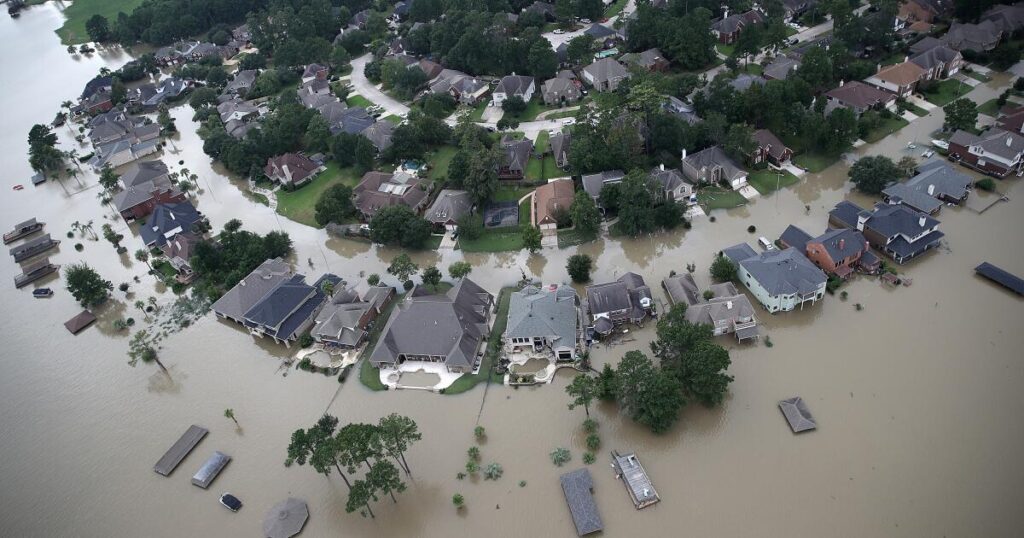
Option B is a similar home in Texas, where the median home costs less than half as much: just $353,700. The catch? Option B sits in an area with significant hurricane and flood risk.
This isn’t just a hypothetical scenario. It’s the impossible choice millions of Americans face every day as the U.S. housing crisis collides with climate change. And we’re not handling it well.
The migration patterns are stark. Take California, which lost 239,575 residents in 2024 — the largest out-migration of any state. High housing costs are a primary driver: The median home price in California is more than double the national median.
Where are these displaced residents going? Many are heading to Southern and Western states, including Florida and Texas. Texas, which is the top destination for former California residents, saw a net gain of 85,267 people in 2024, much of it from domestic migration.
This is a housing affordability crisis in motion. The annual household income needed to qualify for a mortgage on a mid-tier California home was about $237,000 in June 2025, a recent analysis found — more than twice the state’s median household income.
More than 21 million renter households nationwide spent more than 30% of their income on housing costs in 2023, according to the U.S. Census Bureau. For them and others struggling to get by, the financial math is simple, even if the risk calculation isn’t.
In essence, the U.S. is creating a system in which your income determines your exposure to climate disasters. When housing becomes unaffordable in safer areas, the only available and affordable property is often in riskier locations — low-lying areas at flood risk in Houston and coastal Texas, or higher-wildfire-risk areas as California cities expand into fire-prone foothills and canyons.
The destinations drawing newcomers aren’t exactly havens. Research shows that America’s high-fire-risk counties saw 63,365 more people move in than out in 2023, much of that flowing to Texas. Meanwhile, my own research and other studies of post-disaster recovery have shown how the most vulnerable communities — low-income residents, people of color, renters — face the greatest barriers to rebuilding after disasters strike.
Consider the insurance crisis brewing in these destination states. Dozens of insurers in Florida, Louisiana, Texas and beyond have collapsed in recent years, unable to sustain the mounting claims from increasingly frequent and severe disasters such as wildfires and hurricanes. Economists Benjamin Keys and Philip Mulder, who study climate change impacts on real estate, describe the insurance markets in some high-risk areas as “broken.” Between 2018 and 2023, insurers canceled nearly 2 million homeowner policies nationwide — four times the historically typical rate.
Yet people keep moving into risky areas. For example, recent research shows that people have been moving toward areas most at risk of wildfires, even holding wealth and other factors constant. The wild beauty of fire-prone areas may be part of the attraction, but so is housing availability and cost.
In my view, this isn’t really about individual choice — it’s about policy failure. The state of California aims to build 2.5 million new homes by 2030, which would require adding more than 350,000 units annually. Yet in 2024, the state added only about 100,000 — far short of what’s needed. When local governments restrict housing development through exclusionary zoning, they’re effectively pricing out working families and pushing them toward risk.
My research on disaster recovery has consistently shown how housing policies intersect with climate vulnerability. Communities with limited housing options before disasters become even more constrained afterward. People can’t “choose” resilience if resilient places won’t let them build affordable housing.
The federal government started recognizing this connection — to an extent. For example, in 2023, the Federal Emergency Management Agency encouraged communities to consider “social vulnerability” in disaster planning, in addition to things such as geographic risk. Social vulnerability refers to socioeconomic factors such as poverty, lack of transportation or language barriers that make it harder for communities to deal with disasters.
However, the agency more recently stepped back from that move — just as the 2025 hurricane season began.
When a society forces people to choose between paying for housing and staying safe, that society has failed. Housing should be a right, not a risk calculation.
But until decision-makers address the underlying policies that create housing scarcity in safe areas and fail to protect people in vulnerable ones, climate change will continue to reshape who gets to live where — and who gets left behind when the next disaster strikes.
Ivis García is an associate professor of landscape architecture and urban planning at Texas A&M. This article was produced in collaboration with the Conversation.
The post Moving to a climate-disaster zone just to afford a home appeared first on Los Angeles Times.