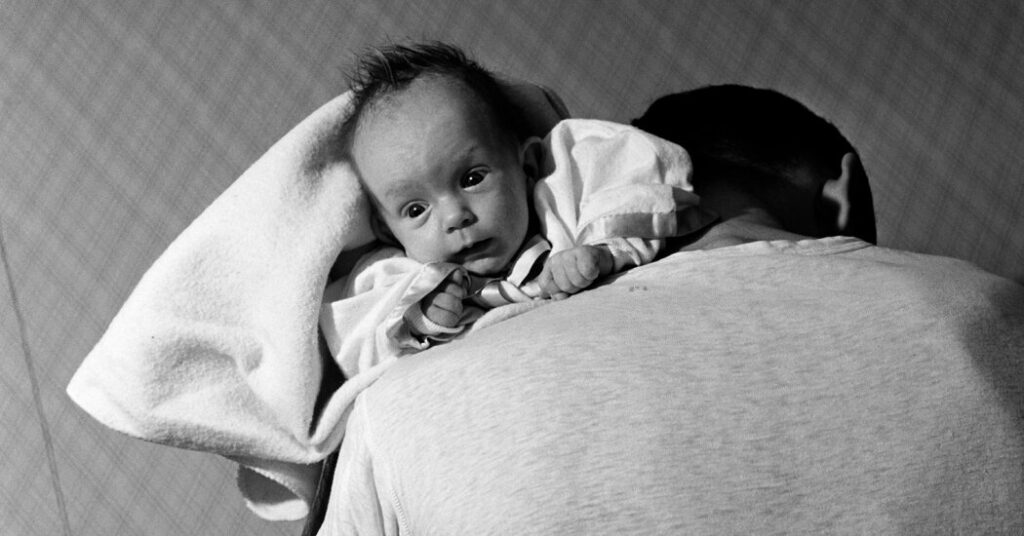
The sheer logistical and financial madness of raising children in America is now officially a matter of political concern.
The mayors of New York and San Francisco, two cities in which large families have become practically an endangered species, have pledged major efforts to make child care free. Last November, New Mexico became the first state in the country to cover child care for all its residents. High-profile Democratic strategists like David Plouffe are encouraging the party to adopt universal child care as an official part of its platform in 2028.
Even Republicans, long skeptical of public funding for child care, are shifting — slightly. The president’s major domestic policy bill last year, while slashing benefits for low-income adults and children, made four million more families eligible for a child care tax credit. It also added tax credits for employers who offer child care. The Heritage Foundation, alarmed by the country’s plummeting fertility rate, is pushing the White House to do much more, including a “large family bonus” for those raising more than two children.
The challenge and cost of caring for children is hardly new for the American family. Since the 1970s, when women began an astonishing three-decade surge into the workplace, individual households have been reinventing the configurations of work and family. Without public assistance, parenting has become increasingly privatized — an expensive, stressful endeavor that many households manage alone. Half a century into this shift, the American family is buckling under the weight. In 2024, the U.S. surgeon general declared parental stress a public health crisis.
The numbers tell an alarming story: In one survey, 48 percent of parents said that most days their stress is completely overwhelming, compared with 26 percent of other adults, a gap that has grown over the last decade. Another poll found that seven in 10 Americans say that raising children is unaffordable, an increase of 20 percent points over the last decade. Indeed, the cost of child care has more than tripled since 1990, far outpacing the rise in wages. To be a parent in America is to race constantly in vain against the clock. In a recent survey of parents of young children under 6, nearly three in four said they wished they had more quality time with their children. Instead, many are working, too crunched financially to contemplate having more hours to enjoy family life.
While this pressure has been building for decades, it’s also relatively new. Millennial parents are raising small children in a world where everyone is now expected to be a breadwinner, with no one at home. For some, this is a choice made possible by professional opportunities for women. But increasingly, it’s a matter of necessity to keep up with the always-growing costs of housing, health care and even a modicum of child care (every parent needs a break, whether they work or not).
Now, in some pockets of the left and the right, an idea is re-emerging that raising children is not a private concern alone. It’s a public issue.
“Parenting has been framed as though it’s a private choice that you make about how you want to live your life,” said Serene Khader, a philosophy professor at CUNY and the author of the 2024 book “Faux Feminism.” “But it’s also something that provides a necessary social good.”
The Privatization of Motherhood
In the 1980s, Robin West, a legal scholar at Georgetown Law, was attending a panel on work-life balance at big law firms when an audience member asked a male lawyer about maternity leave policies. He cautioned that firms could do only so much. The choice to have a child, he explained, was like a decision to sail around the world. In other words, an individual act of extravagance.
The metaphor has remained with West ever since. It seemed to sum up an entire worldview: “If you parent, that was your decision so you’re on your own,” she said. “We don’t owe you anything for that.”
This way of seeing children has become ingrained in American society. Just look at minor cultural flare-ups, like the long-running debates about air travel and whether small children are an intolerable burden for other passengers. It’s little wonder that arguments for publicly supported parenting have felt so impertinent for so long.
But how did Americans come to see parenting as a private issue in the first place?
In the 1970s and 1980s, economists like Milton Friedman hitched their star to an ascendant conservative movement that prized personal liberty and resented federal power. “Free markets” became the order of the day as governments rolled back regulations on businesses and politicians railed against social welfare. These ideas suffused political and cultural life, as well — in the valorization of choice. In this way of thinking, which became known as neoliberalism, the individual is a rational actor in a market who knows best what she wants or needs.
As the historian Sophia Rosenfeld writes in her book “The Age of Choice: A History of Freedom in Modern Life,” having a choice became “itself a moral good, maybe even the moral good, because it is the source of our collective freedom to each live as we wish and, ultimately, to ‘be ourselves.’ In the absence of agreement on the good and the right, choice went from being a benefit of freedom to freedom’s very essence.”
Leading feminists at the time employed this framework, too. Personal choice for women became equated with freedom itself: Each woman who escaped the presumption that she could be only a wife and mother and pressed her way into the male corners of America achieved a win for all. This project amounted to a revolution. From 1950 to 2000, the percentage of women in the work force nearly doubled to 60 percent from 33 percent.
At the same time, the idea of parenting as a personal choice found a powerful and persistent vehicle in the fight over the right to not become a parent. When the 1973 Supreme Court decision in Roe v. Wade led to a backlash from the right, feminist leaders searched for an idea that would ring with so much common sense that its opponents would seem out of touch. During a key early strategy session, Planned Parenthood leaders decided to build their fight around an essential right: the “freedom of choice in parenthood.”
West, who supports abortion rights, argues that by emphasizing the right to choose one’s own destiny, these activists also helped shape the public’s perception that becoming a parent was a personal lifestyle decision.
“If you really maintain that individuals are the authors of their own fate, that leads you to strong support for keeping the state out of people’s individual and even work lives,” she said. “That kind of hyper-individualism can lead to a very minimal state but also a minimal attitude toward state assistance or community assistance, a sharing of cost, a sharing of burdens.”
This became especially true in the workplace, where women found that they could be treated like the men, so long as they appeared to have no personal commitments.
Rather than accommodate a wider range of workers, companies largely gained more employees who could behave as if they had no children at all. “The solutions that came out of that moment, and the notions of sex equality, didn’t really force the nation’s power brokers to change much or give much up,” said Katherine Turk, a professor of history at the University of North Carolina, Chapel Hill and the author of the book “Equality on Trial: Gender and Rights in the Modern American Workplace.”
Gender roles, at work and at home, have proven easier to bend than corporate America’s picture of an ideal worker. Nearly half of mothers are now their family’s breadwinner. Millennial men participate far more in parenting than their fathers or grandfathers, even if women by and large are still doing more. A typical 35-year-old father who was born between 1981 and 1996 spends roughly 80 minutes per day caring for his child, nearly twice the time spent by baby boomer fathers.
At this point, only the wealthiest can largely obscure the existence of their children — and ailing parents — at work by paying for help. But the people doing the help, more often than not women of color, are almost universally paid too little to care for their own families. With the cost of care rising still, even Americans who hustled to reach the professional class are discovering they can no longer maintain the madness of working while looking out for loved ones.
The Breaking Point, a Way Forward
Modern parents grumbled their way through all of this for years. Then came the Covid pandemic. Rather than the miles that once separated family from work, professional-class Americans now merely had the doors of their homes, easily breached by children no longer in school who barged into Zoom meetings. For the majority of Americans who never had access to remote work to begin with, things were even harder.
The pandemic revealed an invisible world of labor that all along had been holding aloft the working world: the schools and day cares that watched people’s children so that they could go to work. Once that was removed, someone had to make up the difference. Usually, it was a woman, long expected by society to be the first line of defense on the home front.
Many workplaces responded with accommodations — more flexibility, better benefits. But when the pandemic receded, companies began rolling back these policies, presuming that families needed them only during world-historic epidemics, not that many of their employees had barely kept it together before.
The crisis of care is now so acute that it can no longer be treated as a private issue. A number of Democrats have seized on this moment to push for universal child care. New York City’s mayor, Zohran Mamdani, has aggressively added free child care across the city, while insisting that it is a public responsibility, not a private one — a right, not a privilege. In San Francisco, Mayor Daniel Lurie has begun an ambitious plan to subsidize child care. A family of four earning less than $230,000 a year, for instance, can now claim free child care. Those making less than $310,000 will soon receive a 50 percent subsidy.
Many Democrats have long wanted these kinds of programs. But now even a majority of Republican voters support policies like paid leave, affordable child care and tax credits for parents. In Utah, the Republican governor Spencer Cox is trying to end the stigma against people who temporarily leave the work force to care for a child or a parent by hiring them into state government.
Democratic leaders tend to describe the challenge of parenting as primarily one of cost, as if we simply need to solve a budget problem one household at a time; on the right, there are conservatives who believe that all of this could be solved if women remained strictly in the domestic sphere.
But there are voices on the left and the right arguing for a deeper shift in society. They want a redefinition of values — a recognition that raising children is a high collective calling, one that demands the backing of the public so that anyone, regardless of gender, can become a devoted parent.
For all the public discussion of the stresses of parenting, mothers and fathers still report gaining deep joy and satisfaction from their roles raising children. Among fathers, 85 percent say that being a parent is one of the most important aspects of who they are as a person. Among mothers, the number is only just higher at 88 percent.
Society benefits when people get to experience a life in which they have time to care for other people — not just children, but neighbors and friends — and in turn be cared for themselves, argues Erika Bachiochi, a Catholic legal scholar and the author of the book “The Rights of Women: Reclaiming a Lost Vision.” A child surrounded by loving adults represents a robust civic life, filled with strong families, schools, congregations, friends who are so close they are called aunts and uncles. This should be the day-to-day practice of living together in a democracy.
Some feminists have long argued that we undervalue the work of caring for other people. In a society that measures the worth of a person by how much they produce at work, being a parent by definition confers lower status. Sarah Leonard, the editor in chief of Lux, a feminist magazine, believes that Democrats need to not only embrace universal child care but also argue for it in moral, not merely economic, terms. “I think they should do it in a full-throated way that really says not just people are working and need child care and it’s too expensive,” she said. “But we as a society bear collective responsibility for the next generation.”
For half a century, American parents have tried to be exceptional individuals, contorting themselves into every possible shape to make the raising of children possible. They have saved, they have delayed, they have settled for smaller families in smaller homes. They have tried to survive under the strangest logic that the act of caring for others, of all things, should be seen as an individual pursuit or even indulgence. The help that is needed never seems to come: There is no amount of private exertion that can overcome public indifference.
The post The American Family Is at a Breaking Point. Our Politics Have Finally Noticed. appeared first on New York Times.