There is an old joke in the U.K. about rich people who like to own soccer clubs (what we call “football”, correctly, over here in Britain). How do you make a million bucks? Make a billion bucks and then invest in a soccer team.
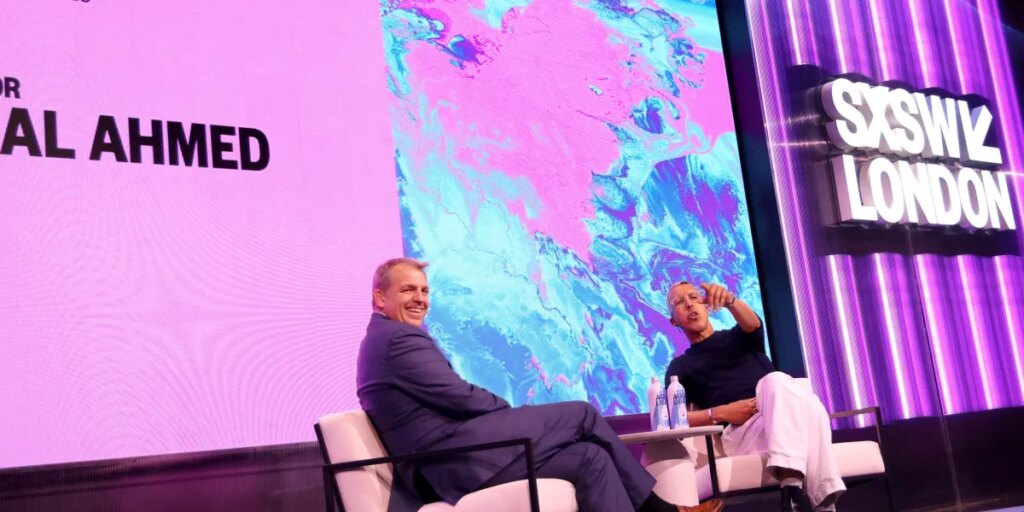
Todd Boehly laughs when I put the point to him during our mainstage interview at SXSW London. As a billionaire investor with stakes in Chelsea FC in London, and the Los Angeles Dodgers (baseball) and Los Angeles Lakers (basketball) in America, he knows more than most about the perils of investing in sports teams. “Risky” is a word often attached to the sector, given the vagaries of form and injuries.
Successful investing in sport needs a few things to be true to work, Boehly says. “These are all giant brands, right?” he says of his sports portfolio. “They’re bigger than the underlying activity. The brand is global, the awareness is global, the fan base is global. They’re more than football clubs, right? They’re lifestyles, they’re entertainment platforms. Everyone wants something to root for—and these give people something to root for.”
Sport, in a world of artificial intelligence and synthetics, is also very human, in all its brilliance and fallibility. The final-minute penalty miss will bring cheers of delight and groans of horror, dependent on the team you support. AI finds such a random rollercoaster of emotions difficult to copy.
Which makes a wider point for Boehly, who is head of Eldridge, a diversified holding company which owns Security Benefit and Everly Life and has stakes in the film studio A24 (Marty Supreme, Beef) as well as across fintech, media, and retail. In a world where significantly more of everyone’s job can be done by AI assistants, the value of human interaction increases.
“If you’re an investment advisor working with a client and you have 100% of your day or 100% of your year, how are you successful?” he says. “You’re successful by being able to sit with people, because there’s still no substitute for being one-on-one, being in person.”
“If you can minimize the time that you have to spend on doing things that don’t create that value [by using AI], then [overall] you’re going to be able to create more value.”
When considering investments and whom to work with, Boehly says two things matter— the ability to say “no” and “I don’t know”.
“It was passing on the opportunities that really made me comfortable with Daniel [Katz, co-founder of A24] as a decision-maker,” he says. “Because when you show up and you’re excited and you’re investing, there’s just so much action and you want to be putting money to work. So, when you see someone who says ‘that’s a bad idea’, right off the chute, and ‘I don’t want to get sucked into that’, [you avoid a] bunch of dogs.”
In film, “avoiding the dogs” is the route to success. In the growing world of artificial intelligence—with its always-on, supportive tone encouraging us all towards false confidence—being comfortable with the ambiguity of “I don’t know” can also be a green flag.
“One of the things I really like to see when you ask people a question—and you can kind of tell—is: do they know the answer or are they just making stuff up?” Boehly says. “And, if they’re making stuff up, it’s really easy to see. So, for me, people who tell me ‘I don’t know’ right off the bat, I love. There’s freedom in ‘I don’t know’. Once you tell me you don’t know, I can’t keep pounding on you.”
I talk to Boehly at a time when the U.S. is enjoying a “gross optimism cycle”. The next 12 months are likely to see three of the biggest IPOs in history (SpaceX, Anthropic, and OpenAI), raising more than $100bn dollars and creating valuations well into the trillions. Markets are at record highs. The latest jobs figures from the U.S. defied expectations on the upside. Investments in data centers and frontier technologies are counted in the hundreds of billions of dollars. Many believe Europe could do with a shot of the ‘energy medicine’ so clearly doing its job across the Atlantic.
“I think the U.S. really has this mindset of ‘everything can be done, everything is possible,’” he says. “Everyone’s worried about jobs getting lost, and I think the reality is that our tools are going to get better, and if our tools get better, you’re going to be able to do more with the same number of people. Sure, there’s going to be wrecks as a result of leaning into it, but I think those wrecks will get corrected so quickly. Our markets heal so fast, and our markets are so deep.”
“I think Europe is still suffering from looking out of the rear-view mirror instead of looking at the front view. They have to start thinking: ‘How do we want to take risk again? We were the number one risk-taking place in the world.’ And then, basically, in my opinion, the Second World War happened, and we were told ‘don’t have any arms, the U.S. will take care of you’. And for 75 years, that’s been the case. Now I think the mindset has to shift, you’ve got to take risk. If you look at the capital markets—70% of the market cap of the world is in America, and 5% of the population lives in America.”
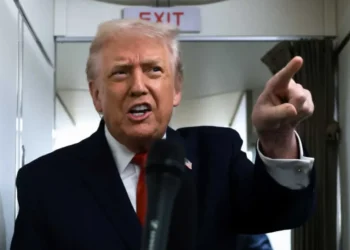
According to Boehly, President Donald Trump has one key power which is why confidence in the U.S. markets and across American businesses is brimming (to the point of hysteria, some suggest).
“He understands the value of time, the whole group understands time,” Boehly says. “If you go back to the early American founders, they were businesspeople that valued time, and my biggest frustration in the world is when people don’t value time.”
Time and chaos? “Don’t listen to what he says, but watch what he does, right?” Boehly advises. “And if you watch what he does without listening to all the ‘go left, go right, go left’ and you just watch him. I was taught when I was playing American football, never watch a guy’s eyes, always watch his hips, he can’t go anywhere without his hips, right? So, to me, if you just cover your ears and don’t listen to the day-to-day, but just watch, it becomes a lot more calm.” Boehly leaves the SXSW audience with that singular thought about the most powerful man in the world. “Hips not lips.”
The post In this AI-driven world, Todd Boehly has spotted the best test for leadership. Someone who is willing to say “I don’t know” appeared first on Fortune.