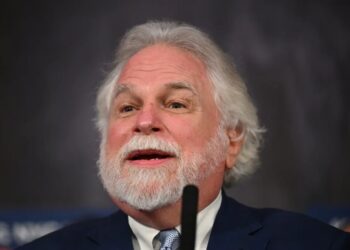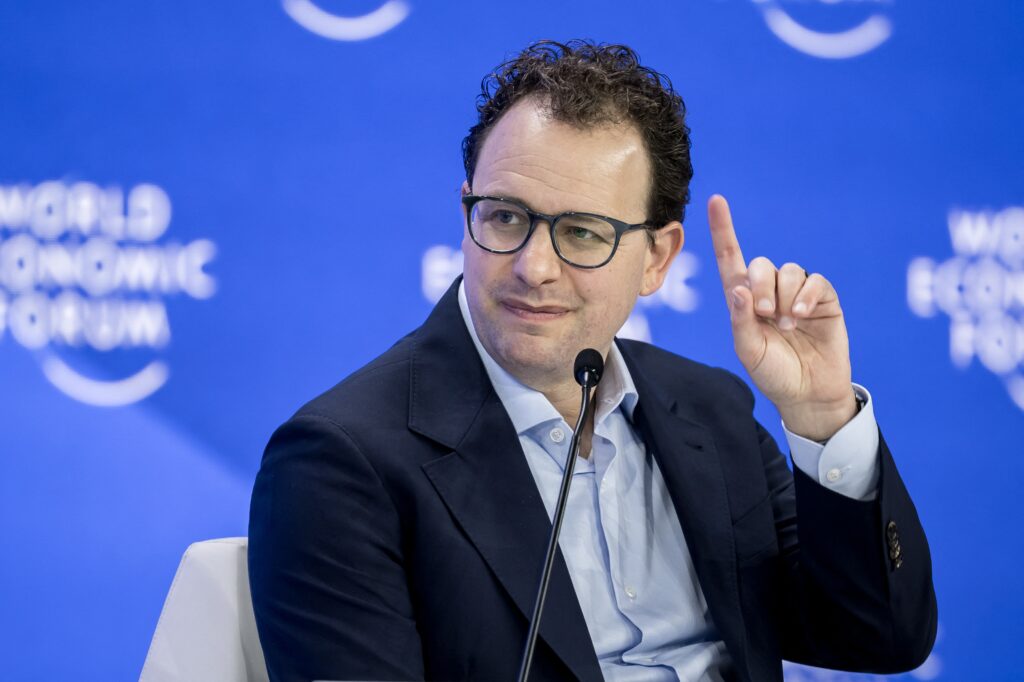
Zachary Karabell is an author and investor and writes “The Edgy Optimist” on Substack.
The artificial intelligence company Anthropic filed initial paperwork last week to become a publicly traded company. Its valuation is approaching $1 trillion, making it among the most valuable enterprises in the world.
Given how much AI is dominating discussions in finance, politics, warfare and employment, it’s worth noting that Anthropic was founded only five years ago. It began in 2021 when a group of OpenAI executives decamped to start a new company after disagreeing with Sam Altman’s paltry commitment to AI safety. Claude, Anthropic’s large language model, debuted in the spring of 2023.
Since then, and especially over the past year, Anthropic has become one of the most successful players in designing the AI that is changing how industries function, lives are lived and wars are fought. It is not hyperbole to say that Anthropic may be the single most powerful company in the world.
Three recent events established its tectonic importance. The first was its dramatic rupture with the Defense Department. Despite months of negotiation between the company and the Trump administration over contract terms, Dario Amodei, Anthropic’s CEO, refused to grant the Pentagon the unfettered right to use Claude for fully autonomous warfare and mass domestic surveillance. Amodei maintained that Anthropic was created with the explicit promise that ethical guardrails would be inviolable, even as much remains in flux about the future of AI models.
The Trump administration then broke off negotiations at the end of February and designated Anthropic a “supply chain risk” (which has rarely been invoked against U.S. companies), banning any Pentagon supplier from using Claude.
Most assumed that the decision would severely harm Anthropic. But it could hurt the Pentagon even more. Claude is not only used by many Pentagon contractors, but it is also embedded in the targeting systems that the U.S. military has used in its war against Iran and its capture of then-Venezuelan leader Nicolás Maduro. In late February, it looked like Anthropic might bow to the government. Now, the government may be forced to stand down in the face of Anthropic’s power. Palantir CEO Alex Karp confirmed in March that his company — a major Pentagon contractor — was continuing to use Claude despite Anthropic’s conflict with the Defense Department.
The second event came from Rome. In late May, the Vatican and Pope Leo XIV presented “Magnifica Humanitas,” the first encyclical of the new papacy and a major effort by the Catholic Church to shape how humanity should use AI. Particularly striking was the presence of Anthropic co-founder Christopher Olah, who spoke after the pope about the imperative of managing AI well.
A founder of a five-year-old start-up sharing the spotlight with the head of a 2,000-year-old church representing more than a billion people speaks as much to the ascendancy of Anthropic as to the moral questions AI raises.
And if anyone doubted the potential risk of AI, the third event was a warning straight from Anthropic. It announced the release of a new AI model called Claude Mythos, but the company was concerned enough about the model’s ability to compromise the security of everyone who uses a computer that it deemed Mythos too dangerous to release to the public. Mythos already has found high-severity vulnerabilities in “every major operating system and web browser,” according to Anthropic.
Though some have speculated that Anthropic overhyped Mythos, the innovation of the company’s other products is obvious. Claude Code was released last year and has rapidly upended the software industry, raising the possibility that anyone can be a developer without actual coding experience.
Anthropic’s leadership, thankfully, is cautious about the new technology. The company called for AI labs last week to consider a pause in AI development “to give ourselves more time to deal with its immense implications.” A slowdown is unlikely, but at least Anthropic seems to understand the history of new tools — such as nuclear power and nuclear weapons — being created without due consideration of the risks.
How and when AI will transform business and society is still uncertain. But the disruption from AI today is at least equivalent to that of the personal computer in the 1980s and the internet and fiber revolution of the 1990s: The technology will fundamentally change how work gets done and at what pace.
What AI won’t change — and what Anthropic implicitly acknowledges in its many public statements — is human nature and its incredible capacity to create along with its depressing ability to destroy. Anthropic could easily misuse its power, and the company’s leadership is aware of that risk. But by any metric, Anthropic is shaping a future that is arriving rapidly. It is a company that didn’t exist a moment ago. Now, it demands our attention.
The post Anthropic might be the most powerful company in the world appeared first on Washington Post.