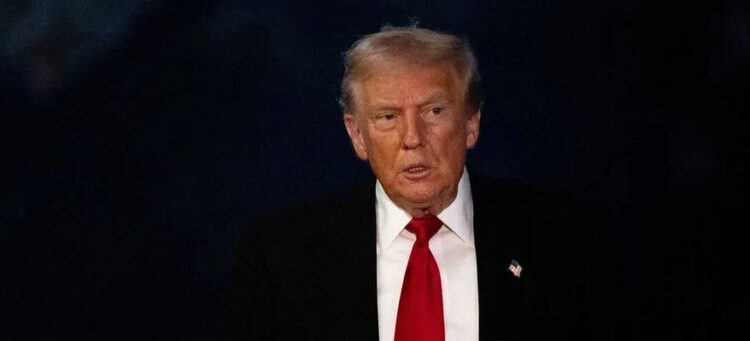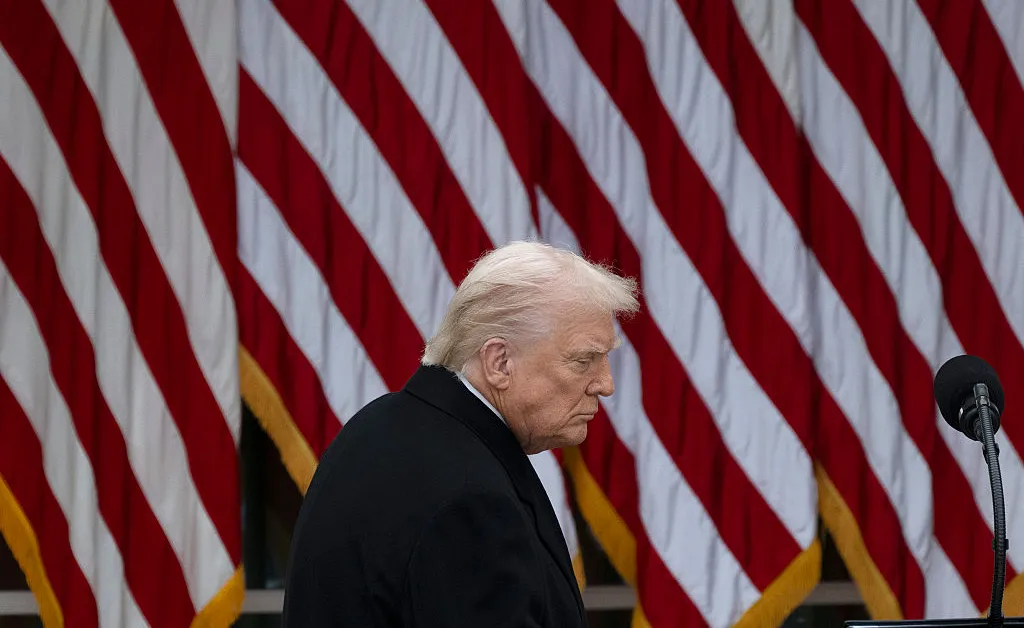
When thinking about the future of Venezuela, parts of the Trump Administration seem to be embracing the theory that democratization is mostly a staffing problem. Replace the “bad team”—President Nicolás Maduro and his inner circle—with a new team committed to democratic norms, and democracy will follow.
Since his first term in office, President Donald Trump has considered Maduro an illegitimate leader and has since designated him as a member of a terrorist organization. The Trump Administration has placed a $50 million bounty on Maduro and reportedly given him an ultimatum to step down.
[time-brightcove not-tgx=”true”]
But the trouble with the Trump Administration’s staffing theory of democracy is that it ignores the institutional foundations required for democratization. Democracies are built by people, yes, but fundamentally, by institutions. Given the scale of Venezuela’s crisis, those institutions cannot be constructed without assistance from major powers. It is far from clear that the Trump Administration would be prepared to offer that assistance.
All new democracies depend on three institutional pillars, each providing a distinct collective good: security, economic restructuring, and de-radicalization. External support is indispensable for each. President Trump is unable to provide these pillars and is therefore unlikely to successfully democratize Venezuela.
Security
New democracies require an encompassing security umbrella. Benn Steil of the Council on Foreign Relations argues that the key lesson from Europe’s democratization after World War II is the U.S. decision to create NATO—the largest security umbrella ever deployed in European history—combined with efforts to modernize local defense forces. Without this broad security umbrella, no amount of financial aid could have produced lasting democracy.
Venezuela also needs a robust security umbrella. The aim would be to shield the country, not from external adversaries, but from internal violence. Dismantling Maduro’s regime will impose enormous costs on many actors who have benefited from it. They will resist. Some will fight.
These cost-bearing groups include the official armed forces, military reservists, paramilitary colectivos that have been known to harass civilians, and extensive smuggling networks. In per-capita terms, these are among the largest and best-armed actors in Latin America. They are also used to operating with impunity. Together, they make Venezuela one of Latin America’s most heavily-armed societies.
Nothing comparable existed during the last major U.S. military intervention in Latin America, the 1989 invasion of Panama. Although Panama was ruled by a corrupt military regime, it was not a heavily-armed society. Its armed forces were small; civilians had limited access to weapons, and decentralized criminal gangs were not dominant. Pacifying Panama was therefore relatively swift. Pacifying today’s Venezuela would be no such cakewalk.
A post-Maduro government will need significant international assistance to build a security architecture capable of containing violence. Democratic transitions resemble peace settlements after civil wars: they are more likely to endure if a neutral external actor—ideally a multinational, human-rights-committed peacekeeping force—stands ready to restrain spoilers.
International involvement also prevents the new democratic government from having to act repressively to establish order. Expecting a transitional administration to deploy coercion risks delegitimizing it. Outsourcing that function to an impartial external force helps avoid that trap.
But the Trump Administration’s dramatic cuts to foreign assistance programs and hesitancy to underwrite the security affairs of other countries means the United States may not come forward to provide any such support. This means Maduro’s departure would leave a security crisis in Venezuela with doubtful prospects for addressing it.
Economic restructuring
The second institutional requirement is economic transformation. Venezuela, like most autocracies in the Global South, must dismantle its current kleptocratic extractivism—the reliance on commodity export revenues for the personal enrichment of rulers.
This model needs to be replaced with what Daron Acemoglu and James Robinson famously called “inclusive economic institutions” that promote broad-based wealth creation. It also makes sense to generate what Venezuelan economist Ricardo Haussman calls “economic complexity”—the creation of diversified, knowledge-based industries and services.
Inclusive wealth-creation and economic complexity demand more than lifting sanctions and providing startup funding. They actually require deploying world-class technical expertise to mitigate Venezuela’s entrenched resource curses. Economic governance frameworks need to be redesigned. All of this requires external advisors, supported by foreign partners, working with multilateral donor agencies and local experts.
But the Trump Administration has shown low esteem for promoting technical expertise when making cabinet appointments. This could translate into a policy toward Venezuela that will under-prioritize the promotion of expert-knowledge thus neglecting the country’s development challenges. And by Trump’s own admission, an “America First” agenda also means that the United States is unlikely to prioritize investing in the economic prosperity of other nations. If anything, all eyes are set on buying mineral products from Venezuela, and nothing else, which suggests that the United States is unlikely to become the partner that Venezuela needs to mitigate the problems of extractivism.
De-radicalization
The third requirement to establish a democracy is de-radicalization. Transitions from authoritarianism often unleash extremism: the new governing team may pursue vengeance for past abuses; remnants of the old regime may consider armed self-defense; citizens may have unrealistic expectations about the speed of progress. Venezuela will need external assistance to temper political demands and defuse zero-sum thinking.
This too will require institutional rethinking. From the constitution to the criminal justice system, any newly democratized country needs new rules to dismantle autocratic legalism. This is the use of the law to favor the Executive branch and punish dissent. Autocratic legalism needs to be replaced with power-sharing.
Instituting power-sharing was a key lesson from Venezuela’s first successful experiment with democracy in the 1960s and 1970s. Actors from different ideologies agreed to share resources and commit to self-restraint, leading to democratic prosperity.
New forms of self-restraint are equally needed today. And without the moderating influence of external actors, mediating across competing extremist demands, it is difficult for polarized societies to achieve reconciliation.
But Trump is an undeniably polarizing figure. Both at home and abroad, he is more often than not a side-chooser and a leading antagonizer. He openly expresses favoritism for one side while frequently trash-talking every other side. He rose to power as an intentional polarizer, and if this approach is applied to Venezuela, it will do little to de-radicalize the nation.
Will the U.S. support democracy abroad?
There is little evidence that Washington is ready to undertake the long, expensive, institution-building project that democratization requires. It’s clear Trump wants Maduro out but not that the United States has a post-Maduro plan. The Trump Administration views democratization as a quick staffing swap rather than a project of institutional reconstruction in partnership with local actors.
The Trump Administration’s aversion to overseas commitments makes sustained involvement unlikely. Its disdain for technical expertise and embrace of an “America First” approach to foreign policy create problems for efforts to rebuild Venezuela’s economy. Its ambiguous stance toward corruption—and potential interest in profiting from Venezuela’s oil economy—casts doubt on its commitment to helping dismantle kleptocratic extractivism. And its enthusiasm for punitive governance, especially targeting those deemed ideologically unacceptable, raises questions about its ability to support de-radicalization.
The United States may be ready to help change Venezuela’s governing team. But replacing leaders is not the same as rebuilding democracy. Without a willingness to partner with local actors to promote security, economic restructuring, and political moderation, Washington wont help Venezuela democratize—only help it transition into uncertainty.
The post Why Trump Won’t Establish Democracy in Venezuela appeared first on TIME.