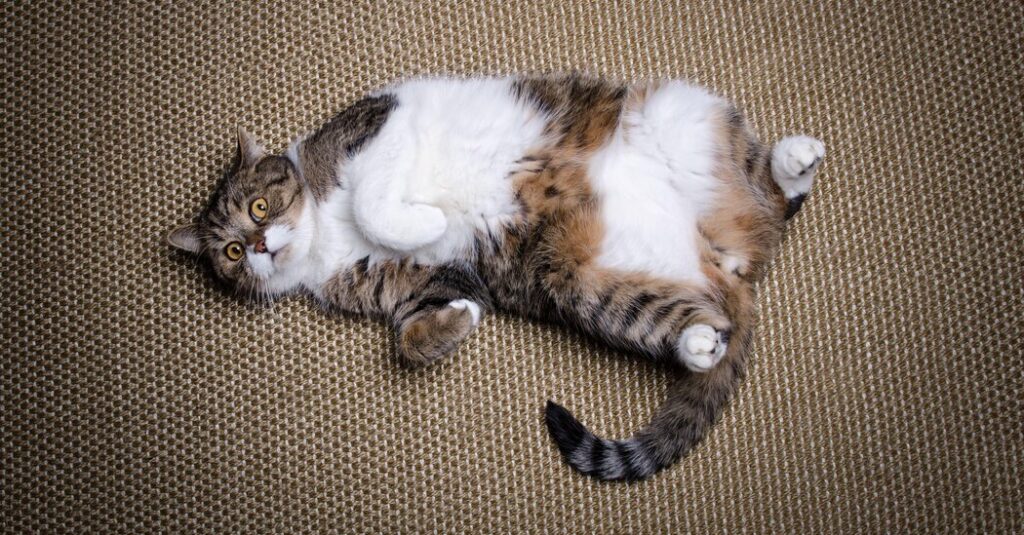
In just a few short years, new diabetes and weight loss drugs like Ozempic, Wegovy and Mounjaro have taken the world by storm. In the United States, one in eight adults say they’ve tried one of these medications, which are known as GLP-1 drugs, and that number seems sure to rise as prices fall and new oral formulations hit the market.
Fluffy and Fido could be next.
On Tuesday, Okava Pharmaceuticals, a biopharmaceutical company based in San Francisco, is set to announce that it has officially begun a pilot study of a GLP-1 drug for cats with obesity. The company is testing a novel approach: Instead of receiving weekly injections of the drugs, as has been common in human patients, the cats will get small, injectable implants, slightly larger than a microchip, that will slowly release the drug for as long as six months.
“You insert that capsule under the skin, and then you come back six months later, and the cat has lost the weight,” said Dr. Chen Gilor, a veterinarian at the University of Florida, who is leading the study. “It’s like magic.”
Results are expected next summer. If they are promising, they could represent the next frontier for a class of drugs that has upended human medicine, and a potentially transformative treatment option for millions of pets.
Some veterinarians have already begun administering human GLP-1 drugs, off label, to diabetic cats, and Okava is not the only company developing a product specifically for companion animals.
“I think this is going to be the next big thing,” said Dr. Ernie Ward, a veterinarian and the founder of the Association for Pet Obesity Prevention. Veterinarians, he added, are “on the precipice of a complete new era in obesity medicine.”
Dr. Ward has provided informal, unpaid advice to Okava and several other companies interested in developing GLP-1 drugs for pets, but does not have financial ties to any of them, he said.
Still, the success of GLP-1 drugs in veterinary medicine is hardly preordained. Large clinical trials are still needed, experts said, and it’s unclear whether the drugs will be affordable, or even appealing, to pet owners.
For “so many people, their main way that they interact with and show their love to their pet often revolves around food,” said Dr. Maryanne Murphy, a veterinary nutritionist at the University of Tennessee.
Will pet owners pay for a drug that makes their animals eat less?
Blockbuster drugs
Recent estimates suggest that roughly 60 percent of the nation’s cats and dogs have obesity; hundreds of thousands of cats and dogs have diabetes, Dr. Gilor said. Better treatments are desperately needed, experts said.
Diabetic pets typically need insulin injections twice a day, every day. It’s a costly, labor-intensive treatment plan and many pets are euthanized within a year of the diagnosis, Dr. Gilor said. “Diabetes is technically completely treatable,” he said. “And we are doing such a lousy job treating it.”
As for obesity, which can substantially increase the risk of diabetes, especially in cats, simply emphasizing diet and exercise has not worked much better for pets than it has for people. “We haven’t moved the needle,” Dr. Ward said.
GLP-1 drugs are designed to mimic a hormone called glucagon-like peptide-1, which stimulates insulin production, slows digestion and promotes a feeling of fullness. Some small studies suggest that the drugs might have similar benefits for pets and people.
Scientists have found, for instance, that some human GLP-1 drugs can also reduce appetite, improve glucose control and lead to weight loss in cats and dogs. (They can also cause familiar side effects, such as vomiting.)
“I do really see clear benefits,” said Thomas Lutz, a veterinary physiologist at the University of Zurich who has studied GLP-1 drugs. “I think what’s really missing are larger-scale clinical studies.”
Still, the findings have been promising enough for some veterinarians to begin using human GLP-1 drugs off label. Dr. Andrew Bugbee, a veterinary endocrinologist at Texas A&M, said he uses the drugs “a handful of times a year” in diabetic cats.
But because there are no veterinary-specific formulations, pet owners pay the same price that human patients do, which is often hundreds of dollars a month. And existing drugs don’t seem to work well enough to entirely replace insulin in diabetic cats, especially in those whose disease is advanced, Dr. Bugbee said.
Focusing on treating prediabetic pets with obesity may prove to be a more effective approach, he said, especially if companies can develop pet-specific products that are cheaper and easier for owners to administer.
MEOW-1
Okava is trying to create just that. “It is our belief that the condition of obesity, the condition of being overweight, is by far the number one most significant preventative health challenge in all of veterinary medicine,” said Michael Klotsman, the founder and chief executive of the company.
Aware that a weekly injection would be a tough sell for many pet owners, Okava partnered with Vivani Medical, a biopharmaceutical company that had developed small, under-the-skin implants that could be filled with a monthslong supply of a GLP-1 drug.
Okava’s product, which contains a drug called exenatide, seemed to lead to weight loss in healthy cats in a small, proof-of-concept study.
Now, the company is testing the implants in cats with obesity, in a larger, placebo-controlled study. (The study is called MEOW-1, for “ManagEment of Over Weight cats.”) Okava hopes to enroll at least 50 cats, two-thirds of whom will receive the drug. The researchers will initially follow the cats for three months; owners will then be able to opt into a three-month extension.
If the results are promising, Dr. Klotsman said, Okava plans to launch a larger clinical trial next summer and apply for approval from the U.S. Food and Drug Administration within the next 18 to 24 months.
Okava’s initial application to the F.D.A. will focus on feline obesity, but the company also plans to study the drug’s effectiveness in dogs, and for a variety of other conditions, including diabetes and chronic kidney disease. (Studies in humans, many still in the early stages, suggest that the drugs could have a wide range of health benefits.) Dr. Klotsman said he hoped that the company might even be able to position the product as a longevity drug.
Dr. Ward said that he was “bullish” on the promise of GLP-1 drugs for pets but that studies like Okava’s were badly needed. “Until we really see them in practice with a broader population, then we really can’t draw conclusions,” he said. “And that’s why it’s exciting that these companies are now moving forward rapidly.”
The biotechnology company ProLynx has also developed a long acting GLP-1 drug that showed potential in diabetic cats. ProLynx, which is primarily focused on human health, is now looking for an animal health company to help further develop the drug. “We think that this molecule is ready for prime time,” said Daniel Santi, the co-founder and president of ProLynx.
Consumer appetite
To succeed in the veterinary market, developers will also need to address some of the practical challenges that have been associated with GLP-1 drugs, said Dr. Bethany Cummings, who studies GLP-1 at the University of California, Davis. One of the biggest ones, she noted, was “how to make it actually financially feasible.”
Okava is aiming to keep the price of its product at or below $100 a month, Dr. Klotsman said, pointing out that some people pay more than that for high-end dog food. “We do think the market is there,” he said.
Moreover, diabetes is itself expensive to treat, Dr. Gilor said. If GLP-1 drugs can prevent the condition, or send some diabetic pets into remission, they could save some pet owners money.
Still, a drug that would cost $100 a month will be out of reach for many pet owners, and even those who could afford it may not necessarily rush to get their hands on it.
Some experts cited the case of Slentrol, an older weight loss drug for dogs made by Pfizer’s animal health division (which later became a stand-alone company called Zoetis). Slentrol, which was approved by the F.D.A. in 2007, was not a GLP-1 drug, but it did effectively reduce dogs’ appetites.
Pet owners didn’t always like that. “They saw that as a negative side effect,” said Dr. Murphy, the veterinary nutritionist. “Because the main way they interacted with their pet was by feeding them, and seeing their excitement and happiness when they were eating the food.”
Within a few years, the drug had been discontinued.
Zoetis confirmed that the company had not seen “sustained demand” for Slentrol, although it provided a different explanation. “We found that pet owners often did not perceive obesity in their pets as a medical condition requiring treatment,” Dr. Kevin Esch, the senior vice president of global therapeutics, said in an emailed statement.
But Zoetis is exploring GLP-1 as one of several potential targets for new treatments for “pet diabetes and other internal medical conditions, including cardiac care,” Dr. Esch said.
Dr. Murphy said she thought GLP-1 drugs did have real potential in veterinary medicine — but as a supplement to, rather than replacement for, traditional weight management plans.
“I think it would not be a simple, quick, easy fix, where you just give the medication and you don’t have to worry about anything else,” she said.
Emily Anthes is a science reporter, writing primarily about animal health and science. She also covered the coronavirus pandemic.
The post Could Weight Loss Drugs Turn Fat Cats Into Svelte Ozempets? appeared first on New York Times.