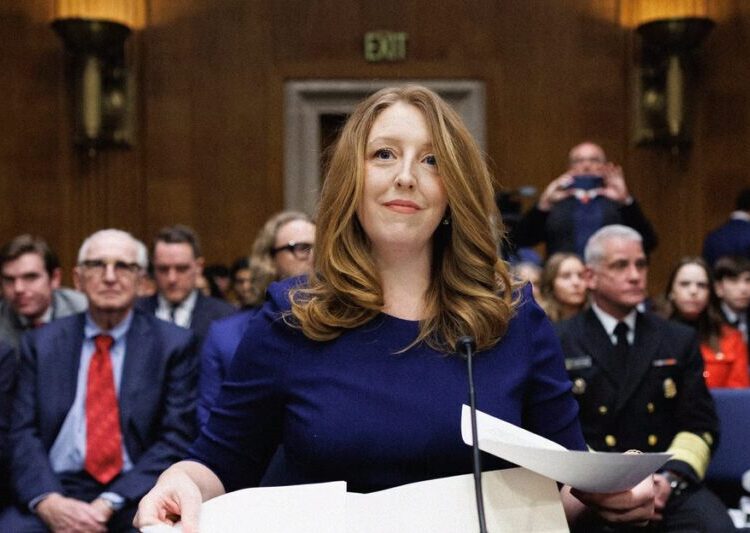
Ezekiel J. Emanuel is an oncologist, medical ethicist and professor at the University of Pennsylvania.
Democrats succeeded in elevating health care affordability to the top of the national agenda during the shutdown fight. Indeed, they forced President Donald Trump to offer proposals — albeit wrongheaded ones — under the rubric of affordability. Count that as a win.
But simply defending the Affordable Care Act does not a health plan make. About 150 million Americans have employer-sponsored insurance, where a family plan now costs workers an average of nearly $7,000 per year from their wages and $27,000 in total — the equivalent of a new Toyota Corolla every year. Half of Americans worry that they cannot afford health care. Congress — and the American public — desperately need new ideas.
While Trump and the Republicans dither, Democrats can seize the advantage and craft a more comprehensive health care affordability bill. These five reforms can be immediately implemented to control costs:
First, hospital prices need to be capped and standardized across the country, with the only variability being cost of labor and rent in different locales. In 2023, the last year for which official data are available, hospitals consumed about a third of all health spending — over $1.5 trillion. Since 2000, hospital prices have gone up faster than any other segment of the economy. In addition, the cost of the same procedure can vary by tenfold among hospitals, depending which insurer is paying. Procedures performed at hospitals often cost tens of thousands more than identical ones done at doctors’ offices or ambulatory surgical centers.
The federal government should embrace what was originally a Republican idea: Cap hospital prices as a percentage of Medicare prices, with higher caps in more competitive markets. This would reward competition among hospitals and lower bills. Such caps have saved money in Oregon and a similar policy was recently signed into law in Indiana. Additionally, the government should expand site-neutral payments to equalize prices for a medical service regardless of where it is provided, a reform that has been advanced by the Trump administration. Site neutral payments alone would save Medicare an estimated $150 billion over 10 years.
Second, we need to address doctors’ incentives. Currently, most physicians are paid a fee for a service. Thus, they get paid more when they do more. The result is well over $100 billion in wasteful and ineffective health spending ever year.
The solution is value-based payments. Doctors should be paid for improving patients’ health, not for doing more treatments and procedures. Surgical operations, cardiac catheterizations, colonoscopies and all other procedures should be covered by one comprehensive and uniform “bundled” fee for the physician, surgical suite, and all other costs, with bonuses for high-quality, long-term outcomes. Government-run pilots of this approach suggest savings in the range of 3 percent, with no reduction in quality. This could be rolled out for common procedures like hip replacements.
Similarly, primary care doctors should be paid not per visit but per person cared for, with bonuses for saving money and reaching high-quality outcomes. For eight years, Medicare’s program for Accountable Care Organizations has saved money, with net savings (after bonus payments) last year rising to $245 per patient. Quality of care for high blood pressure and diabetes also improved. Indeed, the best performing ACOs saved over 10 percent of costs. Together, these policies would incentivize doctors to focus broadly on keeping patients healthy. To be most effective, they need to be implemented system wide, not just within Medicare. Having different payers pay in different ways would weaken the incentive for doctors to change how they practice.
Third, the insurers’ behavior needs to change. In Medicare Advantage, private insurers are rewarded based on how low their bids are compared to a Medicare benchmark. Instead, insurers should compete against each other based on the premiums they charge. In addition to lowering the costs to individuals, such competition could save the government as much as $230 billion in 10 years.
Insurers should also be required to offer their lowest negotiated prices to all customers. Currently, companies negotiate hospital prices that are 8 percent less for patients they insure themselves than for plans in which they are only the administrator. Finally, deductibles for all private plans should be capped at no more than 2 percent of the median household income — about $1,650.
Fourth, similar reforms are needed to address drug prices and pharmacy benefit managers. Reforms should range from linking drug prices to health benefits to mandatory price drops after 5 and 10 years, as exist in Australia and Japan. In addition, payments need to be disconnected from the price of the drugs they cover, so PBMs don’t make more money by increasing drug costs. PBMs should also be required to include biosimilars, when they exist, in creating any formulary.
Fifth, administrative costs are out of control, amounting to about $1 trillion per year, or nearly 20 percent of all health care spending. Global consulting firm McKinsey has estimated that about $250 billion could be saved annually by automating scheduling, quality reporting, data entry and customer service functions. Also needed is a claims clearinghouse to facilitate payments the way the Federal Reserve established standards for electronic payments and a centralized network to enable ubiquitous ATMs.
Cost control is not the full solution to the U.S. health care woes, but it can both provide urgent financial relief to a majority of Americans and is a necessary precursor to much-needed comprehensive health care reform. Democrats have momentum and the upper hand on this issue. Why not use it to make things better — and to win the 2026 midterm elections?
The post Democrats won an opening on health care. Here’s how they can use it. appeared first on Washington Post.