Times Insider explains who we are and what we do, and delivers behind-the-scenes insights into how our journalism comes together.
Last summer, New York Times Travel editors were brainstorming how to pay tribute to the nation’s 250th birthday when Amy Virshup, the desk’s editor, threw out an idea.
What if they asked writers to revisit places where American revolutionaries had once set foot, places rich with history that today’s visitors might overlook? How had the nation changed since its founding? How hadn’t it?
“The idea was to remind people that their history is something they can touch very easily and explore and go and see,” said Ms. Virshup, who worked with editors including Veronica Chambers, Suzanne Macneille and Danial Adkison to develop the series, Revolutionary Journeys.
Taking inspiration from the long-running Footsteps column, in which writers make pilgrimages to places to shed light on the literary and cultural figures who lived and worked there, they set out to transport readers back to destinations across the Colonial-era world. To fully tell the story of the country’s history, though, they would need to find a way to represent experiences that are often sidelined or omitted altogether in U.S. history classes, like those of Black people and Native Americans.
“If you get beyond the founding fathers, who are people who are important?” Ms. Virshup said. “We tried to find writers who could address those themes.”
At the beginning of May, the desk began publishing its 10-part weekly series, which is set to run through mid-July. Exploring sites like Thomas Jefferson’s Monticello home in Charlottesville, Va., and the lives of people like Black Americans who fought on either side of the Revolution, the articles aim to blend context about the original journey with the present-day writer’s observations, surprises and delights.
The desk wanted diversity in both places and people, Ms. Virshup said, and looked beyond the 13 colonies and familiar names. (The final essay in the series, by Ellen Barry, will follow Nancy Ward, a Cherokee woman from what is now Tennessee who acted as a diplomat between the Americans and the Cherokee and negotiated a peace treaty in 1781.)
Eric Weiner followed Benjamin Franklin’s passage to Paris in 1776, when Franklin persuaded the French to back the American rebels, including through the village of Auray in Brittany, where Franklin came ashore. Mr. Weiner said he did not expect the founding father to be so prominently remembered in such a far-flung place. (Franklin did not stay long in Auray, though that has not stopped the town of 14,400 from naming a quay, a bar and an ice cream flavor after him.)
“In some ways, it was surprising that Franklin is more celebrated in this one little corner of Paris than he is in most places in America outside of Philadelphia,” he said.
Other writers, though, found themselves surrounded by less wholesome reminders of the history they were attempting to retrace.
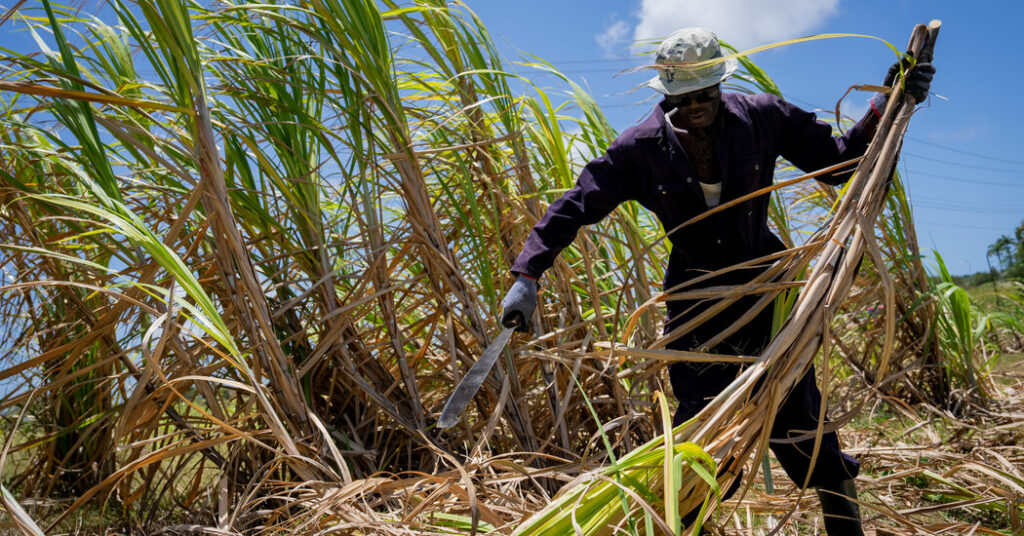
Russell Shorto, a historian and author, embarked on a four-day trip to Barbados in April to explore the beginnings of the plantation system that would take hold in the American South. He found himself enveloped by thousands of acres of sugar cane plantations, reminders of the role of the slavery economy in the Revolutionary era.
“There’s sugar cane all over the place,” he said. “So that vestige of what was is still there.”
Residents, though, were not always eager to dig deeper. Mr. Shorto said the historians and museum staff members he interviewed all told him the same thing: Many people in Barbados “don’t want to hear about slavery.”
“In Barbados, tourism is the main industry,” he said. “People have their lives to live, and they’re thinking a lot about the future and how they fit into the world. And so I could, in a way, understand why they don’t want to dwell on things like that.”
Anna Venarchik, who walked, biked and kayaked to sites connected to the 1780 siege of Charleston, S.C., which led to an American defeat and a two-and-a-half-year occupation of the city by the British, said residents she talked to were delighted by her focus.
“Civil War history down there kind of dominates, so folks were excited and surprised that the area was getting the recognition for that,” she said.
At first glance, a series so heavily focused on history might seem a peculiar fit for the Travel desk. But it is exactly that type of curiosity about the long, storied and sometimes troubled identities of places that is at the heart of the desk’s mission to help people understand the world, Ms. Virshup said.
“This is history we live with every day,” she said, “but perhaps don’t pay that much attention to.”
Sarah Bahr writes about culture and style for The Times.
The post Taking Highways and Back Roads to America’s Founding appeared first on New York Times.