A key Republican senator is demanding that a major medical organization explain how it helps set industry payment rates, adding urgency to a growing political fight over how doctors are reimbursed.
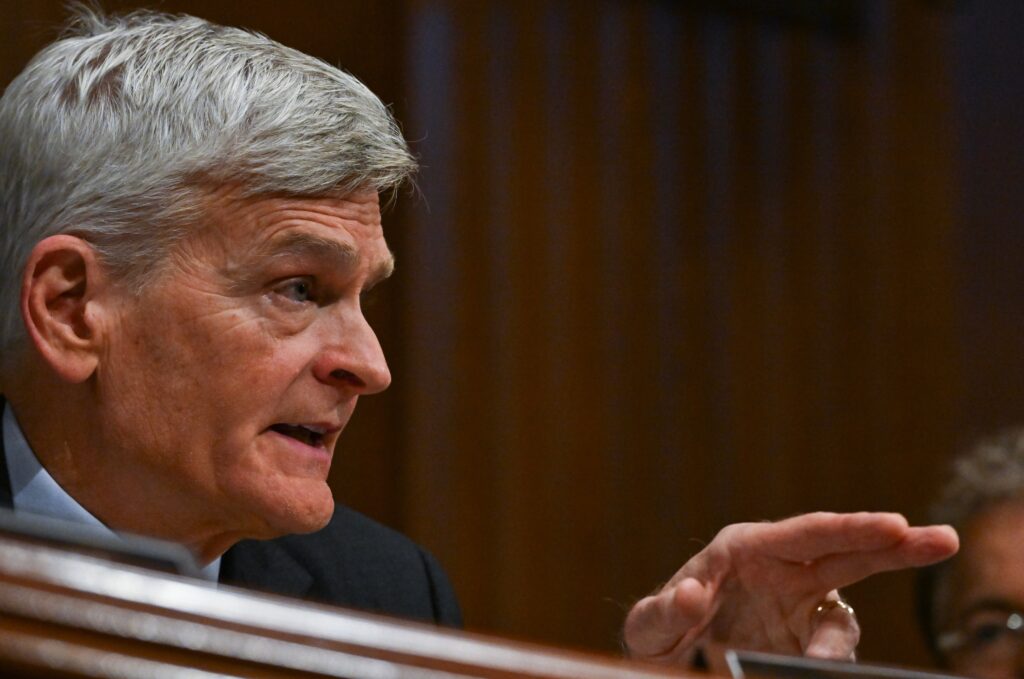
Sen. Bill Cassidy (R-Louisiana), the chairman of the Senate’s health committee, on Monday sent the American Medical Association a list of questions about how the lobbying group devises codes that are used to bill for medical procedures and services, fees associated with that work and the organization’s broader agenda.
The letter, which was shared with The Washington Post, escalates efforts Cassidy made in October to penetrate what he and others deemed an opaque process with outsize influence over the U.S. health care system. Then, Cassidy received answers he deemed insufficient.
“They need to respond to the questions,” Cassidy said in an interview, adding that the billing codes had “become somewhat of a cash cow” for the association, which has reported about $500 million in annual revenue in recent years. Much of that revenue comes from fees related to licensing its codes and related activities, which Cassidy said were eventually “passed along to somebody” and helped inflate U.S. health care costs.
The association did not immediately respond to questions about criticism of its coding system, known as the Current Procedural Terminology, or CPT. An AMA official said the association planned to respond to Cassidy’s requests.
The senator’s focus on the group, coupled with Trump officials’ willingness to smash industry norms, poses a fresh threat to the lobbying organization’s long-standing grip on physician payment rates — often a source of bipartisan frustration but one that has seen little meaningful reform. While Cassidy’s request is voluntary, it represents an early step in what could turn into a larger focus for his committee, pending what he learns, he said.
The association has been tasked by Congress for more than 30 years with helping to generate standardized billing codes across the industry, with an association committee assigning relative values to thousands of different medical procedures. Medicare and other payers subsequently rely on those codes to process claims and make payments.
While the initial effort was hailed as a way to create consistency and predictability for health care costs, the association’s system has faced increasing criticism for creating incentives to perform surgeries and other costly procedures, rather than focus on primary care and prevention. Detractors also have accused it of steering physicians to become specialists because they will be paid more, while financial incentives are different in other countries, where more physicians go into primary care — and health outcomes are better.
Sen. Elizabeth Warren (D-Massachusetts) and other Democrats have argued that the AMA has too much influence to shape billions of dollars in Medicare payments, with too little oversight. In his own questions to the association, Cassidy asked for an explanation of how its process “incorporates the feedback and concerns of all providers and specialties.” He also pressed for answers about whether the lobbying group supported gender-transition procedures, a frequent target of Republican lawmakers.
The AMA’s role has separately drawn the ire of a powerful new foe: Health Secretary Robert F. Kennedy Jr., who has begun overhauling Medicare’s payment formula as part of his broader “Make America Healthy Again” agenda.
A Medicare rule that was finalized on Oct. 31 shifted some reimbursement away from surgeries and toward preventing and managing chronic disease, among other changes. Under an “efficiency adjustment,” payments for surgeries and procedures were cut by 2.5 percent, with Trump officials arguing that past reimbursement failed to account for workflow and technological improvements. Meanwhile, payments for treatments based only on a provider’s time — like a family doctor’s conversation with a patient — were not cut.
“This action does not eliminate the use of American Medical Association surveys to value services altogether but rebalances the approach,” the Centers for Medicare and Medicaid Services said in a statement.
“We leaned heavily toward primary care. We leaned heavily into preventive care. We’re going after reactive care,” Chris Klomp, who oversees the Medicare program, said at a Milken Institute event last month, adding that the Trump administration’s goal was to shift broader industry incentives. “We know that what we do in Medicare will drive the entirety of the rest of the U.S. health care system.”
Some medical organizations have criticized the Trump administration’s approach to physician reimbursement, with the American College of Surgeons and 33 other medical organizations protesting Medicare’s recent payment changes and arguing that it will create new financial pressures on their members.
“We need Congress to step in immediately and stop the implementation of this flawed plan that will negatively impact surgeons and will limit access to care for millions of vulnerable patients,” Patricia L. Turner, the executive director of the American College of Surgeons, said in a statement.
But others have cheered the administration, calling its effort to boost primary care payment overdue and framing it as a bipartisan priority.
“They’ve made some bold moves,” said Ann Greiner, chief executive of the Primary Care Collaborative, calling for more focus on preventive care. “We see this agenda as something that everybody wants — everybody wants health.”
Miriam Laugesen, an associate professor at Columbia University’s Mailman School of Public Health and a former Senate legislative fellow for Warren, also commended Cassidy for pressing the AMA on its operations and role.
“It’s really good that Congress — and particularly from the Republican side — is questioning the AMA’s monopolies in both policy and in the CPT,” said Laugesen, the author of “Fixing Medical Prices: How Physicians Are Paid.”
Cassidy said he had not coordinated with the Trump administration but characterized their shared interest in the AMA’s role and physician payment as a sign of growing awareness that the issue needed more scrutiny.
“If multiple people are noticing something, that kind of begs the question of how do we want to address it,” he said. “In turn, that begs the question, can I have a better answer to my letter?”
Cassidy declined to say whether he would use a subpoena to compel a response. The deadline to reply is Dec. 15.
The post GOP steps up pressure on American Medical Association, physician payments appeared first on Washington Post.