RIO DE JANEIRO — From a platform high above Rio de Janeiro’s Carnival parade, the new manager of the world’s most decorated national soccer team saw in the shimmying, synchronized performers below the qualities needed to return his adopted nation to glory.
“Carnival captures the essence of the Brazilian people,” Carlo Ancelotti said. “There is energy, joy and organization. If we can bring all of that to the team, we will do well at the World Cup.”
It‘s a bit of a cliché to say that Brazil infuses its futebol with the rhythms of samba, just as it is to say that the Germans attack the game with heartless efficiency, or the Argentines with fiery intensity. But only a bit, because it‘s also true that since the English brought the sport to these shores, Brazilians have played the game, from luxurious lawns to tropical beaches to the hillsides of Rio’s favelas, with music at their feet.
At least that’s how they imagine it and what they see as the key to success, the lack of which has taken Brazil’s national team, winner of a record five World Cups but none in more than two decades, to its current identity crisis.
The team is haunted by traumatic defeats, most painfully the infamous 7-1 loss to Germany — at home! — in the 2014 World Cup, among the most shocking results in the sport’s history. With the country’s talent pool thinning, some here fear, worse might be yet to come.
The malaise is so deep — the time so desperate — that the nation was driven last year to a measure almost sacrilegious: To manage the national team, Brazil’s soccer federation hired an Italian.
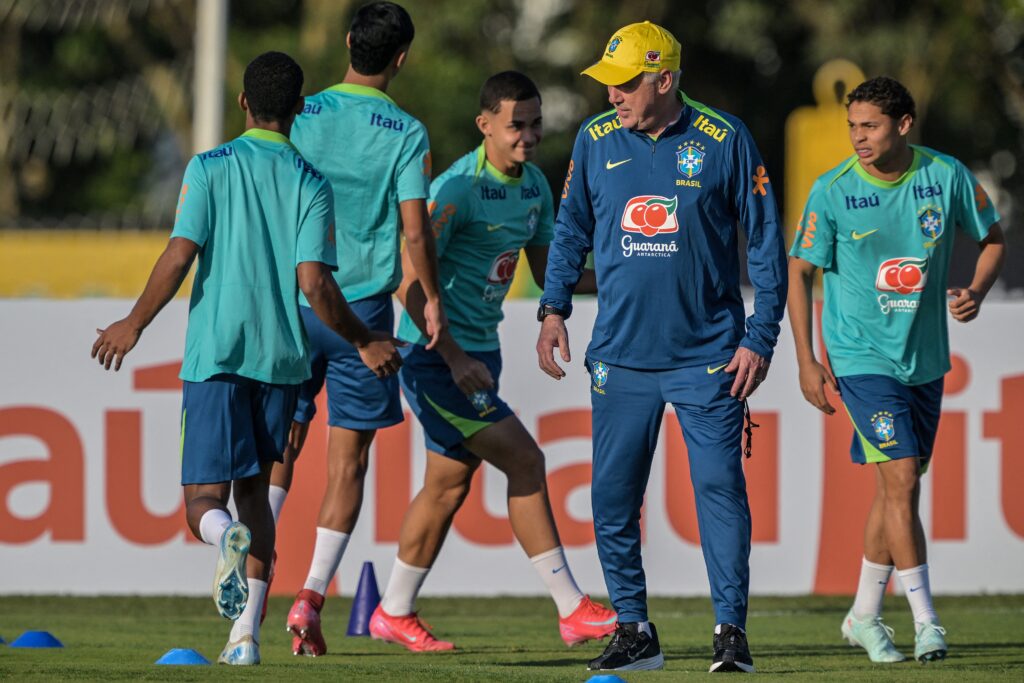
When the 66-year-old Ancelotti leads Brazil onto the MetLife Stadium pitch in New Jersey this month against Morocco, he’ll be the first foreigner to manage the yellow-clad Seleção in a World Cup.
His hire initially drew skepticism even from President Luiz Inácio Lula da Silva, who said he did not see a foreigner saving Brazil.
But Ancelotti is no ordinary foreigner. He’s the most successful club coach in history, the only one to have won five Champions League titles and the only one to have won titles in each of Europe’s five major leagues. He’s found success at several of the sport’s most storied clubs, including AC Milan, Chelsea, Paris Saint-Germain, Real Madrid and Bayern Munich.
Known more for his adaptability than for rigid tactical doctrine, he leans into the qualities and quirks of his players. For the green and yellow, he believes, the path back to the top lies in exactly what the fans have been longing to see: a style of play that taps into the players’ uniquely Brazilian character and molds it to the modern game.
“I’m here because the Brazilian national team is the most important in the world,” he told The Washington Post. “After 24 years, I think it is time for Brazil to win the World Cup again.”
André Rizek, the host of one of Brazil’s most popular sports shows, sees Ancelotti as coming from an era when the World Cup was soccer’s ultimate prize.
“That’s why he takes the risk of embracing such a challenge as leading Brazil in a low moment,” Rizek said. “To be remembered as the greatest coach in history.”
The soccer-samba connection has become banal, but for Ancelotti it‘s a blueprint. On arriving here last May, his first order of business was to get to know the country.
Since then, he has traveled Brazil, went to Carnival in three different states and visits a steakhouse at least once a week. He’s been studying Portuguese and has learned the national anthem so he can sing along before games.
“I feel good here,” he said. “Brazil welcomes foreigners. Its people are joyful and humble, and show a lot of passion.”
Over three decades as a manager, Ancelotti has coached 43 Brazilian players, experience that could help on a team that has struggled to play together consistently and no longer inspires the confidence it once did.
Kaká, winner of the 2007 Ballon d’Or as the world’s best player, played 270 matches under Ancelotti at AC Milan. He was a member of Brazil’s last World Cup winner, in 2002.
“We always talk about Ancelotti’s ability to manage people, and sometimes it seems like that’s all there is to it. But it’s not,” Kaká told The Post. “He knows how to work with star players, he adjusts the game and the team to suit them, and that makes a difference in a championship like the World Cup.”
Brazil is the only nation to have competed in every World Cup since the tournament debuted in Uruguay in 1930, winning in 1958, 1962, 1970, 1994 and 2002, revolutionizing the sport with the free-flowing creativity called jogo bonito — the Beautiful Game — and introducing to the world such stars as Kaká, Ronaldo, Ronaldinho and the greatest of all: Pelé.
But in an increasingly globalized world, Brazil has struggled with players leaving as teens for the glory and riches of European soccer, the game’s shift away from expressive freedom toward the European preference for tactical football and, ultimately, a lack of success that has begotten a lack of success.
Now the nation is preparing to say goodbye to Neymar, who at 34 will play in his fourth and likely final World Cup.
Neymar isn’t just the face of Brazilian soccer for the last 15 years; he’s the last link to the era of the Beautiful Game — and maybe the last hope that it can be resuscitated.
“Brazil has always been seen as a country of extraordinary talent in soccer, the home of jogo bonito,” the sportswriter and color analyst Gustavo Franceschini said. But new technologies and shifting habits, he said, have changed the playing field. “Neymar is a star but spent more than a decade shining on his own.”
Ancelotti left Neymar off his squad until the final roster announcement, a snub that stirred controversy. He said Neymar was insufficiently fit.
The greatest Brazilian player of his generation has suffered a string of injuries and delivered underwhelming performances in domestic play since returning last year to Santos, where he began his career in 2009.
When Ancelotti, unveiling the World Cup roster in May, read out Neymar’s name, shouts of joy erupted from Belém to Porto Alegre.
Ancelotti said he had received “many suggestions” about Neymar’s inclusion. Ultimately, he said, the decision reflected a principle that has long defined his teams: the collective spirit.
“Experience matters in this kind of competition,” he told reporters. “And the affection the group has for Neymar can help create a better environment within the squad.”
Neymar, now dealing with a calf injury, is not expected to recover in time for the early stages of the World Cup.
Ancelotti’s greatest challenge, analysts say, has been to build cohesion within a team that has cycled through four managers in as many years.
In the past year, he has led Brazil to six wins, three losses and two draws, with 24 goals scored and ten allowed — results that haven’t inspired much confidence. The team plays its final pretournament friendly against Egypt on Saturday in Cleveland.
Only 29 percent of Brazilians think the country will win the World Cup this year, according to Datafolha, the first time belief has fallen below 50 percent since the poll began in 1994.
Ana Thaís Matos, a commentator and color analyst for TV Globo, the largest commercial television network in Latin America, said Ancelotti could steady Brazil but could fall short of expectations for want of time.
“We will only really see Ancelotti’s identity at the World Cup, where Brazil will arrive as a surprise this time, not as a favorite,” she said.
The idea of hiring Ancelotti took shape after Brazil’s ouster from the 2022 World Cup. The team, led by the coach Tite, entered the tournament as favorites but was eliminated by upstart Croatia in the quarterfinals — and then suffered the additional indignity of watching rival Argentina win its third title.
An irony is that in seeking to recapture its identity, Brazil has turned to a manager from the country of catenaccio — Italian for door bolt — a scheme rooted in defensive discipline, far removed from the Beautiful Game.
After a friendly loss to France 2-1 in March, the approach drew criticism. Ancelotti responded that “World Cups are won by the team that concedes the fewest goals, not the one that scores the most.”
Those familiar with his work argue that reducing him to a defensive thinker misses the point. He doesn’t limit himself to one system, the UOL sportswriter and Paramount+ commentator Paulo Vinícius Coelho said, but takes parts and makes them a whole.
What Ancelotti is attempting is a synthesis of two cultures: the stalwart defense of Italy and the creative freedom of Brazil — the balance that underpinned Brazil’s World Cup victories in 1994 and 2002.
The “master class in Brazil” that Ancelotti took to understand the country was a smart move, Coelho said, and could change critics’ minds.
Lula has already changed his. He welcomed Ancelotti at the presidential palace in January and appeared encouraged by the coach’s effort to immerse himself in the culture. He also replaced the official portrait in the waiting room outside his office with an image in which he holds the World Cup trophy.
The post Brazil, 24 years from a World Cup title, looks to a foreigner to rediscover its soul appeared first on Washington Post.