Early in the 20th century, childbirth in America looked very different than what you’ll find in most labor and delivery wards today.
Many hospital births involved “twilight sleep,” a cocktail of drugs that rendered a woman unconscious for delivery. If she started thrashing, as women often did, she could be tied to the bed. She had no loved ones in the room to advocate for her, and no voice in the process. Just drugs, disorientation and, in the end, a baby she had no memory of delivering.
Most of us look back on that era with a shudder. It’s hard to imagine how we ever came to accept a practice like that as standard.
I sometimes wonder if my granddaughters will have a similar reaction when they look back on the way our health care system approaches menopause care today.
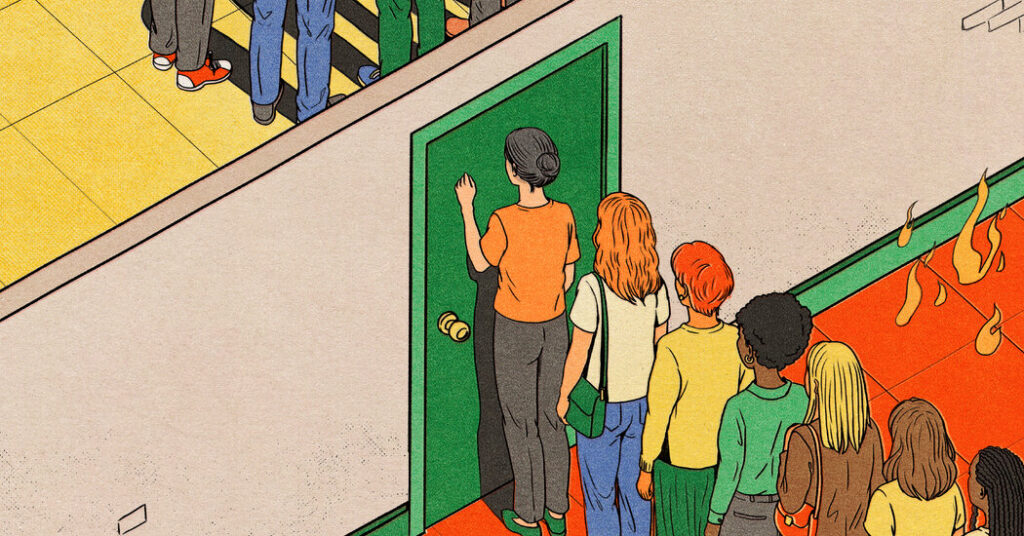
Like the women who were knocked out for their deliveries, women going through menopause have an alarmingly high chance of experiencing care that fails them completely. Here’s a scene that regularly plays out across the country: A woman walks into her doctor’s office with an increasingly debilitating set of symptoms — her sleep destroyed, joints aching, heart racing, memory slipping — and walks out with no diagnosis, no treatment and no plan.
Maybe you know her. Maybe you’ve been there. Nearly one in three U.S. women over 40 experiences severe menopause symptoms, and those symptoms can be severe enough to disrupt daily life. For many women, menopause means waves of depression they’ve never experienced before or terrible insomnia. The underlying hormonal changes driving these symptoms increase a woman’s risk of cardiovascular disease, osteoporosis and certain types of cancer.
Often, these symptoms strike when a woman is at the peak of her career, raising children and caring for aging parents. There’s a whole constellation of people relying on her. The Mayo Clinic estimates that menopause-related symptoms cost the United States $26 billion in medical expenses and lost work time every year.
Even so, only about one in four women in menopause in the United States is treated for her symptoms. Too many women are left to face another sleepless night — their joints still aching, hearts still racing, memories still slipping — while their appeals to the medical system have gotten them nowhere.
When I first noticed signs I was starting menopause, it fell to me to raise the topic with my doctor and push for options to manage my symptoms. Even though I have access to excellent health care, and have spent the past 25 years as a women’s health advocate, there was a lot I simply didn’t know. Some symptoms, I learned, can have lasting consequences if left untreated: Insomnia can increase the risk of losing cognitive function or developing Type 2 diabetes, and hormonal shifts can lead to heart disease. It’s no exaggeration to say that the care a woman receives in this moment can change the trajectory of her life.
I feel lucky to be living through an era when women are speaking out about what our mothers’ generation navigated in silence, but solidarity is no substitute for systemic change. That’s why I’m expanding my work in women’s health to include significant new funding for midlife and menopause care. These investments will bring my total funding for women’s health over the past two years to more than $600 million.
At a time when women’s rights are under attack and too many women are dying during pregnancy and childbirth, I remain deeply committed to my longstanding work in reproductive and maternal health. The funding I’m announcing on Thursday includes additional support for these issues, too. We need to fight for women’s health on multiple fronts at once.
Our society’s approach to menopause and perimenopause reflects the deep flaws of a health system that has long treated women as an afterthought. Consider the staggering fact that, according to one survey, less than a third of American OB-GYN residency programs offer a menopause curriculum of any kind. That’s right: The very doctors who specialize in our bodies aren’t always equipped to support us through a biological event we will all encounter.
Beyond the training gap, there are gaps in treatment and knowledge. The share of postmenopausal women in the United States using hormone therapy, the most effective solution for managing menopause symptoms we have right now, has plummeted to less than 5 percent.
While we know that menopause has implications for bone health, heart health and brain health, what we don’t know is how to protect women from these risks.
We need a menopause revolution in this country. Better training is an obvious place to start. By including menopause care in both foundational and continuing education for health care practitioners, we can equip more of them to support their patients. Medical schools and residencies need to embed menopause care in their curriculums, and accreditation bodies and licensing boards need to make it a required part of training — not just for OB-GYNs, but for anyone who treats women in midlife.
We also need action from policymakers, particularly at the state level. Advocates should press lawmakers to create new education requirements, expand insurance and Medicaid coverage for menopause treatments and ensure that women in menopause have workplace protections the way they do in pregnancy — like the ability to take time off to seek care — so they can keep doing their jobs without sacrificing their health.
Public education campaigns can play an essential role in starting new conversations about menopause and addressing the structural barriers that are leading to disparities in who gets care. In the United States, postmenopausal white women are more than twice as likely as Black and Hispanic women to use hormone therapy treatment.
Finally, we need additional research to learn more about the range of hormonal and other changes that happen with menopause and their implications for women’s well-being — and to accelerate new breakthroughs and treatments. For every dollar the world spends on medical research and development, just five cents goes to women’s health. We need to change our assumptions about whose bodies are worth understanding.
We are seeing the glimmers of real progress. Health care practitioners have received updated guidance about hormone therapy, which could reverse years of confusion about when it can be used safely. More companies are offering menopause benefits, and more states are introducing legislation to mandate workplace protections or insurance coverage.
For all this, we should thank the women who have been speaking out about their experiences and demanding better. Just as a previous generation took on twilight births, they have set something in motion that is going to touch millions of lives.
Melinda French Gates is a philanthropist, businesswoman and global advocate for women and girls. She founded and heads Pivotal, a group of organizations working to accelerate the pace of social progress for women and young people.
The Times is committed to publishing a diversity of letters to the editor. We’d like to hear what you think about this or any of our articles. Here are some tips. And here’s our email: [email protected].
Follow the New York Times Opinion section on Facebook, Instagram, TikTok, Bluesky, WhatsApp and Threads.
The post Melinda French Gates: Women, We Deserve Better Than This appeared first on New York Times.