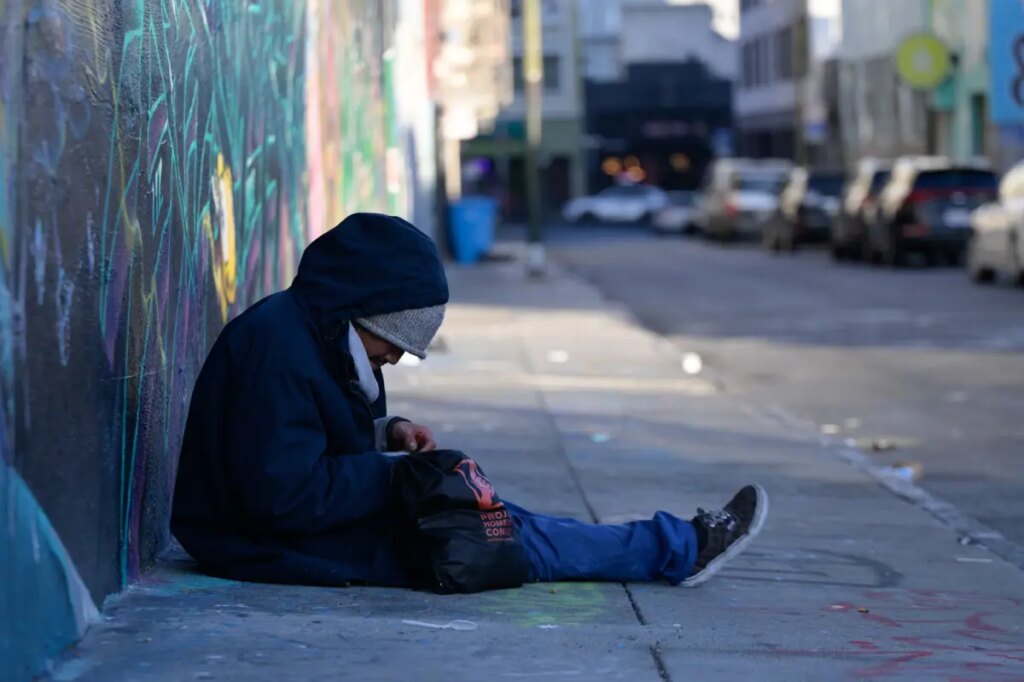
It’s 3 a.m. in San Francisco’s Tenderloin district, and an all-night, drug-fueled party has been raging for hours. The sidewalks are littered with trash and human feces.
Addicts huddle in the alleys, inhaling fentanyl fumes through plastic straws; others are slumped over, barely conscious. Makeshift homeless encampments line block after block.
Dealers are everywhere. On the street corners, groups of men dressed in dark hoodies and face masks sell drugs.
These are the “Hondos,” migrants from Honduras who have taken over the San Francisco drug trade. Night after night, they turn the Tenderloin into a lucrative, open-air drug market.
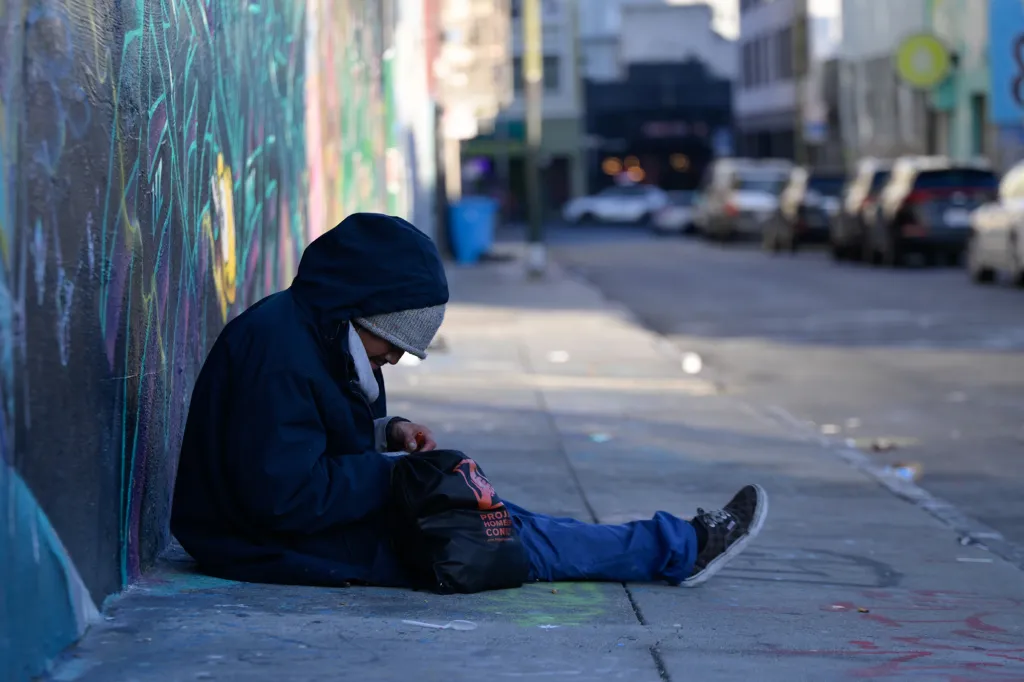
We spent three days and nights in the Tenderloin, talking to addicts, journalists, cops and the dealers themselves.
We discovered that the city’s progressive policies have allowed foreign drug gangs to take over an entire neighborhood in downtown San Francisco, poisoning the down-and-out and bringing Third World conditions to one of America’s wealthiest cities.
In the Tenderloin, the Hondos rule.
In 2022, former San Francisco mayor London Breed seemed to admit as much in a radio interview, saying that “a lot” of the city’s drug dealers were Honduran.
Her comments sparked a wave of backlash from Latino activists, with one local group denouncing the remarks as “xenophobic and racist.” Soon after, Breed was pressured into issuing a public apology.
But Breed was right.
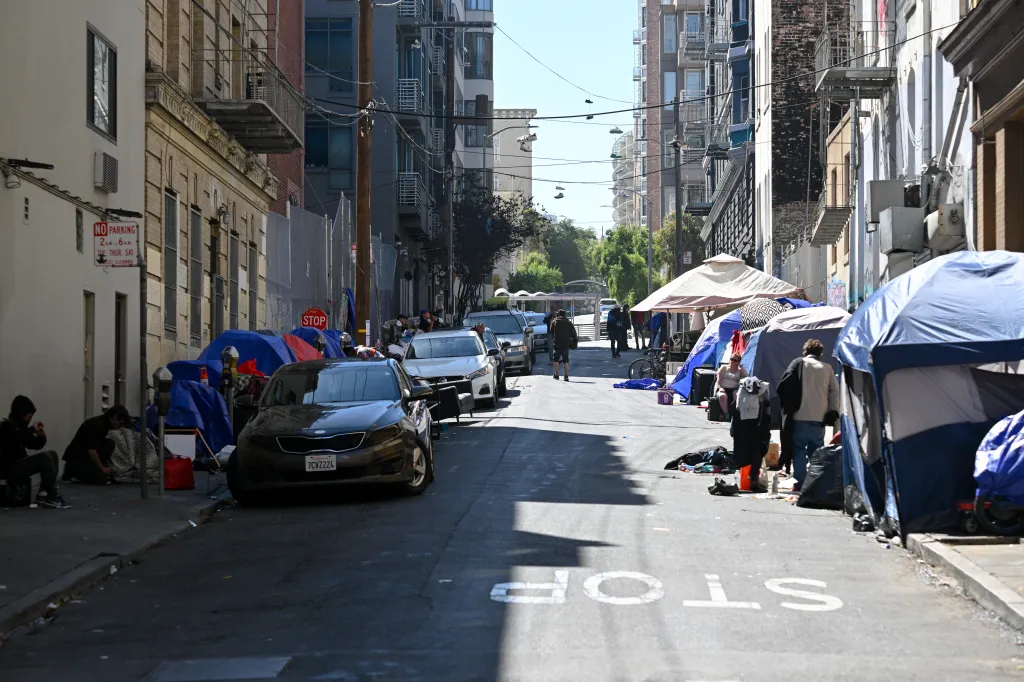
Gangs of migrants, primarily from Honduras and supplied by Mexican cartels, run the fentanyl trade in San Francisco. In 2023, the San Francisco Chronicle reported that Hondurans had “taken over the sale of [fentanyl]” in the city’s “[open-air markets].” Last year, an article in the Harvard Law Review stated that “nearly all” low-level fentanyl and meth dealers prosecuted as part of a federal sentencing program were “Honduran men without legal status in the United States.”
Why is this happening?
For years, the city has prioritized its “sanctuary” law that make deportations more difficult; relaxed drug enforcement, limiting arrests of dealers and users; and embraced “housing first” policies, which make cleaning up homeless encampments and coercing addicts into treatment nearly impossible.
This crisis didn’t come from nowhere. It is the predictable result of deliberate choices.
In response to a public records request, the San Francisco Police Department provided City Journal with a copy of its policy on immigration enforcement. The document makes clear that officers are not allowed to “inquire into an individual’s immigration status” and cannot ask anyone to produce documents proving his or her status.
Officers are barred, in many cases, from “assist[ing] in the enforcement of federal immigration laws” or honoring ICE detainer requests.
In addition, illegal migrants prosecuted for drug dealing in California courts have been repeatedly released back onto San Francisco’s streets.
Predictably, San Francisco’s permissive drug culture, and the tolerance it showed to illegal aliens peddling poison, helped drive an explosion of overdose deaths. In 2023, San Francisco’s overdose-death rate was more than double the national average. Between 2020 and 2025, an estimated total of 4,087 people died of overdoses in the city, with many of those deaths clustered in the Tenderloin.
By 2023, then-Mayor Breed had declared a state of emergency and reached out to the federal government for help.
In August of that year, the All Hands on Deck initiative began, a new partnership between federal, state and city officials to crack down on fentanyl dealing. The initiative saw the federal government step in to prosecute low-level street dealers in the Tenderloin. It also included fast-track sentencing, which can result in a “reduced sentence in return for a quick plea and waiver of procedural rights.”
In theory, this arrangement would enable officials to bypass the city’s sanctuary law and deport undocumented criminals quickly.
This policy might sound like progress, but some evidence suggests that the Honduran criminal networks view the initiative more as a get-out-of-jail free card than a serious threat to their operations.
When Daniel Lurie ran for mayor in 2024, he promised to restore order to a city that had become an international symbol of disorder and decline.
Since taking office in January 2025, Lurie has embraced tougher enforcement, reduced the level of visible homeless encampments and pursued increased cooperation between local and federal officials.
But Lurie’s reforms do not go far enough. For his efforts to succeed, the city must roll back the sanctuary city protections that have allowed foreign drug gangs to poison people in San Francisco with impunity.
As long as San Francisco remains a place where you can sell fentanyl with minimal consequences, the open-air drug markets in the Tenderloin — and all the human misery they bring — will endure.
Christopher F. Rufois a senior fellow at the Manhattan Institute, a contributing editor of City Journal, and the author of America’s Cultural Revolution. Ryan Thorpe is an investigative reporter at the Manhattan Institute. Jonathan Choe is a senior fellow at the Discovery Institute and a journalist.
The post Open-air drug markets a reminder: much work still to do in San Francisco’s Tenderloin appeared first on New York Post.