The state of New Jersey filed a lawsuit this week against the operator of a privately run immigration detention center in Newark, claiming that health inspectors were denied full access to the facility. It’s the latest reminder that the federal government’s immigration enforcement system desperately needs greater transparency and accountability.
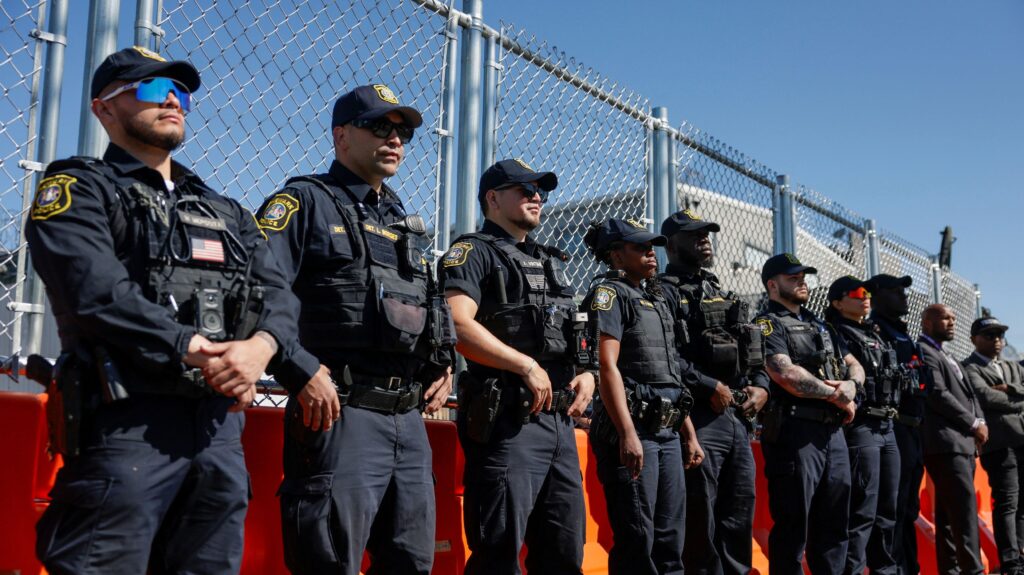
The facility, called Delaney Hall, has become a flash point in recent weeks. Reports of unsanitary and inhumane conditions, which have become disturbingly common among detention facilities nationwide, have resulted in violent clashes outside the building between protesters and police. The situation has gotten so bad that Newark Mayor Ras Baraka (D) imposed a curfew around the center, and Gov. Mikie Sherrill (D) deployed state troopers to manage the crowds.
Sherrill is correct to try to “lower the temperature” and stop agitators from contributing to the spectacle. People have every right to protest peacefully, but assaulting officers and lighting fires in the streets are crimes that warrant prosecution.
At the same time, the federal government has an obligation to ensure that detainees in its custody, even if they illegally entered the country, are not subject to cruel conditions. Immigration detention centers are not supposed to be punitive; their purpose is to temporarily house immigrants while courts review their cases.
For weeks, detainees and attorneys advocating for them have accused the Delaney facility of providing poor living conditions and inadequate medical care despite outbreaks of covid-19 and the flu. Some prisoners have joined a hunger strike, alleging that they have been served expired food and even meals containing live worms. Others have said they were subjected to solitary confinement.
Those reports prompted the state health department to send representatives to the facility, where they were allowed to inspect the food service department. But the state said in its complaint that the inspectors were denied access to the center’s medical unit, sleeping areas, showers and ventilation system.
The Department of Homeland Security called the state’s lawsuit “frivolous” and denied allegations of poor conditions. “No lawbreakers in the history of human civilization have been better treated than illegal aliens,” the department said on social media. Homeland Security Secretary Markwayne Mullin was nominated for the job to deescalate tensions, but he’s scoffed at complaints about food, saying detainees refused to eat because they wanted “ethnic” food. “Well, they can go back to their country and get whatever food they want,” said Mullin.
There’s reason to be skeptical about the administration’s nothing-to-see-here attitude. Eighteen individuals have already died in the government’s custody this year, matching its count for all of 2020, at the height of the pandemic. Last year, 33 detainees died, and multiple facilities reported outbreaks of tuberculosis, a disease associated with poor living conditions.
Meanwhile, the Trump administration gutted watchdog agencies at DHS. Last year, it attempted to eliminate the Office for Civil Rights and Civil Liberties, which once had about 140 full-time employees. DHS backtracked amid threats of lawsuits, but it still slashed the office’s headcount to about 40 people, most of them outside contractors. It also limited the way people can submit complaints, such as requiring that they are written in English.
It’s heartening to see New Jersey authorities take this seriously, but that’s not enough. As Congress takes up a reconciliation bill this week to provide additional funding for immigration enforcement, lawmakers have leverage to put a stop to cruelty in detention facilities.
The post Newark’s detention center requires real accountability appeared first on Washington Post.