Dear reader,
How high are gas prices near you? Here in California, where I live, the average price recently hit $6.15 a gallon, and it’s not uncommon to see prices higher than $7. As a result, my colleagues have reported, people are delaying travel, small business owners are raising prices and laying off workers, and commuters are biking and investing in electric vehicles. Yet one of the lodestones of our local public transit system — Bay Area Rapid Transit — is struggling mightily.
In other words, the costs of a car- and highway-centric transportation network have rarely been more evident. So we wondered, how is the United States doing in building its public transit? We asked the reporter Alexander Nazaryan to figure out how many miles of transit are being built domestically. The answer is, in short, “not much.” Read on for his appraisal of why that is.
— Matthew Thompson
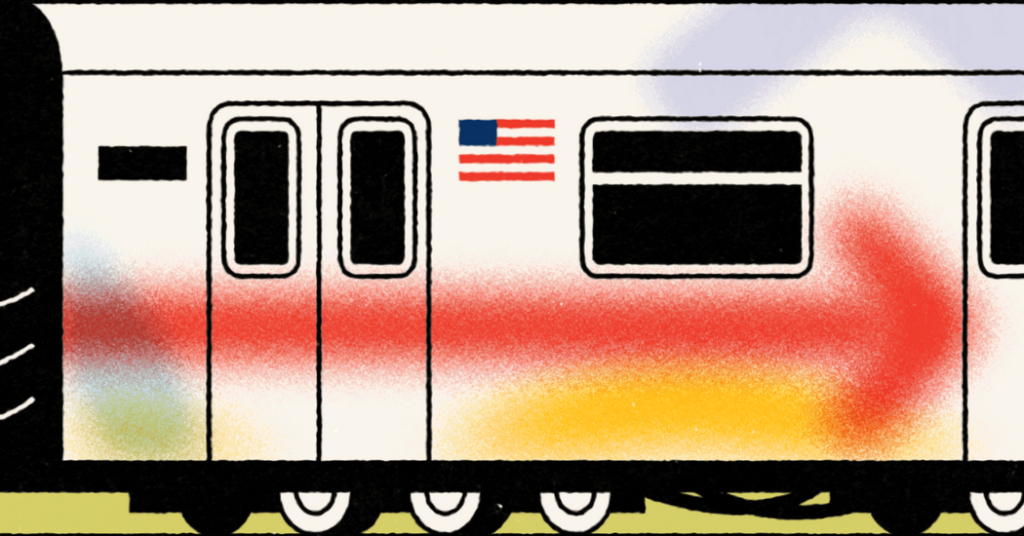
How much transit is being built in the U.S.?
This might seem like the perfect moment for public transit. Gas prices have risen 52 percent since the United States began its war on Iran. Commute times, as we’ve discussed, have effectively returned to prepandemic levels. Traffic fatalities are rising once again.
Yet “the reality is that the U.S. has simply abdicated new transit construction, for the most part,” said Yonah Freemark, a researcher at the Urban Institute. Subways, in particular, have suffered.
New construction of subway and light rail lines “has been declining pretty dramatically” since the 1980s, Freemark said. In 2025, he estimates, the United States added 3.7 miles of subway, about 13 miles of light rail and 43 miles dedicated to bus rapid transit.
A few cities are adding to existing lines, but ambitious build-outs — like those in New Delhi or in Madrid — are not happening in the United States. Light rail is at a similar standstill, with a few exceptions. Bus rapid transit has become popular in recent years but has been put in effect too modestly thus far to have a significant impact on commuting habits.
“There are places that are doing more to invest in public transit,” said Brian D. Taylor, a professor of urban planning and public policy at the University of California, Los Angeles. Many are large cities already well-known for their walkability and public transit: New York, Washington, Chicago, Seattle.
Why has U.S. subway construction fallen so much?
“Subways are not really happening here,” said Eric Goldwyn, program director at the Marron Institute of Urban Management at New York University.
High-density urban areas where new subway lines make the most sense are also the places where such projects are the most expensive, said Dr. Taylor of U.C.L.A. Building foundations have to be reinforced and utilities rerouted. The concerns of businesses and residents have to be addressed, including via relocation fees.
Only three U.S. cities are building out their metro systems.
Los Angeles: The westward extension of the D line, which opened in May, saw 3.9 miles of new track, from Koreatown toward Beverly Hills, with three additional stations along Wilshire Boulevard, the densest urban corridor west of the Mississippi River. The city hopes to complete the full nine-mile D extension in time for the 2028 Summer Olympics.
New York: At a length of 1.8 miles, Phase 1 of the Second Avenue line runs between 72nd and 96th Streets on the Upper East Side of Manhattan. Phase 2, now underway, is expected to be about the same length. By the end of it, the line will reach 125th Street, connecting with the Nos. 4, 5 and 6 lines as well as the Metro-North commuter service. The second phase is to be completed by 2032, at a cost of $7 billion. The $2.5 billion-per-mile cost of the line’s first segment notoriously made it “the most expensive mile of subway track on earth.”
Chicago: In May, Chicago started a 5.5-mile expansion of its Red Line elevated trains to the city’s far South Side, with four new stations, at a cost of $5.7 billion.
Much older European and Asian cities that face similar issues as U.S. cities have been able to build much more quickly and cheaply. Subways in cities outside the United States cost from $250 million to $450 million per mile, Dr. Goldwyn has written. Madrid’s stunning expansion — 120 miles, 157 stations, all in a 12-year span between 1995 and 2007 — cost only $100 million per mile.
“Everything is more expensive than it needs to be,” Dr. Goldwyn said in an interview. According to his Transit Costs Project, a transit project in New York will cost about 20 times more than in Seoul, which underwent a massive expansion in the 1990s and now has what is considered one of the best public transit systems in the world. Dr. Goldwyn attributes this discrepancy to lengthy environmental reviews, a reliance on contractors and consultants instead of direct government building capacity, and a push for distinctive station designs rather than standard and functional ones.
How are other modes of transit faring?
A few cities are trying to take a thoughtful approach to light rail, but “the rate of increase has really slowed down” in recent decades, Freemark said.
Washington: At a cost of $10 billion, the Purple Line will travel in a 16.2-mile arc north of Washington, D.C., connecting the densely populated suburbs of Montgomery and Prince George’s Counties. It is expected to open next year.
Honolulu: The city’s Skyline system is elevated and automated — and growing. Segment 2, which opened last year, linked Pearl Harbor, Daniel K. Inouye International Airport and the busy transit hub at Middle Street. Segment 3 will push into downtown Honolulu.
Brooklyn/Queens: The Interborough Express would link the two most populous boroughs in New York City, where a combined 5 million people live. The state has already awarded it a $166 million design contract, though it could be years before shovels are in the ground.
Los Angeles: A new line, 6.7 miles long, will run north-south through the San Fernando Valley.
Elsewhere, the Bay Area Rapid Transit system is expanding into Silicon Valley, though it is also facing an existential risk because of low ridership and funding shortfalls. Minneapolis and Seattle are also in the midst of light rail expansions.
While an attractive option, light rail comes with problems of its own. “Often, what we do is say: ‘Wow, it’s so expensive to build down Wilshire Boulevard or to build the Second Avenue Subway. Let’s build a light rail line out on the fringe,’” Dr. Taylor said. “That’s a lot cheaper, but it carries way fewer people.”
What about buses?
Given the challenges with subways and light rail, some cities have been modernizing their buses, which are the most popular form of public transit in the U.S.
Truly rapid bus transit — which, according to the Institute for Transportation Development & Policy, includes dedicated rights of way, off-board ticket collection and platform-level boarding — remains something of a rarity in the United States. But rapid bus projects in development include:
Montgomery County: The Flash Bus Rapid Transit will connect crowded suburbs north of Washington, D.C., including Bethesda, Rockville and Silver Spring. A couple of lines are already running.
Miami: It took six years, and $300 million, to build, but Metro Express is the most extensive fully electric rapid bus network in the United States.
Phoenix: The sprawling city is building out its public transportation infrastructure, with a planned rapid bus line along 35th Avenue and two light rail lines, now in operation. One of the light rail lines connects downtown Phoenix, Mesa and Tempe, home to Arizona State University.
San Bernardino, Atlanta and Salt Lake County are forging ahead with rapid bus service as well.
What can I check out next?
-
It’s one challenge to build new transit systems. How about running them? Here’s a look inside the substations that the Metropolitan Transportation Authority operates to power the subways.
-
Ahead of the World Cup, which starts on June 11, Kansas City, Mo., built a new, temporary transit system for the expected influx of visitors. The least populous U.S. metro area to host matches, the city is expecting the tournament to be the biggest event in its history.
-
As a mayoral candidate, Zohran Mamdani campaigned for free buses for all riders, but his promise is hitting some speed bumps. Here’s a look at what the City Council is suggesting instead.
-
In The New Yorker, Oren Peleg considers whether Los Angeles is finally ready to embrace the subway.
-
From 2021 (an oldie, but a favorite of some of our team members): Listen to the hidden melodies of subways around the world.
— Alexander Nazaryan
Your turn
Test your knowledge: After Iowa City enacted a two-year pilot program to make buses free, ridership increased to 118 percent of prepandemic levels. In 2025, what percentage of prepandemic public transit ridership had cities recovered on average, according to the American Public Transit Association?
Tell us your thoughts: What is public transit like in your community? How would you like to see it improved? Please email your thoughts to [email protected].
Following up: In response to our look at apprenticeships, we heard from several readers who had apprenticed at some point themselves or seen their children benefit from it as an on-ramp to a career. The respondents with experience apprenticing had degrees as well, and underscored the point that these pathways are not mutually exclusive, and shouldn’t be understood as competing with each other. One respondent with an associate’s degree said that looking back, while she was happy with the career outcomes that resulted from her apprenticeship, she wished she had been encouraged to pursue a bachelor’s degree as well.
The thoughts on career paths and learning put us in mind of a recent bit of advice from our colleague, the investigative reporter, Jodi Kantor. Although it’s aimed at young people newly facing their working years, you might find her reflections useful wherever you are in your career journey.
Alexander Nazaryan contributed reporting.
The Headway initiative is funded through grants from the Ford Foundation, the William and Flora Hewlett Foundation and the Stavros Niarchos Foundation (SNF), with Rockefeller Philanthropy Advisors serving as a fiscal sponsor. The Woodcock Foundation is a funder of Headway’s public square. Funders have no control over the selection, focus of stories or the editing process and do not review stories before publication. The Times retains full editorial control of the Headway initiative.
The post Where Are All the Subways? appeared first on New York Times.