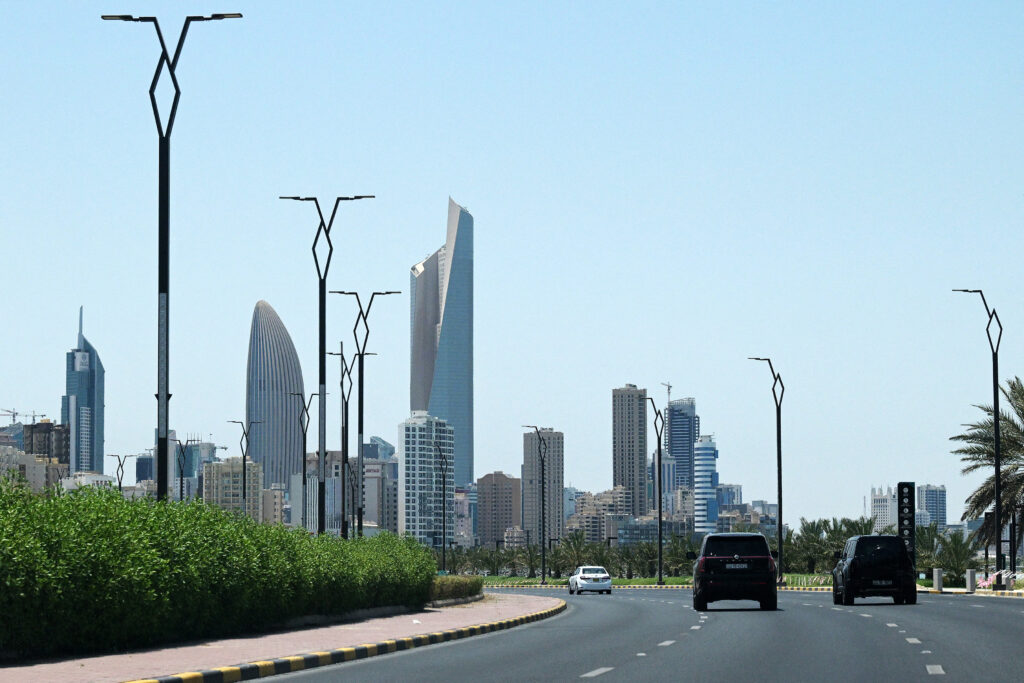
The United States and Iran traded strikes overnight in one of the most intense bouts of conflict since the increasingly tenuous ceasefire between the two countries began in April. U.S. forces targeted Qeshm Island and Iran fired missiles and drones at Bahrain and Kuwait, killing one person at Kuwait International Airport, which suspended flights after the attack.
The U.S. carried out “self-defense strikes” on an Iranian military ground control station on Qeshm Island in the Strait of Hormuz, U.S. Central Command said Tuesday, describing them as a response to Iran launching ballistic missiles against Kuwait and Bahrain.
The exchange comes as talks to end the war between the U.S. and Iran remain deadlocked and tit-for-tat exchanges and aggressive military action in Lebanon threaten to collapse negotiations.
On Tuesday, Secretary of State Marco Rubio reiterated the Trump administration’s demands in peace talks, saying Tehran must reopen the Strait of Hormuz and commit to future negotiations on curbing its nuclear program before Washington will ease financial sanctions or end its blockade of Iranian ports.
Centcom said the Iranian strikes failed to hit their intended targets, with two missiles fired at Kuwait falling short or breaking apart en route, while three launched at Bahrain were intercepted by air defenses. A wave of Iranian drones attempted to target U.S. forces in Kuwait, Centcom said, but no U.S. personnel were harmed.
Iranian drones did strike Kuwait International Airport early Wednesday, killing one person and injuring others, Kuwait’s Ministry of Foreign Affairs said in a statement. Iranian attacks have also damaged other “vital facilities, including diplomatic missions,” it added, without providing further details.
Kuwait’s official news agency reported Wednesday that the Civil Aviation Agency suspended and rerouted flights from Terminal 1 after the attack, which came just two days after international flights had resumed there. The airport had suspended traffic Feb. 28 to repair damage from Iranian attacks and had been working on a phased reopening.
Bahrain’s Defense Force said Wednesday that its air defense systems intercepted three missiles and several drones after Iran targeted civilian infrastructure but did not report any deaths or injuries.
Iran’s Foreign Ministry condemned the U.S. strikes in a statement Wednesday, saying authorities in Kuwait and Bahrain bore “direct and clear responsibility” for the attacks against them, having allowed the U.S. to use their territory in the war against Iran. “The Islamic Republic of Iran will utilize all available capacities to defend its territorial integrity and national sovereignty, including by targeting the origin and sources of aggressive attacks,” it said.
Iran’s Islamic Revolutionary Guard Corps said it targeted the headquarters of the U.S. Fifth Fleet in Bahrain and an American air base in an unnamed location after an Iranian oil tanker was struck near the Strait of Hormuz in a statement reported by Iran’s semiofficial media outlet, Fars.
“In response to this assault, their air and helicopter base stationed in one of the countries of the region, as well as the headquarters of the U.S. Fifth Fleet, were subjected to missile and drone attacks by the IRGC Aerospace Force,” the IRGC statement said.
Earlier Tuesday, Centcom said it had fired a missile striking the engine room of a Botswana-flagged Tanker, Lexie, headed toward Kharg Island after it ignored warnings to comply with a U.S. blockade. “A U.S. aircraft ultimately disabled the vessel by firing a Hellfire missile into the ship’s engine room, preventing the tanker from reaching Iran,” Centcom said.
U.S. forces also shot down Iranian attack drones launched toward civilian mariners, Centcom said, adding that no U.S. personnel were harmed.
The latest retaliatory clashes come after the U.S. military struck Iranian drone and radar sites over the weekend, with Iran later launching missiles at Kuwait. Tehran suspended peace talks with the U.S. on Monday after Israel intensified attacks in Lebanon, according to state media reports and an Iranian official who spoke on the condition of anonymity because he was not authorized to brief the press.
Siham Shamalakh contributed to this report.
The post Drone attack damages Kuwait airport as U.S.-Iran strikes widen appeared first on Washington Post.